
Students, parents and organizers press Milwaukee school board to fund mental health, fix bathrooms and back equity audits
Get AI-powered insights, summaries, and transcripts
Sign Up Free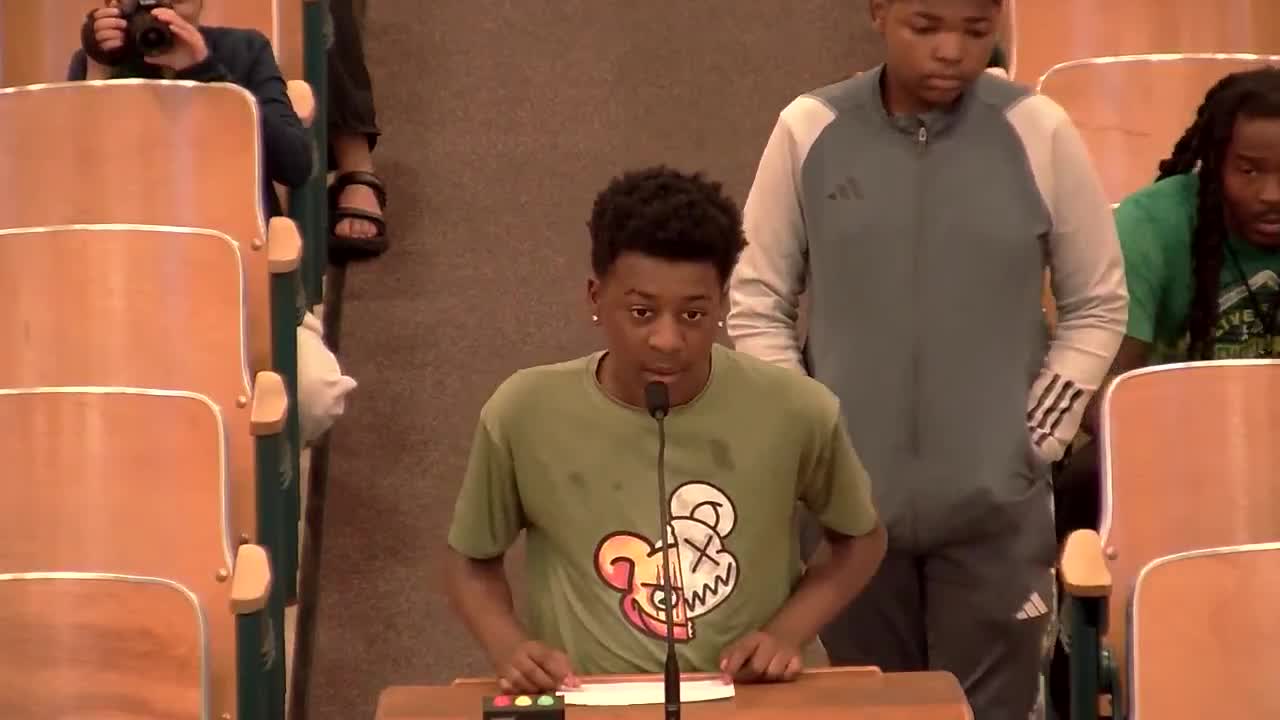
Summary
More than a dozen students and community organizers told the Milwaukee Board of School Directors on June 24 that the district’s FY26 priorities should prioritize mental-health staff, clean and functioning restrooms, up-to-date learning materials and community-driven equity audits rather than an undefined $2 million “safe schools” hub.
More than a dozen students, organizers and teachers told the Milwaukee Board of School Directors at its June 24 meeting that the district’s proposed FY26 budget must prioritize mental health staffing, school facilities and equitable instructional supports.
Students and staff from Leaders Igniting Transformation (LIT), a youth-led advocacy group, urged directors to fund counselors, replace broken equipment, repair unsanitary bathrooms and adopt community-proposed equity amendments before spending on a “safe schools hub.”
The speakers framed the demands as matters of student safety and learning. “Everyday students like me are forced to deal with bathrooms that are not only dirty but honestly disgusting,” student Lamorie Chase said. “No student should have to experience that just to use the bathroom.” Joseph Johnson, a 12th grader and LIT member, said schools lack mental-health resources and programs: “I am once a person with bad mental health and a very low self esteem until I got the help I needed. To see other students…suffer with the mental health is basically just sickens me a lot.”
Why it matters: Speakers repeatedly tied facilities, staffing and materials to academic outcomes and equity. Several described outdated Chromebooks and textbooks, limited counselors, and examples of buildings with pests, asbestos exposure concerns and locked or vandalized restrooms. Organizers urged the board to adopt two community amendments — “Equity First: An Amendment to Thrive” and “Building Better: An Amendment to Develop Professionally” — that call for district-wide equity audits, anti-bias training and job-embedded professional development for teachers.
LIT co-executive director Dan Maldonado said the $2 million proposed for a district “safe schools hub” was too vague and risked prioritizing surveillance over student supports: “When safety isn’t clearly defined, it too often defaults to control, surveillance, locked bathrooms, and exclusionary discipline.” Jasmine Segara, a LIT staff member, asked the board to “stop giving us Band‑Aid solutions and actually fund things that matter to us.”
Board response: Several board directors thanked students and said administration had already begun work on some concerns. Superintendent Dr. Cassellius said the district invested $16 million in lead-abatement work and that custodial and facilities staff would be trained on lead‑safe cleaning protocols; she also said facilities teams would be cleaning bathrooms over the summer. She added that the district plans menstrual-product dispensers this fall and will roll out salad bars in high schools.
Directors asked administration to follow up on speaker-identified schools and provide specifics on restroom cleanliness, recess availability and Chromebook life-cycle replacement. IT director Chad Meyer told the board principals had responded to a technology needs survey and that requested devices would be shipped to schools this summer; district technicians and contractors also repair Chromebooks as tickets are entered.
What speakers asked for - More school counselors, therapists and mental‑health staffing; lower counselor-to-student ratios. - Clean, accessible and functioning restrooms, stocked with supplies and menstrual products. - Replacement or repair of outdated Chromebooks and textbooks; clearer device distribution policies. - Job‑embedded professional development, coaching and equity audits available across all schools. - Student participation in decisions about safety and discipline.
Context and next steps: Organizers and students noted the April 2024 referendum voters approved for MPS and asked how those funds were being distributed; board members and administration promised follow-up and earlier, expanded engagement in the FY27 budget cycle. Several directors invited student groups to the district’s listening sessions scheduled for the summer and fall.
Ending: Speakers closed by repeating a request for sustained partnership. “We invite you to work with us to reimagine safety for our district by investing in what truly makes our school community safe,” said Janiqua Woodson, LIT’s high‑school organizer.