
Regional utility LOTT reports strong performance, outlines reclaimed-water limits and future needs
Get AI-powered insights, summaries, and transcripts
Sign Up Free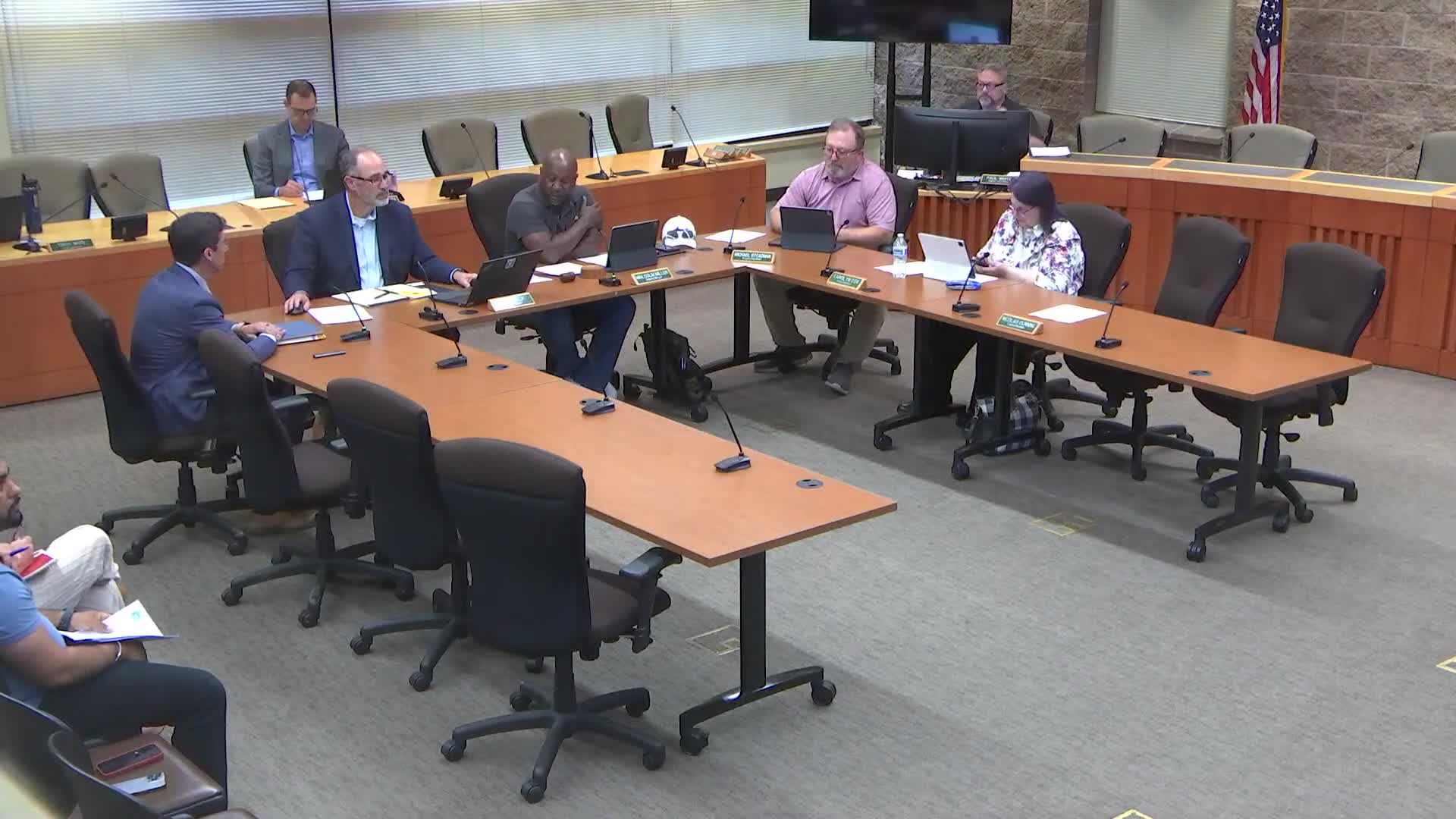
Summary
LOTT Executive Director Matthew Kennelly told the Lacey City Council that the regional utility is meeting permits while expanding reclaimed-water work; city staff described a reclaimed-water plan that will prioritize water-rights mitigation and means Lacey currently has little reclaimed water available for parks or irrigation.
LOTT Executive Director Matthew Kennelly told the Lacey City Council on June 24 that the regional wastewater utility serving Lacey, Olympia, Tumwater and Thurston County is meeting discharge permits, has cut energy use and is expanding reclaimed-water use — but that most reclaimed water available to Lacey is committed to water-rights mitigation.
The presentation, given to the City of Lacey during a regular work session, summarized LOTT’s treatment capacity, recent upgrades and community reuse projects and was followed by a separate city presentation on Lacey’s newly drafted reclaimed-water plan.
Kennelly said LOTT treats roughly 13,000,000 gallons per day at its Budd Inlet treatment plant in downtown Olympia and that the utility “is your wastewater utility.” He noted the utility tests about 23,000 samples a year, treated roughly 4,460,000,000 gallons last year, and said the utility has the highest level of treatment on Puget Sound. Kennelly added that the Martin Way reclaimed-water plant produces about 1.5 million gallons per day of Class A reclaimed water and that more than 180,000,000 gallons were delivered last year to Woodland Creek recharge sites for groundwater infiltration.
Why it matters: Lacey’s reclaimed-water supply and LOTT’s capital plans determine whether reclaimed water can be used for irrigation, parks or other local uses now or in the future. City staff said most of Lacey’s current allotment must be infiltrated to satisfy mitigation required by water-rights permits, limiting near-term reuse for parks or city landscaping.
Key facts and planning details
- Scope and customers: LOTT serves about 140,000 people across the region, processing sewage collected by partner cities before advanced treatment at the Budd Inlet plant.
- Treatment and reuse: Kennelly described the utility’s recent process upgrades, energy-efficiency gains (he said a recent upgrade saved about 15% plant-wide energy), biogas reuse for heat and power, and biosolids reuse programs for agriculture. He said LOTT won national engineering awards for its recent plant upgrade.
- Capital projects and costs: Kennelly said capital projects make up about 70%–74% of LOTT’s budget. He described a scheduled digester upgrade — four large tanks built in the 1980s — with a budget of about $34,000,000. He said LOTT funds projects with fees, loans and bonds as needed, and cited recent loans including two $10,000,000 low-interest loans and an SRF loan of about $15,000,000 for a prior upgrade.
- Reclaimed-water operations and constraints: City utility staff (Gagan Braar and Terry O’Neil) explained Lacey’s reclaimed-water allotment from the Martin Way plant and how much must be infiltrated for mitigation under existing water-rights conditions. They said Lacey’s current allotment is approximately 0.68 million gallons per day (MGD). Of that, 0.45–0.65 MGD is currently being infiltrated at the Woodland Creek recharge facility to satisfy mitigation commitments; regulators and permit conditions limit infiltration to about 0.9 MGD at that site.
- Capacity and future supply: Staff and LOTT said Martin Way’s current membrane bioreactor treatment trains require steady flow to operate and that expanding reclaimed-water production would require adding treatment capacity (additional “trains”) only when sustained wastewater flows justify it. A full build-out of the Martin Way facility and other LOTT decisions would be needed before reclaimed water is routinely available for parks and irrigation. City staff projected that by 2040 Lacey’s allotment could increase (staff estimated an allotment scenario up to roughly 1.46 MGD in materials shown), but most near-term supply would still be committed to mitigation as population growth triggers additional mitigation obligations.
- Where reclaimed water is used today: Staff said reclaimed water is being used to recharge groundwater at Woodland Creek Community Park and the Hawkes Prairie infiltration ponds, and to serve large irrigation users such as the Tumwater Golf Course. They said no single-family homes in the service area currently receive reclaimed water and that commercial or large institutional users are the primary customers.
Quotes from the meeting
Kennelly: “I’d like you to think about that we are your wastewater utility.”
Staff (on mitigation limits): “We have to make sure we don’t infiltrate more than 0.9 MGD of reclaimed water every day” at the Woodland Creek facility.
Council questions and clarifications
Council members asked whether reclaimed water could supply parks or residential irrigation. City staff said the Martin Way plant does not currently have excess capacity for both mitigation and widespread irrigation and that a future expansion would be required to free up reclaimed water for parks. Staff noted the need for storage, pumping and distribution improvements and said those costs would be part of future capital planning if and when reclaimed-water supply grows.
Discussion versus decisions
Both presentations were informational; no council action or vote was taken. Staff said the reclaimed-water plan will be attached to the city’s wastewater comprehensive plan and brought back for adoption with that document in a future year. LOTT said it will continue to pursue loans and cost-effective capital funding; Lacey staff said they will continue coordination with LOTT, Department of Ecology and regional partners.
Community connections and next steps
Kennelly, LOTT staff and city engineers highlighted partnerships with the Squaxin Island Tribe and the Department of Ecology on regional water-quality work, and described outreach programs such as school tours (more than 1,000 fifth graders participated last year) and public wet-science displays. LOTT and city staff recommended continuing regional collaboration rather than building multiple new small treatment plants, and said several LOTT-owned properties were offered first to partner jurisdictions for reuse (for example, the Mullen Road property was sold to the city of Lacey for affordable housing because it was surplus to LOTT’s plans).
Provenance: Meeting transcript, LOTT presentation and city reclaimed-water plan briefing.
Ending: Staff said the reclaimed-water plan requires no immediate council action and will be integrated into the city’s wastewater comprehensive plan. Council members asked to be notified as capital and funding decisions progress.