Get Full Government Meeting Transcripts, Videos, & Alerts Forever!
Get email alerts on the Budget topic
No spam. Unsubscribe anytime.
Port Washington-Saukville board adopts preliminary 2025-26 budget after hearing on special education costs and tax shift
Summary
The Port Washington-Saukville School District board approved a preliminary 2025-26 budget after a public budget hearing in which staff warned that state-level decisions and rising special education costs could change the final numbers and shift about $325 per pupil onto local taxpayers.
The Port Washington-Saukville School District board voted to approve a preliminary 2025-26 budget, including a Fund 39 addendum, after a budget hearing in which administrators warned the figures remain fluid pending state budget decisions and audit review.
The budget approved Tuesday night keeps a modest projected surplus and a fund balance that staff said meets district policy, but presenters warned special education costs, state reimbursement rates and a possible $325-per-pupil shift in state aid could change levy pressure on local taxpayers.
Mel, a district staff member who presented the budget, told the board the document is “almost that preliminary budget” and stressed it would be updated as state negotiations conclude. “This budget will change, and it always does depending on everything that rolls out in the state and the final decisions,” Mel said. She also called out two errors in the printed booklet, including one paragraph that is “off by $10,000 right now.”
Why it matters: the district is projecting a small positive balance for 2025-26 but said that several high-cost, variable items — chiefly special education and self‑funded health insurance — could shift results and the tax levy. Administrators also advised that a $325-per-pupil increase that the governor included in the state budget discussions could end up being borne by local taxpayers unless the state increases general aid.
Most important facts: Mel said the district is presenting a “draft and preliminary” budget so it can legally begin spending on July 1. The board was shown a beginning Fund 10 balance of $4,900,000 and a staff estimate of a $66,384 surplus for 2025-26 that would keep the fund balance near 13.8% of expenditures, within district policy. Mel also noted auditors will review the 2024-25 year and that some revenues and invoices for June may still arrive, creating additional change.
Special education and reimbursements dominated the hearing discussion. Administrators told the board that special education costs have risen while the state reimbursement rate has declined; high-cost special education aid was described as the category that could produce meaningful offsets. Mel said preliminary state proposals would increase primary special education reimbursement to 35% in 2025-26 and to 37.5% in 2026-27, and would increase high-cost categorical aid from 50% to as much as 90% in 2026-27. She cautioned those are preliminary numbers and that not every district qualifies for high-cost reimbursement.
Board member Brian noted how the state’s revenue-limit worksheet counts pupils but does not weight students by need. “The people count is the people count,” Brian said, describing how the formula uses a three‑year average of pupil counts rather than per‑student cost factors for special education.
Administrators highlighted an apparent discrepancy they said warrants public attention: private schools are reportedly reimbursed at a much higher rate for special education services than public districts. Mel told the board private schools are being reimbursed at about 90% currently (with a proposal cited to reach 100% in a later year), while public schools in the state are being reimbursed at about 33% for primary special education. She urged board members and community members to contact state legislators and the Joint Finance Committee to express concerns about the disparity.
Tax levy and enrollment: The budget presentation shows an anticipated 4.06% mill rate increase under the scenario in which the $325-per-pupil item is shifted to local taxpayers. Mel said the district expects a 2% increase in equalized value in the tentative figures but emphasized final equalized value and other statewide figures will be published in October, when the board will consider a final, permanent budget. Administrators also told the board the district is projecting continued enrollment declines, which factor into the revenue-limit calculation because the worksheet uses a three‑year average.
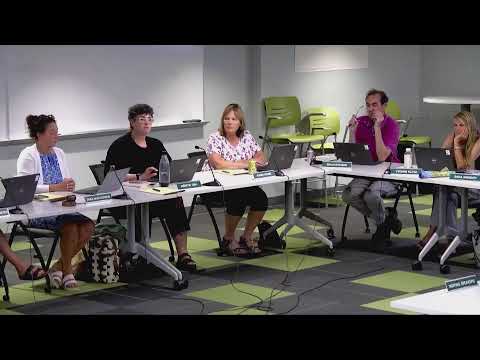
Process notes and approval: During the meeting administration presented the budget in a budget‑hearing portion of the agenda but the board adjourned that portion before adding formal approval as an action item. The board later amended the regular meeting agenda to add approval of the preliminary budget, then approved it by roll‑call vote. The roll call for the final motion showed unanimous support among board members present who voted in favor.
What’s next: Administrators said auditors will begin their review next week and that monthly updates on 2024‑25 closeout and 2025‑26 will be presented to the board. The board expects a near‑final budget in October once statewide aid and equalized value figures are finalized.
Sources: Budget presentation and exchange during the Port Washington-Saukville School District budget hearing and regular board meeting. Direct quotations in this story are drawn from the meeting transcript and attributed to speakers who spoke during the budget portion.