Get Full Government Meeting Transcripts, Videos, & Alerts Forever!
Get email alerts on the Technical Assistance topic
No spam. Unsubscribe anytime.
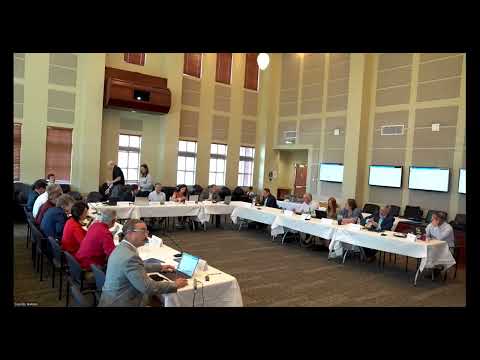
ULCT board weighs expanding technical assistance role; staff and mayors caution on capacity and funding
Summary
Board members discussed whether the Utah League should take a larger role delivering technical assistance to small and transitioning communities — a potential new strategic objective — but noted staffing limits and recommended state funding with a clear firewall between advocacy and service delivery.
The Utah League of Cities and Towns board discussed whether the organization should formally expand its role providing hands‑on technical assistance to smaller and transitioning communities, a topic that has gained urgency amid statewide housing‑planning work groups.
Molly, a ULCT staff member who has met with Association of Governments directors and LAA staff, summarized feedback that smaller communities place a high value on education and hands‑on assistance and that the league’s existing Local Administrative Adviser (LAA) work has been instrumental. At the same time she told the board ULCT has limited full‑time staff and has been stretched by LAA and related work, which has required extra time from league staff.
Board members voiced support for the concept of expanding technical assistance but emphasized the need for dedicated funding and structural safeguards. Several mayors said a state‑funded staffing model — similar to the existing state‑funded LAA positions — would be preferable so assistance does not draw down the league’s core advocacy budget or create perceived conflicts. One mayor suggested hiring a dedicated staff person focused solely on technical assistance. Others emphasized creating a firewall so state funding and programs remain distinct from the league’s core policy and advocacy functions.
Why it matters: State housing work groups identified local technical assistance as a pressing need for communities on the urban edge. Board members said that without adequate staff and funding the league would risk overcommitting to service delivery it cannot sustain.
Supporting details: Staff flagged that four of five state housing plan work groups had identified a need for additional local technical assistance. The board asked staff to continue exploring a “seventh objective” for the league’s strategic plan that could clarify roles and funding, and to return with more concrete proposal options later this summer.
Decision and next steps: No vote was taken; board members provided direction to staff to continue evaluating funding models and to return with options that preserve a firewall between advocacy and state‑funded technical assistance.