Get Full Government Meeting Transcripts, Videos, & Alerts Forever!
Get email alerts on the Government Technology topic
No spam. Unsubscribe anytime.
Van Zandt County officials review expanded IT, camera and radio costs in draft budget
Summary
County staff and commissioners spent a large portion of a budget workshop on proposed increases for radios, security cameras, vehicle cameras, software contracts, Office 365 licensing and network upgrades, and discussed funding sources and next steps for procurement and configuration.
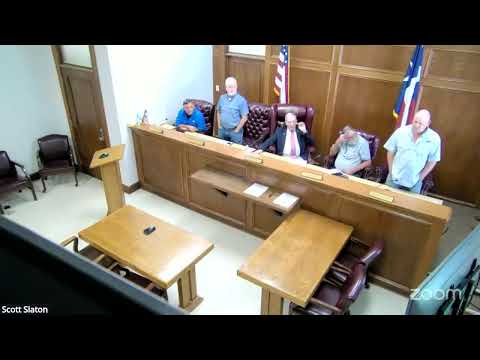
Van Zandt County Commissioners’ workshop attendees reviewed proposed increases for information technology, communications and security equipment that staff say are needed for elections, public-safety vehicles and county facilities.
County staff described requests that would raise line items for radios and tower service, new security cameras and network hardware, vehicle cameras for sheriff’s patrol cars, Office 365 licenses and several recurring software contracts. Staff said some purchases are one-time capital and others are multi-year service contracts that affect the county’s recurring operating budget.
County IT staff said the county plans to replace aging library and facility cameras, expand coverage to entryways and curbsides, and add external cameras to the precinct service drives. “We’ve been replacing cameras. We’ve done two so far this year. Like, every storm, our camera goes out,” a staff member said during the workshop, explaining repeated storm damage as a driver of replacement costs. Staff estimated unit costs “around $400” per camera for some replacements, and described higher-end network video recorder (NVR) and intrusion-detection options that add annual service fees.
Staff also discussed vehicle and body cameras for the sheriff’s office, which would add recurring service charges and per-vehicle equipment. One staff member said the sheriff’s office has requested at least five new vehicle cameras; the county’s projected recurring cost for patrol-camera service was discussed as several thousand dollars annually. WatchGuard-style evidence packages and five-year service contracts were cited as examples.
Officials raised several procurement and budgeting points: some systems are tied to vendor DVR/NVR limits, older systems may need full replacement rather than piecemeal upgrades, and a small number of county locations currently use vendor-managed systems separate from the county’s primary security system. Staff proposed moving some recurring line items into the budget’s contract-services category and tracking other costs as Sabita/state-reportable contracts where required.
Beyond cameras, staff proposed adding funding for radios and FirstNet/Starlink-style broadband hotspots to support elections and remote precincts; one presenter said elections equipment and some hotspots will be on a split billing arrangement so costs can be charged directly to elections. They also recommended additional phones for specific offices (veterans officer, district attorney) and funding for commissioner radio connectivity.
Software and cloud services were frequently raised. Staff summarized recurring contract costs for Office 365 (monthly license totals referenced), AcuFund, data-protection services, courtroom/jury-selection software, and remote-access/intrusion-detection subscriptions. An example figure given was approximately $6,005.51 in current monthly Office 365 payments; staff said adding more personnel would increase that line. Staff also mentioned a proposed malware/anti‑phishing service with an annual subscription fee (an example monthly intrusion-detection service was cited at roughly $2,400 per year).
Participants discussed funding sources and restrictions. Staff asked whether courthouse-technology and security-specific funds (for example, the county’s courthouse security technology fund and JP security funds) could be used for camera and panic-system work; they noted some monies are restricted and must be budgeted before they can be spent. “It’s best to go ahead and budget for all the funds that we have even if we don’t spend them,” one staff member said, citing the limits on after-the-fact additions to restricted accounts.
Next steps included further scoping and vendor demos for items such as intrusion detection and higher-resolution cameras; staff said they would coordinate with vendor contacts (a named vendor representative was mentioned) and bring cost details back to the commissioners. Staff also said some purchases could wait until year-end hardware buys to conserve operating funds, while other items tied to restricted security funds should be budgeted now so the money remains available.
Details and clarifications provided during the workshop included per-unit and recurring service estimates, which systems are already vendor-managed, and which county locations were included in the camera and alarm service contracts. Staff proposed separating recurring license fees from capital replacements in the draft so the commissioners can see one-time and ongoing cost impacts.
The workshop ended with commissioners asking staff to refine cost estimates, confirm which funds (restricted or general) can pay for each item, and return with vendor quotes and a recommended phasing plan.