Get Full Government Meeting Transcripts, Videos, & Alerts Forever!
Get email alerts on the Vacant Property Ordinance topic
No spam. Unsubscribe anytime.
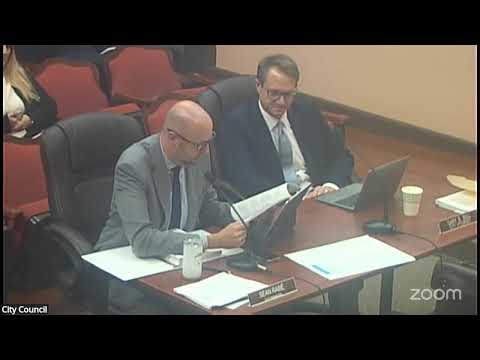
Auburn council reopens public hearing on vacant commercial building ordinance; delays action after mixed feedback
Summary
Council reopened the June 9 hearing on a proposed vacant commercial building ordinance, heard extensive public comment and stakeholder concerns about the 90‑day registration window and quarterly $338 fee, and did not adopt the ordinance; staff was directed to meet with property owners and return with targeted options.
The Auburn City Council reopened a public hearing on a proposed vacant commercial building ordinance and associated registration fees, receiving extensive public comment and further council questions before taking no final ordinance action.
Jonathan Wright, the city’s economic development director, summarized the ordinance background and said the registration requirement and proposed $338 quarterly monitoring fee were intended to reimburse staff time and encourage owners to return vacant commercial space to the market. “That registration requirement is triggered after that certain number of days,” Wright said, adding the 90‑day trigger and fee amount were both set at the council’s discretion.
Council members and members of the public probed the ordinance’s language and practical effects. Council members asked whether buildings actively for sale or lease would be treated as in compliance; Wright said a sign or other substantial evidence could meet the standard but that registered properties would still need to remit the quarterly fee and be monitored. City Attorney Gary Mappa clarified that the ordinance separates registration (an administrative requirement) from enforcement: failure to meet the ordinance’s substantive conditions for a vacant building would create a code violation enforceable by staff.
Public commenters, including longtime local property owners and business operators, urged more outreach, a data-driven vacancy study, and alternatives such as a voluntary vacancy registry, landlord outreach and targeted incentives rather than a broad quarterly fee. Cinnamon Pryor, a business owner and property owner in Auburn, said the community needed more transparency and data on vacancy rates before adopting a punitive approach.
Council discussion focused on balancing concerns: some council members favored the ordinance as a tool to motivate long‑term absentee owners; others cautioned that the 90‑day window and quarterly fee could penalize owners legitimately marketing or improving properties. A motion to reintroduce the ordinance with a 180‑day registration window failed for lack of a second. Council directed staff to convene property owners, compile additional outreach and data, and return with narrower options (for example, targeted rules for long‑term vacancies) and possible timing tied to completion of the form‑based code and general plan work. No ordinance was adopted at the meeting.