Get Full Government Meeting Transcripts, Videos, & Alerts Forever!
Get email alerts on the Tax Incentives topic
No spam. Unsubscribe anytime.
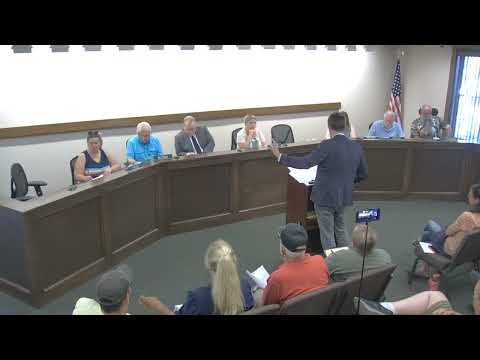
Bricker & Graydon briefs Commercial Point council on TIFs, CRAs, NCAs, PACE and enforcement via TURK
Summary
Attorneys from Bricker & Graydon presented an overview to the Village of Commercial Point council of tax-incentive tools—TIFs, CRA abatements, new community authorities, PACE financing and port-authority options—and how oversight and clawbacks work.
Attorneys from Bricker & Graydon gave a roughly hourlong briefing to the Village of Commercial Point council on local economic development tools, including tax increment financing (TIF), community reinvestment/CRA tax abatements, new community authorities (NCA), PACE financing and port-authority financing. The presenters described how each tool shifts or creates revenue flows to fund infrastructure for large development projects and how enforcement and clawbacks can be used if private commitments are not met.
The presentation stressed three broad ways municipalities typically support development: reduce taxes through abatements, divert taxes into infrastructure funds (TIF), or add assessments/taxes to a development area (NCA/new community authority). The presenters emphasized that these are contractual, negotiable tools intended to make large or infrastructure-heavy projects feasible while protecting municipal and school-district interests.
Council members asked for clarification on several points. One councilwoman asked, “Why is an abatement a good tool for us and for our constituents and not just for the developer to make more money?” The presenter replied that abatements are not free and described pilot payments and enforceable written agreements; as the presenter put it, “No abatement is free.” He explained that abatements often accompany commitments such as job creation and that income-tax revenue from new jobs, pilot payments and long-term infrastructure remaining with the municipality are part of the community return.
The briefing covered specifics raised in the presentation: - CRAs (tax abatements) typically are structured as 15-year agreements in Ohio; mega-project abatements can run longer when the state designates a site and projects meet statutory criteria. The presenter used the example of large-scale projects that required longer abatement periods to pay for hundreds of millions in infrastructure. - TIFs were described as a way to segregate the post-improvement tax increment and direct it to infrastructure or bond debt for up to 30 years; presenters noted residential TIFs are more constrained and generally keep school funding held harmless. - Port authorities can enable bonding and certain sales-tax exemptions for construction materials tied to large projects; the presenter identified Tim Kollwern as the current executive director of the county port authority and explained how port authorities help aggregate and monetize future revenue streams. - New community authorities (NCAs) allow municipalities to add limited millage or assessments on new development areas so that new residents/businesses fund new infrastructure and amenities rather than shifting costs to existing taxpayers. The presenters said establishing an NCA is a municipal decision that can be managed centrally for consistency. - PACE financing (property-assessed clean energy) was noted as a property-owner tool for energy-related retrofits and upgrades; presenters said Ohio has sizable PACE activity and that the financing is repaid via assessments on the participating property.
The presentation discussed enforcement and oversight. The county's tax-incentive review process (referred to in the hearing as TURK) was described as the accountability mechanism: local appointees review TIFs and CRAs and can recommend clawbacks or contract enforcement when private parties do not meet commitments. The presenters named Wendy Hastings and Margie Weaver as village appointees to the county review council and described clawback language that allows proportional recovery when performance falls short of contract terms.
Council members asked if the presentation materials could be posted; the presenters agreed to make the full slide deck and the firm's toolkit available for public posting and distribution.
No formal council action on tax incentives occurred at the meeting; the session was informational and intended to help council and counsel understand options for future development negotiations.