Get Full Government Meeting Transcripts, Videos, & Alerts Forever!
Get email alerts on the Behavioral Health topic
No spam. Unsubscribe anytime.
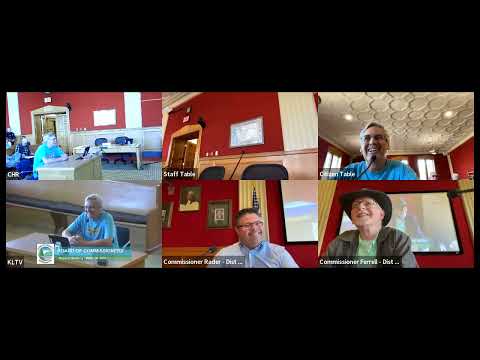
Cowlitz County discussion grows over plan for long-term behavioral health facility; no vote taken
Summary
County commissioners heard more than an hour of public comment and commissioner discussion on a proposal to create a coordinated long‑term behavioral health and substance‑use treatment effort, including talk of an inpatient facility; no formal motion or funding decision was made.
Cowlitz County commissioners and community members spent the majority of a morning meeting debating whether to pursue a coordinated, long‑term behavioral health and substance‑use treatment program and facility, with residents urging a single leader and project manager to organize existing services and commissioners saying they will continue discussions with other counties and stakeholders.
The issue drew repeated calls from residents who said current programs scatter funding and services and fail to produce durable results. "One of the two principles of leadership is you have to know who's in charge," said Larry, a community member who presented a written proposal and urged the commissioners to name a lead commissioner and hire a project manager to keep the effort in front of the public weekly. "If you put it under the board of health, it's gonna get buried in a once a month," he said.
The proposal and ensuing discussion came during the Board of Commissioners' public comment period; no formal motion or budget vote was taken. A county commissioner said they are working to get support from other county boards and are exploring options rather than committing the county to a specific structure. "I sit on the Great Rivers Behavioral Health Board, and we, we too are doing the exact same thing," the commissioner said, adding that consolidating funds and resources could improve outcomes.
Speakers at the meeting described several gaps: the county lacks a local long‑term inpatient facility for people who need sustained treatment or involuntary care; jails and emergency rooms are used instead and are effectively "warehousing" people who need treatment; and multiple small programs exist but resources are fragmented. One commenter who identified themselves as a retired care provider said some individuals have brain damage from long‑term substance use and argued a small inpatient facility could serve those people; another speaker noted St. John's hospital currently devotes roughly 22 beds to behavioral health needs and cited that as an example of existing, limited inpatient capacity.
Residents and commissioners raised concerns about cost, governance and the risk of the county becoming a regional magnet if neighboring jurisdictions sent people to a new facility. Several speakers said many people experiencing homelessness are from outside the county; another speaker, who worked with a local church, said they had bought bus and train tickets to reunite people with their home communities. Commissioners and residents also discussed potential funding sources already in use, including county and municipal spending on public safety and a locally referenced "mental health tax" that funds behavioral health positions in the area.
No ordinance, contract or funding allocation related to the proposal was approved at the meeting. Commissioners agreed to continue conversations with other counties and stakeholders and indicated they would provide periodic updates; one commissioner said they would keep pursuing inter‑county support while exploring how to concentrate existing resources and avoid duplicative management layers.
The discussion highlighted a mix of perspectives: some residents favor a nonprofit or public‑private management model rather than a county‑run facility; others argued for involuntary treatment options used in other states. Several speakers urged that any short‑term arrangements be tied to clear goals and exit plans so the county is not simply holding people without measurable treatment outcomes. The board concluded the item as an ongoing discussion and moved on to scheduled hearings and business, with no follow‑up motions recorded during this session.