Get Full Government Meeting Transcripts, Videos, & Alerts Forever!
Get email alerts on the Economic Development Transparency topic
No spam. Unsubscribe anytime.
Senate committee advances bill to tighten reporting on enterprise zone and SIP incentives
Summary
The Senate Committee on Finance and Revenue voted to send House Bill 2351B to the floor with a "do pass" recommendation after testimony from Business Oregon and tax advocates that the bill would improve transparency and interagency data sharing about economic development incentives.
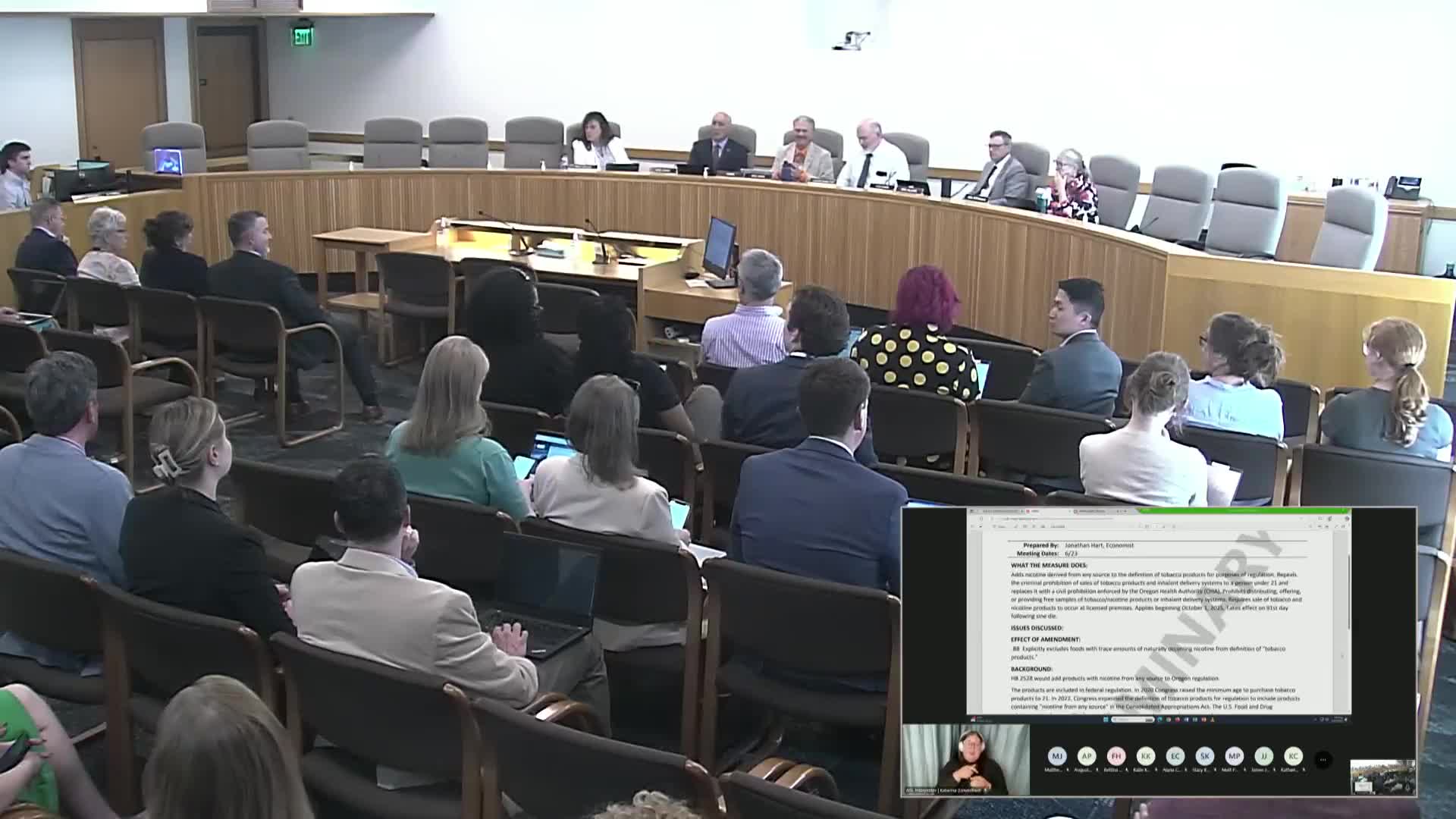
Chair Meek opened a public hearing and work session June 23 on House Bill 2351B, a measure to increase transparency around enterprise zone and Strategic Investment Program (SIP) tax incentives and improve interagency data sharing.
The measure would change reporting timelines and require the Department of Revenue, Business Oregon (OEDD), county assessors and zone sponsors to share information about economic development incentives and to establish clearer contents for those reports.
The nut graf: Supporters said HB 2351B implements recommendations from a statutorily required enterprise zone transparency study and would make data on tax-abatement agreements and related payments more accessible to the Legislature and public.
Michael Held, regional services manager at Business Oregon, told the panel the enterprise zone transparency study “calls out that generally Oregon performs relatively well” but also recommended clarifying reporting content and timelines. Held said the bill would “modify some timelines for enterprise zone and strategic investment program reporting” and improve secure communication of “exempt, proprietary information between the 2 agencies.”
John Calhoun, representing Tax Strategies Oregon, testified the bill “will improve the data available to legislators, the public and the press” and praised an amendment that requires reporting not only of tax abated but “also the fees paid.” Calhoun said the bill’s reporting changes will include cumulative reporting of investments in projects and that signed agreements “often include significant payments to local communities and community service fees… in some cases, in the millions of dollars annually.”
Committee members heard that assessors provided neutral testimony and that multiple stakeholder conversations produced the dash-1 and dash-3 amendments. After brief discussion, Vice Chair McLean moved HB 2351B to the Senate floor with a due-pass recommendation. The committee recorded several roll-call votes and the motion passed.
Discussion versus decision: the hearing included supportive testimony and explanation of amendments (discussion). The committee then took formal action—adopting a motion to advance HB 2351B to the full Senate with a “do pass” recommendation.
Ending: The bill record will include the submitted reports and amendments; witnesses indicated the changes are intended to make reporting more specific and to enable secure interagency exchanges of proprietary information.