Get Full Government Meeting Transcripts, Videos, & Alerts Forever!
Get email alerts on the Disability Employment topic
No spam. Unsubscribe anytime.
Panelists at commission event urge networking, employer flexibility to improve disability employment
Summary
At a Massachusetts Permanent Commission on the Status of Persons with Disabilities event, jobseekers, job coaches and employers described persistent barriers to hiring and retaining people with disabilities and recommended networking, on-site coaching and flexible accommodations as practical remedies.
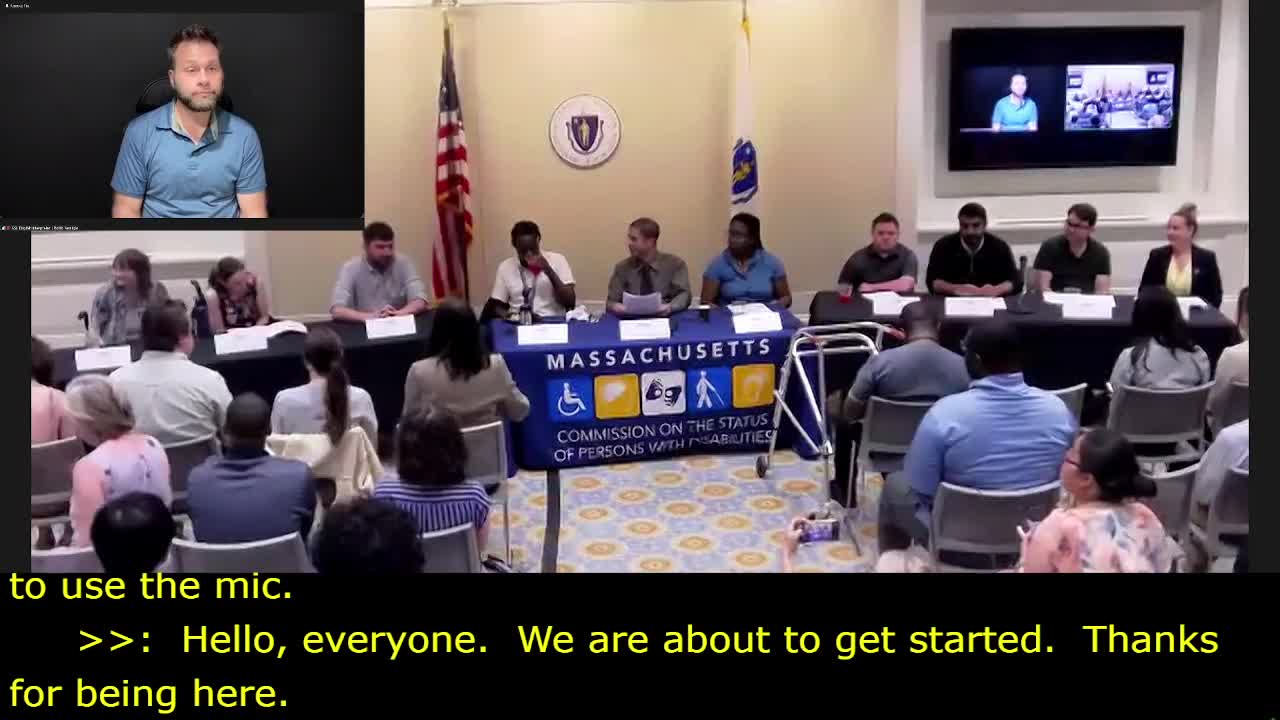
At a hybrid “Strength and Support” event hosted by the Massachusetts Permanent Commission on the Status of Persons with Disabilities, panelists described how job coaching, networking and small employer accommodations can help youth and young adults with disabilities find and keep work. The event was introduced by Commissioner Jassy Burks Abbott, co-chair of the Disability Employment Subcommittee, who opened the program and noted the session was being recorded and live streamed on the Massachusetts legislators website.
The session brought together people with lived experience, job coaches and service providers to share specific employment successes, common roadblocks and practical strategies. Panelists emphasized that many candidates succeed when employers take modest steps — offering initial on-site coaching, flexible schedules and clearer onboarding — and when jobseekers build local networks and incremental workplace experience.
Speakers described concrete successes. Sarah, a communications and social media intern with MassAbilities Career Services/NextGen, said her internship has been renewed multiple times and that the program’s supports allowed her to return to school and maintain work: “we've gotten this multiple renewed internship… it's been really great to have that kind of baseline support.” Sophie Corbic, community advocate at Northeast Independent Living Program, credited networking and internships with landing her current role and urged systems that create experience-building opportunities: “the more connections job seekers make and the more experience they have, the better employment outcomes will be.”
Other panelists gave employer-side and coaching examples. Vanessa Stewart, family support coordinator for Orkink, described a client, William, who moved from having no retail skills to training new staff and receiving employee-of-the-month honors after sustained coaching: “William has reached his employment goal, which was work in the community with people in retail settings.” Wayne Glavin, who holds two jobs including at Legal Seafood, said targeted outreach and interview practice led to his hiring: “people seem to call me back later that day…and after I did the job interview…they called me back and said that I got hired.”
Panelists identified repeat barriers: employers’ assumptions about capacity, difficulty getting interviews or meaningful work experience, and breakdowns during onboarding when managers are too busy to provide promised training. Multiple speakers described rejection at the application or interview stage as a frequent obstacle and recommended alternative ways for candidates to demonstrate skills, such as working interviews or shadowing.
Suggested employer and program practices included: proactively auditing application and training processes for accessibility; providing short-term on-site job coaching or shadowing during first days or weeks; flexible scheduling to accommodate medical or family needs; clearer, succinct communication from jobseekers when requesting accommodations; and building relationships between career coaches and managers so supports can be deployed quickly when difficult customers or situations arise.
Panelists also recommended concrete steps for jobseekers: seek internships and fellowship opportunities, attend networking events, and persist through repeated applications while building a portfolio of local references. Lynn Finale, director of Options Clubhouse, framed employment as central to recovery and independence, saying advocating for someone “to take a chance on them” can yield long-term gains.
The event closed with encouragements to both jobseekers and employers: remain patient, build networks, and “take a chance” on qualified candidates who need supports. Organizers thanked interpreters, tech staff and partner organizations and urged attendees to carry the strategies back to workplaces and communities.
Ending: The commission said the conversations will continue and encouraged participants to follow up with the Commission’s Disability Employment and Workforce Support subcommittees and listed partner resource tables available at the event.