Get Full Government Meeting Transcripts, Videos, & Alerts Forever!
Get email alerts on the Public Records Transparency topic
No spam. Unsubscribe anytime.
Senator urges extending public-records law to governor and legislature and adopting information‑governance standards
Summary
Senator Becca Rausch told the committee Massachusetts is currently the only state that exempts both the governor and the legislature from the public‑records law; she urged passage of S.2210 and S.2207 to increase transparency and create consistent information‑governance practices across public bodies.
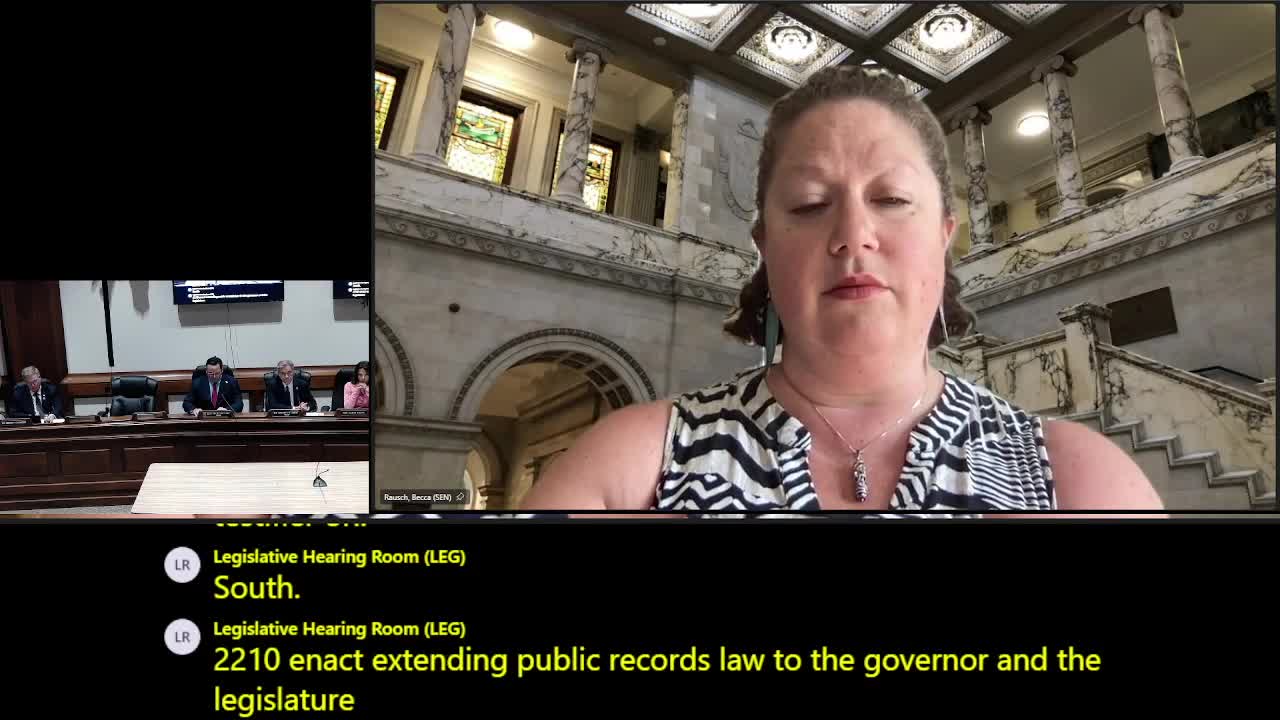
Senator Becca Rausch told the Joint Committee on June 24 that S.2210 would extend the Massachusetts Public Records Law to the Governor’s Office and the Legislature, bringing the Commonwealth in line with other states. "We are the only state in the entire nation in which the legislature and the governor are both exempt from the public records law," Rausch said during testimony.
Rausch also urged passage of S.2207, a bipartisan information‑governance bill she said would establish standardized records‑management protocols (naming, retention, privacy determinations, security and disposal) across public bodies subject to the law. She cited a 2018 Boston Globe public‑records example in which a fee estimate to comply with a records request reached $245,425, noting that poor information governance makes many technically public records effectively inaccessible because of time and cost barriers.
Why it matters: Rausch said poor retention practices create taxpayer waste (storage costs, duplicate holdings) and impede public access. The bill would provide legislative guidance for internal organization and digital records management and reduce litigation and delay costs associated with large, unstructured record holdings.
Committee action: Committee members asked clarifying questions about the fee example and implementation mechanics. Senator Rausch said S.2207 has received favorable reports in prior sessions and urged the committee to again report the bills favorably. No committee vote occurred at the hearing.