Get Full Government Meeting Transcripts, Videos, & Alerts Forever!
Clinicians and harm‑reduction providers: Xylazine linked to deep wounds, prolonged sedation; low‑barrier wound care and overdose training urged
Summary
State and community clinicians described Xylazine’s association with large, hard‑to‑heal skin wounds, extended sedation and harder‑to‑manage withdrawal. Presenters urged expanded low‑barrier wound care, updated hospital protocols and more clinician and first‑responder training.
State public‑health officials, infectious‑disease and addiction clinicians, harm‑reduction providers and people with lived experience described the health harms linked to Xylazine and urged expanded wound care and provider training.
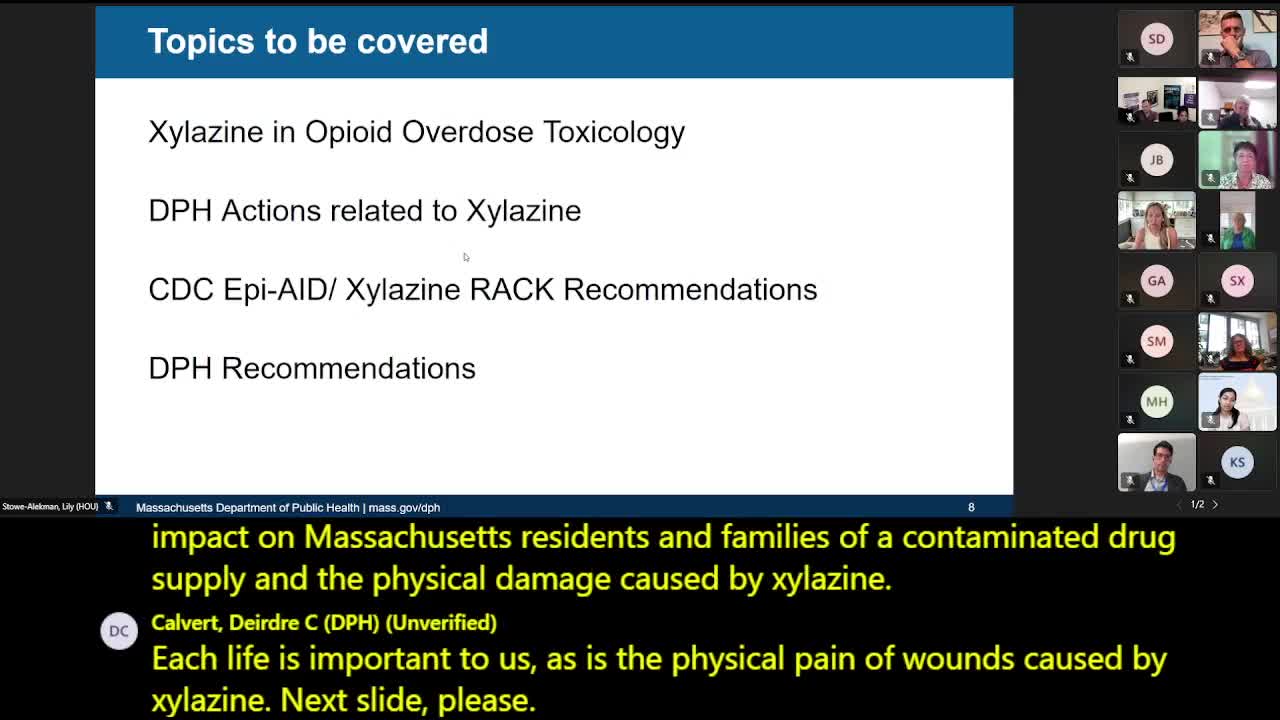
Deirdre Calvert, director of the Bureau of Substance Addiction Services (BSAS) at the Massachusetts Department of Public Health, told the commission that “xylazine was first detected in the Massachusetts drug supply in 2020, and we see it begin to be present in the opioid overdose toxicology data in 2022,” after the medical examiner began routine testing. Calvert summarized BSAS recommendations from a joint CDC Epi Aid and Brandeis investigation: reduce stigma in health systems, expand self‑directed wound‑care supports (including billing and supply coverage), expand drug‑checking, and support low‑barrier care such as mobile vans and clinics.
In cl…
Already have an account? Log in
Subscribe to keep reading
Unlock the rest of this article — and every article on Citizen Portal.
- Unlimited articles
- AI-powered breakdowns of topics, speakers, decisions, and budgets
- Instant alerts when your location has a new meeting
- Follow topics and more locations
- 1,000 AI Insights / month, plus AI Chat