Get Full Government Meeting Transcripts, Videos, & Alerts Forever!
Get email alerts on the Igaming topic
No spam. Unsubscribe anytime.
Industry, unions and public-health advocates clash as committee considers legal online casino bill
Summary
The Joint Committee on Consumer Protection and Professional Licensure heard competing testimony on bills to authorize regulated online casino gaming (iGaming) in Massachusetts, with industry witnesses touting consumer protections and revenue and unions and public‑health experts warning of job losses and addiction harms.
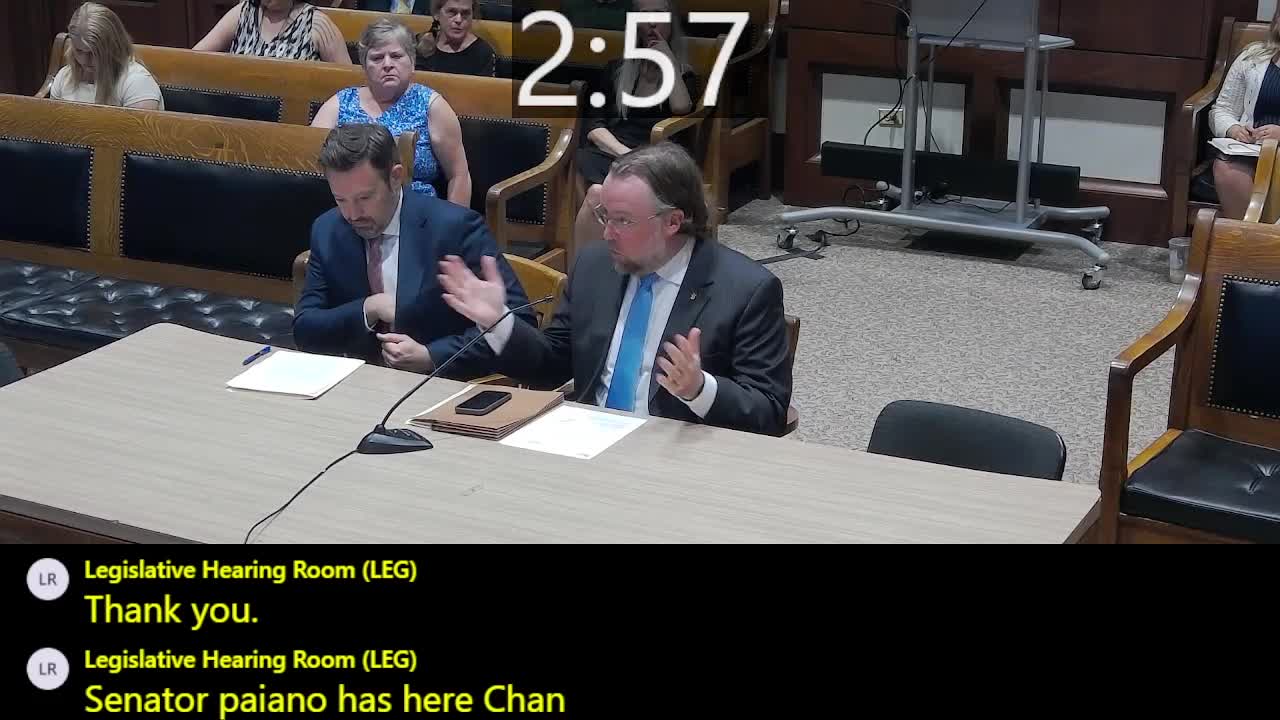
BOSTON — The Joint Committee on Consumer Protection and Professional Licensure heard more than two hours of testimony on bills that would authorize regulated online casino gaming in Massachusetts, with industry representatives arguing legalization would move wagering from an unregulated market into a taxed, supervised system and opponents warning of job losses and increased problem gambling.
Industry witnesses including David Prestwood, government affairs manager for DraftKings, and James Hartman, state government relations director at FanDuel, told the committee that iGaming already exists in the Commonwealth but is largely unregulated and that a legal market would provide age and identity verification, responsible‑gaming tools and tax revenue. “Regulating iGaming provides Massachusetts consumers with a safe and transparent alternative to that illegal market,” Prestwood said.
The economic case from industry focused on new tax revenue and job growth. DraftKings said Massachusetts could “conservatively generate $230 million to $275 million annually” under the tax structure proposed in the bills; John Pappas of the iDevelopment and Economic Association (IDEA) cited Rightlander advertising‑traffic estimates that roughly $2.5 billion in wagers occurred in Massachusetts last year on offshore sites and estimated roughly $260 million annually in new tax revenue from a regulated market. Pappas and other industry witnesses pressed the committee to allow more competitive license structures than in the draft bills, arguing the state could support many operators.
Union and public‑health witnesses countered that a regulated iGaming market can cannibalize existing brick‑and‑mortar gaming jobs and increase harms from problem gambling. Jake McNeil, general agent for Hospitality Workers Union Local 26, said his union’s analysis — drawing on an Innovation Group study — projects the state could lose about 862 gaming jobs and 2,786 supporting jobs if iGaming is legalized as currently drafted. Mark Stewart of the National Association Against iGaming and Brianne Dorosh, a national problem‑gambling expert, highlighted steep increases in helpline calls and studies from other states showing higher rates of problem gambling and increased social costs after iGaming launches.
Several witnesses emphasized consumer protections. Hartman said legal platforms include identity verification, account limits and interventions; FanDuel described a “real‑time check‑in” tool and partnerships with behavioral health providers. Opponents said verification systems and self‑exclusion lists have proven imperfect. Stewart cited Pennsylvania enforcement actions where operators were found to have accounts created with other people’s information and instances of excluded individuals returning to play.
Questions from committee members sought sources and modeling details; Representative LeBoeuf asked the industry to provide the underlying revenue and market‑capacity data cited in testimony.
The hearing included no committee votes on the measures; the meeting concluded with a procedural motion to close the hearing that passed by voice vote.