Get Full Government Meeting Transcripts, Videos, & Alerts Forever!
Get email alerts on the Primary Care Access topic
No spam. Unsubscribe anytime.
Advocates and clinicians press committee to boost primary care spending, payments and training in H.2537
Summary
Healthcare advocates, medical societies and community health center leaders urged the Joint Committee on Public Health to advance H.2537, a bill that would raise primary care spending, create payment reforms and fund residency training to expand access to primary care.
Advocates, clinicians and residency directors urged the committee to favorably report H.2537, which they say would increase access to primary care by boosting investment, changing payment models and expanding training slots.
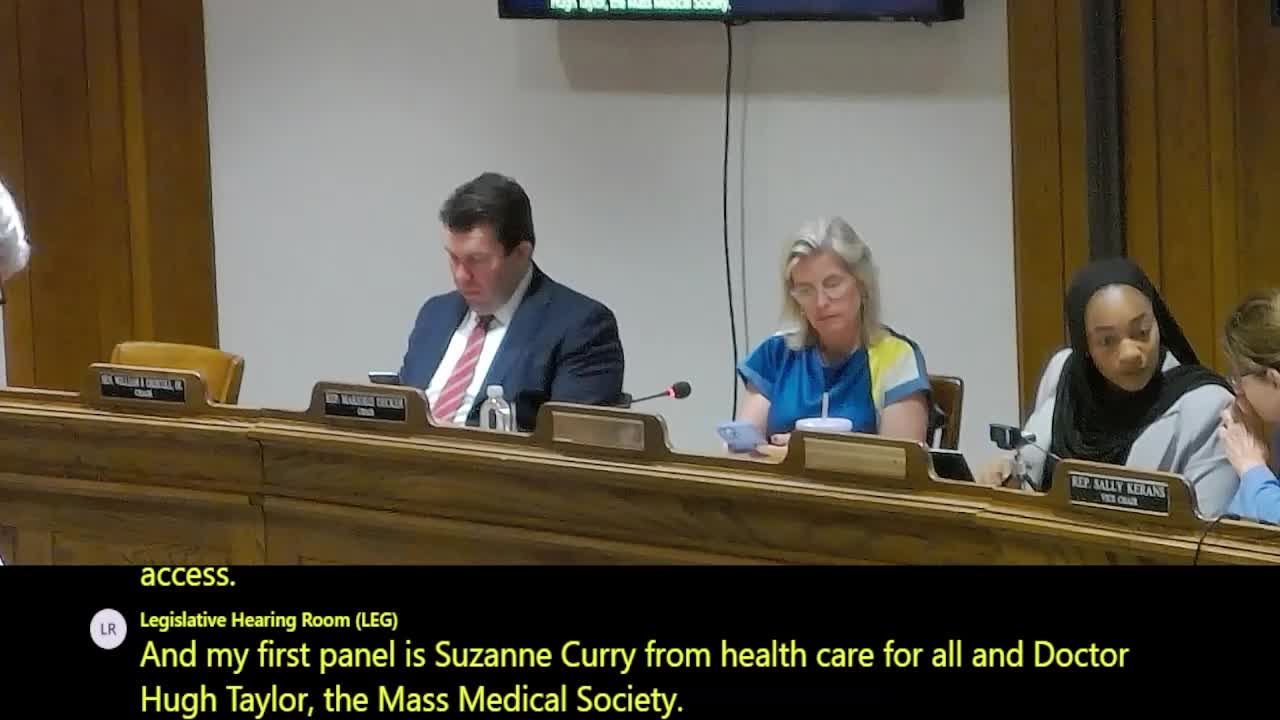
Suzanne Curry, director of policy initiatives at Health Care For All, summarized four main provisions: set a primary care spending target of at least 12% within four years; make the primary care task force a permanent board to advise regulations and establish a capitated payment model; establish a commercial payment floor so federally qualified health centers (FQHCs) are not paid less by commercial insurers than by MassHealth; and create a Medicaid‑funded graduate medical education (GME) program targeted to primary care and shortage areas.
Physician groups, including the Massachusetts Medical Society and the American College of Physicians (Massachusetts chapter), supported the bill. Dr. Hugh Taylor, a past president of the Massachusetts Medical Society, said stronger primary care reduces mortality and overall health costs by focusing on prevention and continuity of care. Vinay Kadiala of the American College of Physicians framed the bill as a way to reduce unnecessary hospitalizations that result when patients delay preventive and chronic disease care.
Residency leaders described workforce effects. Nicholas Weeda, program director of the Greater Lawrence Family Medicine Residency, said community‑based residency training increases retention: “Last year, nine of our 10 graduates entered primary care practice at FQHCs,” he said, and noted Massachusetts is one of only seven states without a Medicaid GME program.
Witnesses cited data showing primary care’s share of commercial health spending is low (testimony cited 6.7%) and that Boston had long new‑appointment waits in a 2022 health policy commission review.
The committee asked questions about practical implementation and about the potential effects on specialists. No formal vote was taken; supporters requested a favorable report and provided technical and written testimony for the record.
Details to clarify in drafting include how the spending target is enforced; reporting requirements for payers and health systems; the proposed payment floor level; and the structure of the Medicaid GME reimbursement (witnesses proposed up to 50% of residency costs leveraging federal match).