Get Full Government Meeting Transcripts, Videos, & Alerts Forever!
Get email alerts on the Federal Policy topic
No spam. Unsubscribe anytime.
Task force briefed on federal reconciliation progress: 45Q/45V changes could tighten timelines for hydrogen projects
Summary
Federal reconciliation drafts under consideration at the end of June would, in their current form, tighten eligible start dates for clean hydrogen credits and change key 45Q provisions, the task force was told.
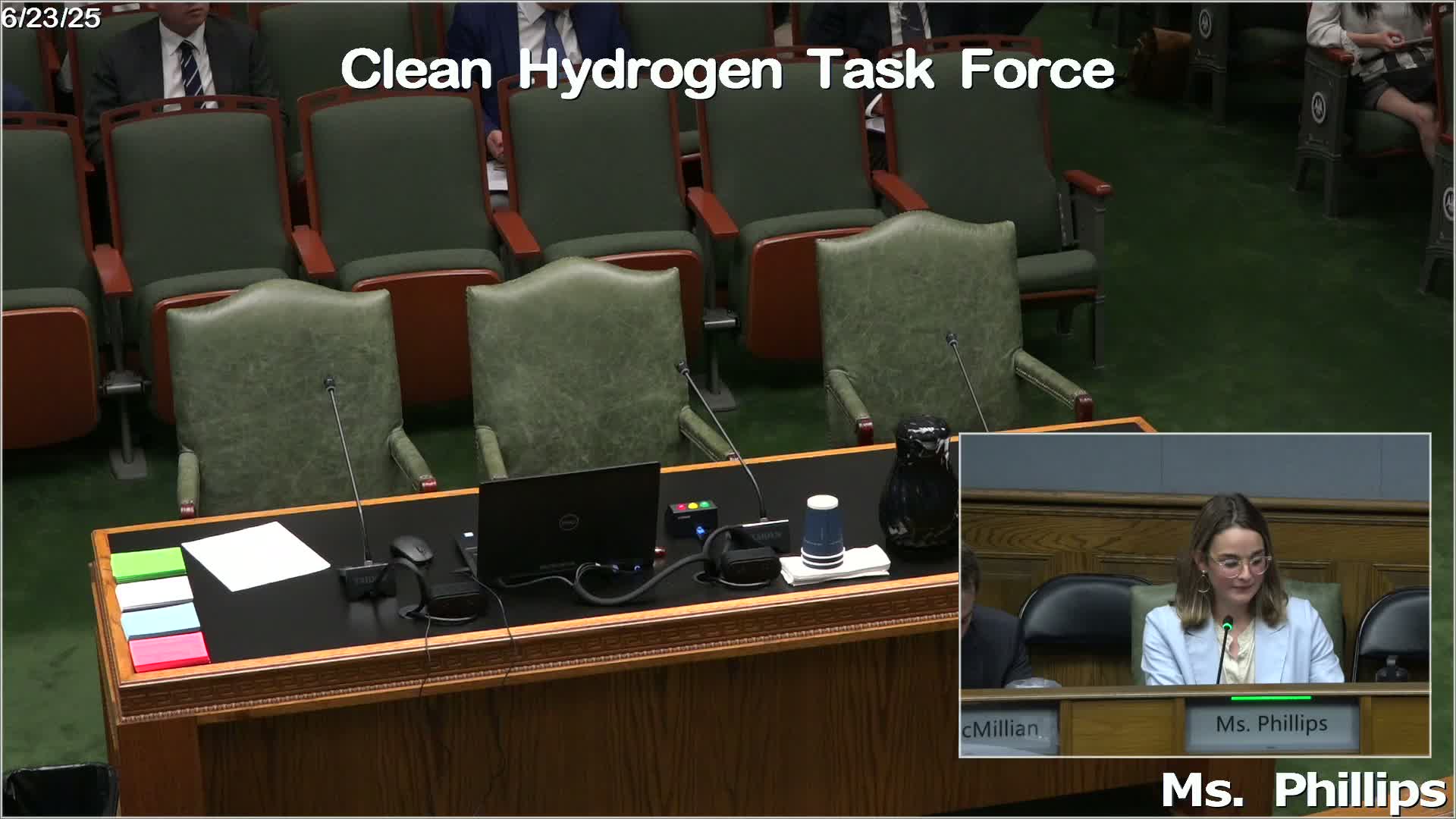
Baton Rouge — A staff briefing at the June 23 meeting updated the Louisiana Clean Hydrogen Task Force on the status of federal tax incentives in the ongoing budget reconciliation package often referred to at the meeting as the “big beautiful bill.” Lindsey Cooper Phillips of the Clean Air Task Force summarized differences between House and Senate drafts and the implications for hydrogen and carbon capture projects.
“President Trump has requested the bill to be on his desk by July 4,” Phillips told the task force, and congressional leaders were moving the legislation quickly. She said the House Ways and Means Committee’s markup left the dollar amounts for Section 45Q intact but removed transferability and added “foreign entity of concern” provisions. The Senate Finance Committee draft restored transferability, kept the foreign entity language, raised the enhanced oil recovery (EOR) rate to $85 per ton for 45Q and shifted the inflation indexing base year from 2025 to 2026.
On 45V — the production tax credit for clean hydrogen — Phillips said both House and Senate drafts shortened the eligible construction‑commence window: the current versions would require projects to commence construction by Dec. 31, 2025, to qualify under the draft language. She noted that such a deadline would exclude many announced projects and that Senator Cassidy and others are seeking an extension to 2029 to provide a longer runway for projects.
Why it matters: Several presenters emphasized that project economics for hydrogen production and for CCS‑enabled processes are highly sensitive to federal tax credits. Changes to transferability, eligible start dates, or credit amounts could alter whether planned projects remain financially viable.
Discussion vs. direction vs. decision
- Discussion: Task force members and presenters discussed the practical consequences of different draft provisions, including who can access credits, how long credits apply (45Q originally provided a 12‑year period), and how a shortened commence‑construction window could affect announced projects.
- Direction/assignment: Task force members encouraged continued outreach to federal delegations to request extensions or clarifications on timelines and to preserve program transferability where beneficial to project finance.
- Formal action: No formal action or vote was taken by the task force on federal legislation during this meeting.
Ending
Phillips advised members to monitor the Senate’s expected floor action in the week beginning June 30 and noted that any late changes could further affect project eligibility. Task force members reiterated a preference for predictable, durable incentives to catalyze private investment in hydrogen and CCS.