Get Full Government Meeting Transcripts, Videos, & Alerts Forever!
Get email alerts on the Education Funding Vouchers topic
No spam. Unsubscribe anytime.
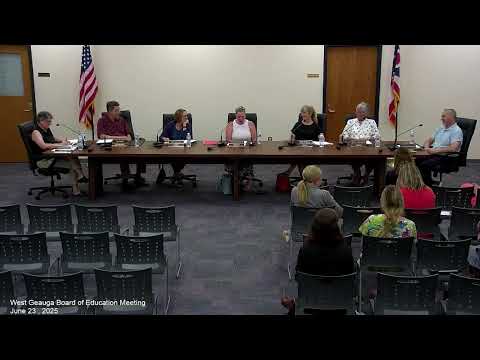
West Geauga Local board votes to join Vouchers Hurt Ohio coalition
Summary
The West Geauga Local School District Board of Education voted to join the Vouchers Hurt Ohio coalition after a prolonged discussion; the roll call recorded yes votes from Miss Leavenworth, Missus Sherwood and Dr. Beers and no votes from Missus Glapel and Missus Coleman Walsh.
The West Geauga Local School District Board of Education voted to join the Vouchers Hurt Ohio coalition after a prolonged discussion during its public meeting. During the roll call on Resolution 2-63 the board recorded yes votes from Miss Leavenworth, Missus Sherwood and Dr. Beers and no votes from Missus Glapel and Missus Coleman Walsh; the motion passed.
Board members debated whether expanded state vouchers — commonly referred to as EdChoice — have grown beyond their original purpose. Several members said vouchers were designed to help students in failing districts but have since expanded to allow broader eligibility. One board member summarized that expansion by saying the program “doesn't matter if the school is failing. It doesn't matter about income. Everybody qualifies for a voucher.”
Public commenter Missus Kerwin urged the board not to join the anti-voucher coalition and argued in favor of school-choice options, saying, “So vouchers do not hurt Ohio.” Board members who spoke in favor of the resolution cited concerns that state funding is increasingly directed to private and parochial schools and said oversight and limits should be considered.
Speakers also discussed local conditions that affect how vouchers play out in West Geauga. Several members noted the district is surrounded by multiple private and parochial options, which shapes local choice dynamics differently than in parts of rural Ohio that lack alternatives. Board members clarified that the voucher expansion is separate from homeschooling or district-run online programs and that families who previously paid tuition for private schools may now be eligible for state funds.
Board members cited figures discussed during the meeting: a board member reported that the full voucher amount for secondary students is “between 8 and 9,000,” with a smaller amount for K–8. The board did not adopt any additional policy changes or take further directed action at the meeting beyond approving membership in the coalition.
The resolution does not itself launch litigation; board members referenced that the coalition is pursuing reforms and in some cases legal challenges, but no specific lawsuit or next legal step was adopted by the West Geauga board at this meeting. The board did not specify implementation steps or budget implications tied directly to the membership vote.
The board’s decision is likely to shape future public discussion locally about state school funding and choice programs. Members said they expected ongoing debate at future meetings as statewide policy and funding proposals continue to evolve.