Get Full Government Meeting Transcripts, Videos, & Alerts Forever!
Get email alerts on the Solar And Resilience topic
No spam. Unsubscribe anytime.
Residents urge Bowling Green utility to drop rooftop-solar surcharge and expand local renewables
Summary
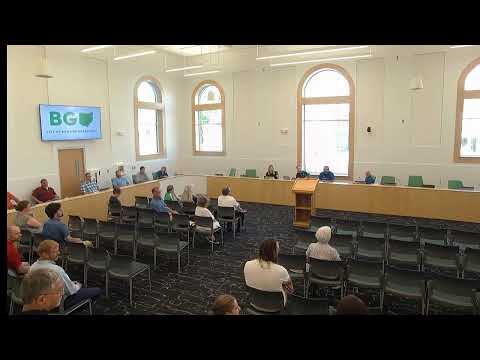
Public commenters at the Bowling Green Board of Public Utilities meeting urged the board to remove the city's electric facilities surcharge for rooftop solar (Rider E), expand community-solar options and use distributed renewables to boost local resiliency during extreme weather.
A group of Bowling Green residents pressed the Board of Public Utilities on the city's surcharge for rooftop solar, arguing the fee discourages installations and undermines local resilience during storms.
Joe DeMar, a Bowling Green resident at 517 South Main Street, told the board the current policy places a monthly surcharge of $4 per installed kilowatt on rooftop solar systems and asked the board to "end the electric facilities charge added to the bills of solar panel owners in Bowling Green." He said the city pays 7.5' per kilowatt-hour for solar owners' excess generation, sells that power at full retail (13.13'/kWh) and — based on his examination of three local systems — "the city makes more profit selling the excess power from these systems than it loses in delivery revenue." DeMar said the surcharge has discouraged new rooftop installations: "there are now only nine solar installations in the entire city of 30,000 people."
Rose Drain, speaking on behalf of BG Save Our Neighborhoods, asked the board to give the city's climate-action team's research "thoughtful and serious consideration" and described municipal examples from other Ohio communities that support rooftop and community solar programs. Jacqueline (Jackie) Nathan and Jim Evans also described models from Dayton, Westerville and Yellow Springs, and urged the board to study community solar, virtual power plants and sustainable energy utilities as alternatives to the city's current approach.
Speakers cited the Bowling Green Climate Action and Resiliency Improvement Plan as the city's policy context for expanding renewables and made resiliency the primary rationale: distributed solar plus batteries can provide temporary power for charging phones, running medical devices, preserving food and operating heating or cooling during outages. DeMar and other commenters also argued customers with rooftop solar reduce peak demand and transmission expenses for the utility.
Board members and staff acknowledged the comments and clarified terminology during the exchange: the surcharge is catalogued in the utility rate schedule as Rider E (the "electric facilities charge" for rooftop-solar customers). No formal action to change the rate was taken during the meeting; the item remained public comment and will require a policy or ordinance change and board action before the charge can be removed.
The board did not vote on any motion related to the surcharge at this meeting. Commenters asked the Board of Public Utilities and city council to revisit the surcharge in light of falling solar costs, inflation-reduction-act funding now available to municipalities, and the city's own climate plan.