Get Full Government Meeting Transcripts, Videos, & Alerts Forever!
Get email alerts on the Zoning Variance Communal Living topic
No spam. Unsubscribe anytime.
Jefferson County board denies variance to allow communal living homes in R‑1 subdivision
Summary
The Board of Zoning Adjustment denied a request by Martin Management Consulting LLC to reclassify single‑family homes on Eastern Valley Road as communal living residences for up to six unrelated occupants, after staff recommended denial and neighbors opposed the change.
The Jefferson County Board of Zoning Adjustment on June 23 denied a request by Martin Management Consulting LLC to allow communal living homes for up to six unrelated occupants in an R‑1 single‑family subdivision on Eastern Valley Road.
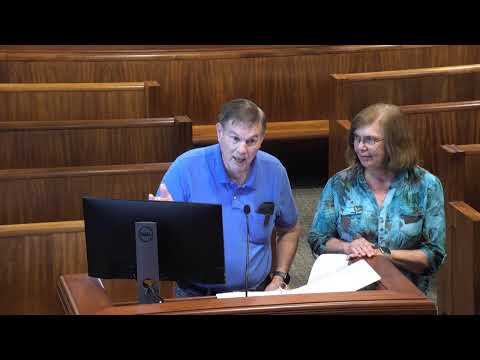
The request, filed as case A‑25‑0015, sought a use variance to permit a communal, peer‑supported residence model — the applicant said similar to an Oxford House — in a neighborhood rezoned to R‑1 single family in 2022. "This is not a halfway house. These are homes for women who are communally as a family unit," said Abby Raber, representative for Martin Management. Raber told the board the applicant was seeking a reasonable accommodation under the Fair Housing Act so that up to six unrelated residents with disabilities could live together.
Staff recommended denial, saying the proposed communal facility would be "out of character with the surrounding area." The staff presentation noted the parcel is about 0.375 acres and that the subdivision was approved by the planning and zoning commission in June 2022; site infrastructure plans were approved January 31, 2023, and the final plat recorded in early 2024.
A neighbor who spoke in opposition, Lindsay Eastwood, said her family has owned property nearby for 106 years and that granting the variance would not be in the community's best interest. "We just don't believe that this is in the best interest of the community," Eastwood said, citing concerns about neighborhood character and long‑term planning. She said the family supports other community‑oriented recovery programs but opposed this specific variance.
Applicant representatives argued addiction and recovery can be disabilities protected under federal law and that local zoning's unrelated‑occupant limits can conflict with the Fair Housing Act. Martin Evans, also representing the applicant, said the ordinance treats biologically related large households differently than unrelated households and that the requested accommodation would not increase density compared with households of extended families.
After public comment and board questions, a board member moved to deny case A‑25‑0015. The motion carried and the hearing record notes the applicant may appeal the decision to circuit court within 15 days.
The board did not record a roll‑call vote in the hearing record and did not identify the members who moved and seconded the motion on the transcript. The staff packet and formal written decision, which the board said would follow within 10 days, may contain the official vote tally and additional findings.
Details recorded at the hearing show the applicant has built six single‑family dwellings on the site and is seeking to allow those homes to be leased to unrelated individuals living communally; the applicant asked to expand the county's allowance from three unrelated occupants to six when at least one occupant qualifies as handicapped under the laws cited by the applicant.
The public hearing portion of the case is closed; the board treated the item as a land‑use variance request rather than adopting a policy. The transcript notes staff relied on Jefferson County zoning regulations for the definition of "family" and the county's minimum yard and district standards when making its recommendation.