
City adopts 2025 Historic Preservation Plan to guide preservation and grant work
Get AI-powered insights, summaries, and transcripts
Subscribe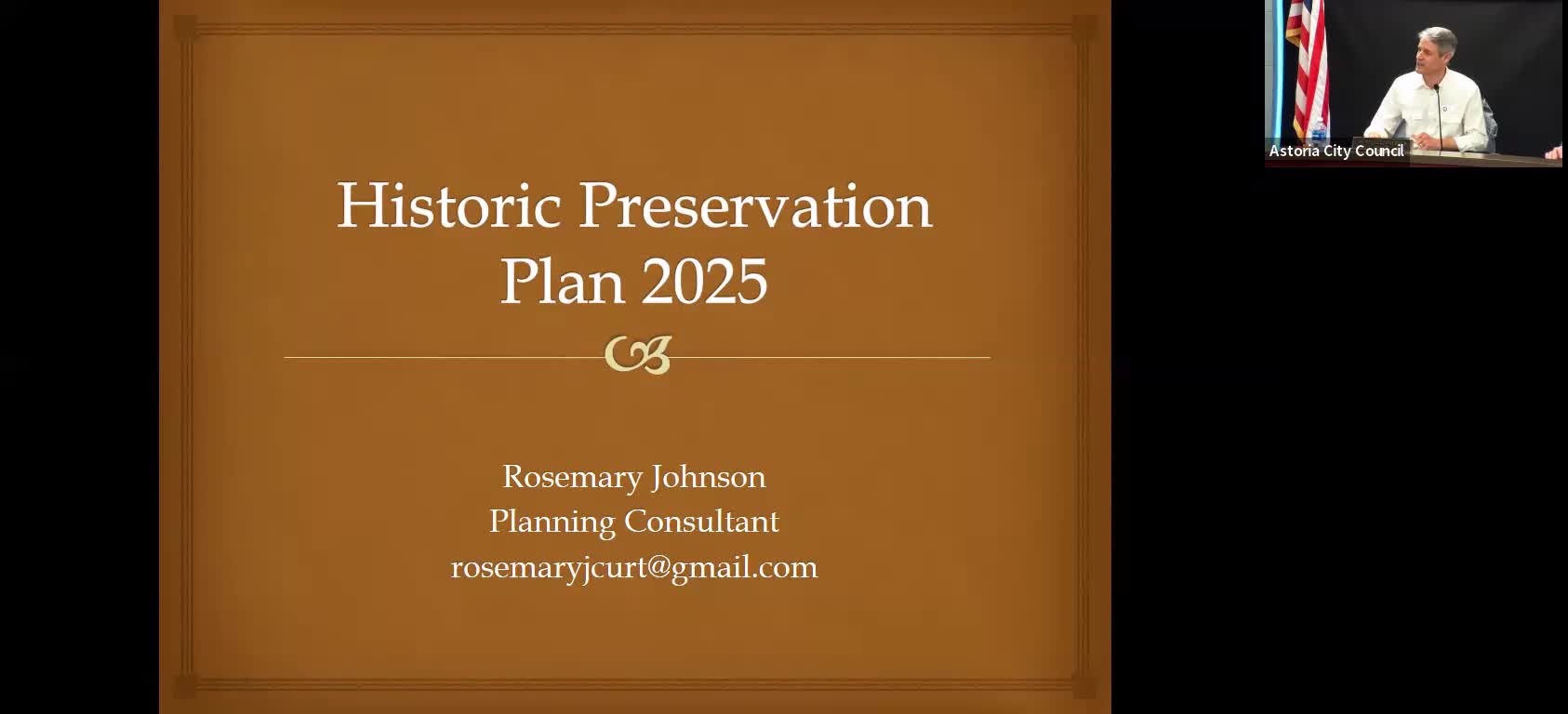
Summary
The council adopted an updated non‑regulatory Historic Preservation Plan to guide preservation efforts, support grant applications and inform future code updates. The plan inventories assets, recommends action items and emphasizes partnership and funding strategies for a 10‑year horizon.
The Astoria City Council adopted the city’s 2025 Historic Preservation Plan on June 2, approving a non‑regulatory guidance document intended to shape preservation activities, grant applications and public outreach for the next decade.
Rosemary Johnson, the city’s contract planning consultant and former historic preservation officer, presented the plan and noted that Astoria’s heritage is a major driver of tourism and economic activity. The plan updates background inventories, summarizes community surveys and recommends action items under four themes: updates to the development code and comprehensive plan, additional surveys and inventories, economic incentives, and public‑education programs.
Johnson said the plan is advisory and does not itself change development code; code amendments would require separate public hearings and council action. She and planning staff emphasized the plan is intended to clarify procedures, make preservation‑related processes more predictable, and help property owners access funding and technical assistance, not to automatically increase regulation.
Council members raised procedural questions about the scope of design review in inventoried areas and the relationship between the plan and later code changes. Planning staff said designated responsibilities already encoded in the development code remain the operative law; the preservation plan offers priorities and suggested actions to guide future code updates and grant work.
Council voted to adopt the plan and to close the grant project; staff noted the state Historic Preservation Office grant supporting the plan needed to be closed out by the end of the month. The adoption includes recommended priorities and a suggestion that the city continue targeted inventories (for example, Aldabrook and South Slope) and pursue funding sources to support preservation projects and disaster resilience work.
Johnson described the plan as a 10‑year vision to help Astoria “retain the very thing that brings the tourists to our city.” The plan calls for updated inventories, clearer code language, stronger public outreach and identification of funding partners to support the maintenance of historic properties.