Get Full Government Meeting Transcripts, Videos, & Alerts Forever!
Get email alerts on the Public Engagement Transparency topic
No spam. Unsubscribe anytime.
Speakers fault outreach process and demand clearer zoning details for downtown and neighborhood centers
Summary
Several callers told the select committee that parts of the comprehensive plan lack transparency: downtown zoning changes are not yet disclosed, public engagement favors those with time and resources, and neighborhood-center designations should be better justified and clearer to affected residents.
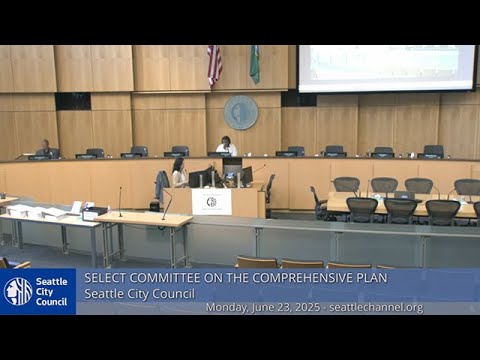
Commenters at the June 23 public hearing raised concerns about the public-engagement process and the lack of specific zoning details in parts of the proposed comprehensive plan.
Megan Cruz, a downtown resident, said downtown is “Seattle's largest residential neighborhood with over a 100,000 people,” and urged the council to provide zoning details that are currently omitted from the draft comp plan, noting that “residents deserve a voice in neighborhood development.” She asked the committee to restore transparency and a meaningful public-engagement process for downtown and future zoning phases.
Vanessa Bowen criticized the public-comment format itself, calling it “deeply undemocratic” because it favors people with time and quiet space to participate. Several other callers echoed concerns about accessibility and asked that the council extend outreach to people most affected by housing decisions — renters, low-income households and those working long hours.
Other callers asked staff to clarify frequent-transit-route designations and to provide better justification for neighborhood-center boundaries. Representatives of the Seattle Planning Commission and the Seattle Metropolitan Chamber of Commerce urged the committee to keep proposed neighborhood centers that would allow more housing and services near existing hubs; other residents asked the council to shrink or remove proposed centers where infrastructure or transit access is limited.
What the hearing did not decide: The committee did not change rules or timelines during the morning session. Staff and council members repeatedly asked attendees to also submit written comments for the record.
Ending note: Callers asked for more meaningful, transparent outreach and for the committee to publish clearer zoning maps and neighborhood-center criteria before adopting major upzones.