Get Full Government Meeting Transcripts, Videos, & Alerts Forever!
Get email alerts on the Operating Budget topic
No spam. Unsubscribe anytime.
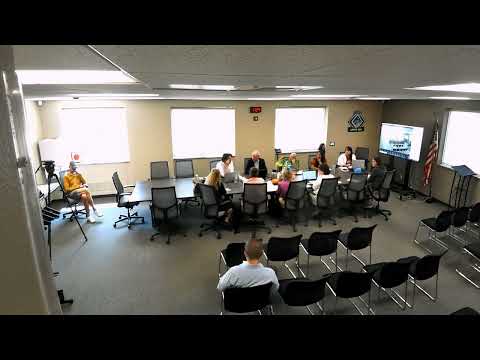
GBHA Properties 1 Inc. approves FY2026 operating budget; discusses using surplus to support homeownership
Summary
At its June 19 meeting, GBHA Properties 1 Incorporated approved an operating budget for the fiscal year beginning July 1, 2025, noting interest income will cover audit and insurance and discussing possible use of surplus funds to support affordable homeownership via a community land trust or direct subsidy.
GBHA Properties 1 Incorporated on June 19 approved an operating budget for the fiscal year beginning July 1, 2025, and spent part of the meeting discussing whether surplus interest earnings could be used to support affordable homeownership.
The budget approved at the meeting relies on interest income from previously held scattered-site cash. "We have interest income because we do have cash that we have had from when we were actively, running scattered sites. So that interest is what we are using to pay for our audit fees and insurance," Board Member 3 said during the discussion.
Board members said the operating entity has only those two explicit expenses on the single account and that the current budget shows a surplus. At least one board member suggested the entity could either convert scattered-site units into public housing or use the surplus to subsidize a single home purchase for an eligible household. "I think we can buy 1 house versus help a whole community. Yeah," Board Member 2 said, and added the authority could "sponsor the the cost of that gap for 1 house." The board noted using a community land trust could mean the trust holds a portion of a property's cost while the homeowner borrows a smaller amount; one board member described the example: "it's a $100,000 for the house. You're not borrowing a $100,000. Right. You may be only borrowing 20 or 25."
Questions were raised about legal and programmatic limits. When a board member asked whether funds could be closed or whether the entity could participate in a community land trust, a different board member replied, "That's a legal issue that is," and one board member agreed to review that question: "I I'll take a look at it." The record shows no formal action to allocate surplus funds to a community land trust or homeownership subsidy; the board instead approved the operating budget and discussed possible next steps.
Representatives and participants referenced related programs and partners during the discussion. A commenter (Speaker 7) outlined how the Integrated Community Solutions (ICS) family self-sufficiency and homeownership pathway might interact with a community land trust, saying, "If she, commits to the family self sufficiency program through integrated community solutions after being on that program for a year, she would be eligible for homeownership." NeighborWorks was also mentioned as an active program partner in similar efforts.
Procedural business at the meeting also included approval of the agenda and approval of minutes from the February 2025 meeting; each motion carried by voice vote. The board indicated the next meeting will include informational items and training and will include the regular financial report.
The operating budget approved covers the fiscal year beginning July 1, 2025; the board did not specify any immediate reallocation of surplus funds and identified legal review as a next step before pursuing community land trust participation or direct homeownership subsidies.