Get Full Government Meeting Transcripts, Videos, & Alerts Forever!
Get email alerts on the Oversight And Transparency topic
No spam. Unsubscribe anytime.
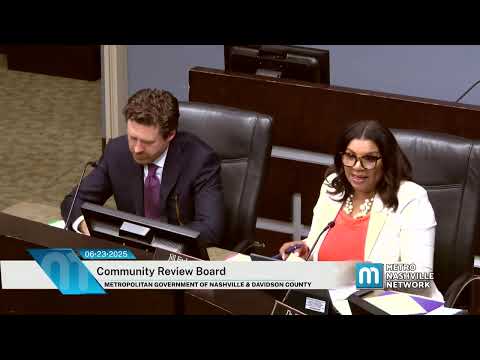
Community Review Board says police department declined to formalize Rule 16 discovery sharing; DA may provide materials case‑by‑case
Summary
The board reported a meeting with the police department and the district attorney about a proposed agreement to share Rule 16 materials; the department said it is not legally required to share discovery and would not sign a formal agreement, though the district attorney may share materials on a case-by-case basis.
The Community Review Board reported that efforts to secure a formal agreement with the police department to share Rule 16 discovery materials stalled after a June meeting with police leadership and the district attorney’s office.
Board members and staff said they brought a draft Rule 16 access agreement — described at the meeting as a Rule 16/DAMOU arrangement — to discussions with the police department, but the department declined to sign a formalized agreement. The board’s report said the police department’s position is that “the law does not require them to share Rule 16 materials with the community review board.” The board added that District Attorney Lehi Funk indicated he may, on a case‑by‑case basis, supply materials when requested.
The board discussed next steps at the meeting. Staff and board members said the group exchanged recollections about earlier MOU negotiations: board negotiators believed the police had been willing to join the Rule 16 arrangement during prior rounds of talks, while police representatives remembered the conversations differently. The board said those differences in recollection were part of the reason a formal agreement was not reached.
Board counsel and staff recommended a clearly defined, written procedure for requesting discovery from the district attorney so that future requests can be handled in a predictable way. Attorney remarks at the meeting urged the board to identify specific cases and to submit written requests that explicitly describe the materials being sought; the DA’s office indicated it could respond on a case-by-case basis.
Board members said they will continue to pursue access to discovery materials and seek a formalized process for requests. The board did not take formal action to force disclosure at the meeting; the department’s refusal and the DA’s conditional willingness were described as the present status.