Get Full Government Meeting Transcripts, Videos, & Alerts Forever!
Get email alerts on the Tax Sales topic
No spam. Unsubscribe anytime.
Jackson County committee debates temporary pause on tax lien sales after 2023 assessment jumps
Summary
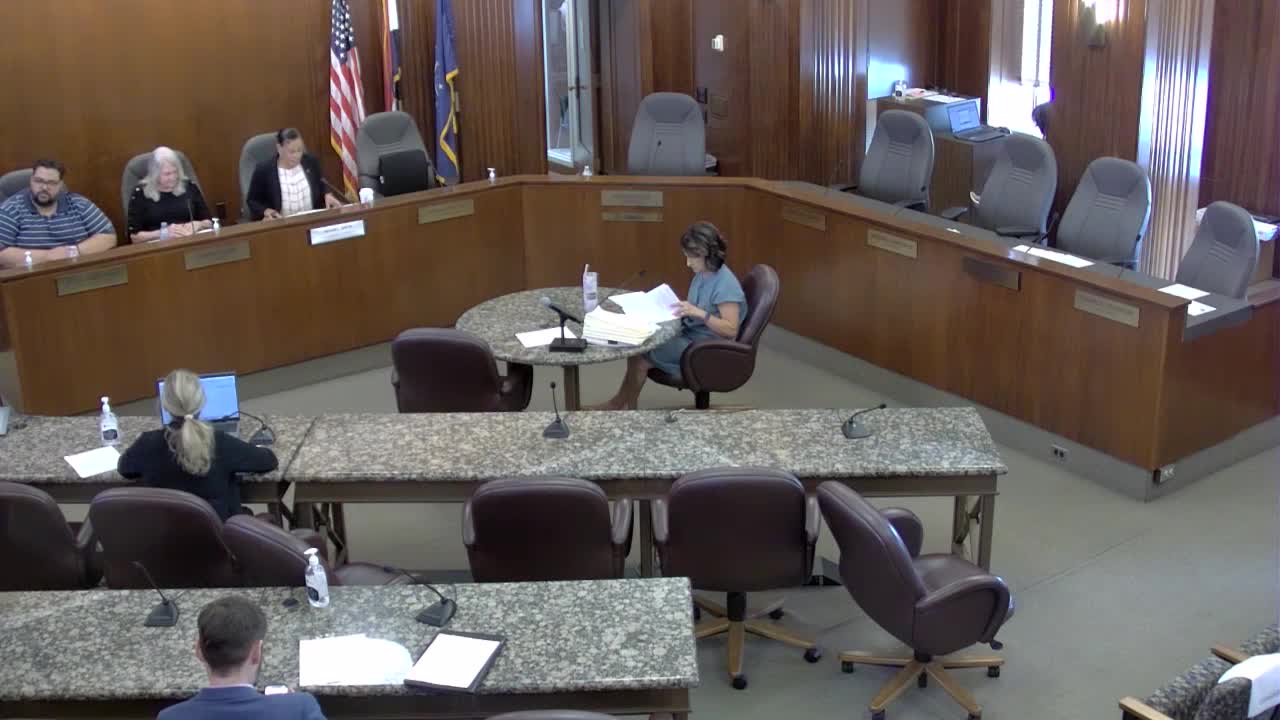
Megan Smith, chair of the Jackson County Land Use Committee, convened the committee to consider Resolution 21,930, “urging the county executive to implement a temporary moratorium on foreclosure proceedings and tax lien sales against residential property owners affected by the 2023 Jackson County property assessment cycle.”
Megan Smith, chair of the Jackson County Land Use Committee, convened the committee to consider Resolution 21,930, “urging the county executive to implement a temporary moratorium on foreclosure proceedings and tax lien sales against residential property owners affected by the 2023 Jackson County property assessment cycle.”
The committee met only to gather information and consider legal, operational and fiscal implications before any legislative action. The discussion focused on which parcels could be held out of the 2025 tax sale, what authority the county has under state law, and what administrative and budget effects a moratorium would produce.
Whitney Miller, attorney with the County Counselor’s Office, told the committee that “state statute 141 is the statute that governs the collection of delinquent taxes, among other things.” She said that while the statute requires steps in the collection and sale process, the county has routinely removed parcels from a sale when litigation or other issues make sale impractical. “The county executive has already authorized the removal of, I believe, over 900 properties, residential properties,” Miller said, describing parcels pulled from the 2025 sale because they were affected by a pending State Tax Commission order tied to the 2023 assessment cycle.
Committee members and staff discussed the scope of the assessment increases and outstanding appeals. The assessment department data discussed in the meeting reported roughly 203,705 parcels that experienced an increase of 15% or greater in the 2023 cycle; 54,623 of those parcels filed appeals with the Board of Equalization (BOE). Miller and staff cited roughly 7,763 appeals that remain open with the BOE and about 1,960 open with the State Tax Commission (STC). Committee members noted those counts may overlap and asked staff to reconcile duplicates.
Staff explained the tax-collection timeline that produces a tax sale: after a parcel is three years delinquent (counting to Dec. 31 of the third year), the county sends pre-petition notices in February and March, files petition in May of that third year, requests judgment in the fall, and then sells the parcel the following year (the fourth year of delinquency). Staff highlighted that a taxpayer may ask for an installment contract any time before the sale; if owner-occupied the down payment is 10% and for non-owner-occupied parcels it is 30%, with the remaining balance paid over 11 months.
Committee members asked about which parcels had already been pulled from sale. Staff said 1,252 residential parcels were in the sale at the time the list was reviewed and that 914 of them had a 2022–2023 increase greater than 15% and had been removed from the 2025 sale because they were affected by the STC order. Staff emphasized that removal from the sale does not eliminate the county’s judgment for delinquent taxes; if assessments are lowered after STC or BOE action, collection staff would recalculate judgment amounts and related fees.
On the fiscal side, a finance staff member noted the county retains roughly 7% of tax-sale proceeds and that proceeds from many tax-sale parcels are small relative to the county budget. Staff said the county does not budget estimates from tax-sale proceeds because the amounts are minimal. They also said administrative costs would shift: collections may need more staff time, mailing supplies and other costs next year if more parcels are carried forward into future sales. Staff warned that when judgment amounts grow because parcels are carried longer, the opening bid required at sale rises and fewer bidders may submit offers, increasing the number of parcels that ultimately go to the land bank.
Committee members and staff discussed administrative readiness. Assessment and collections use separate software (assessment software and CAMA for values; a collections system for tax-sale status). Staff said they can match parcel lists across systems but that compiling reconciled reports will take staff time. The County Counselor’s Office described the normal collaborative process: collections brings disputed or problematic files to the counselor’s office, which authorizes removal from sale on a case-by-case basis.
At the meeting’s close, Chair Megan Smith summarized three deliverables the committee expects before its next meeting: a legal memo outlining the county’s authority and limits for a moratorium; a fiscal-impact memo explaining revenue, cost and budget implications; and an administrative-readiness memo describing data, timing and staffing needed to track and act on affected parcels. Smith said the committee would revisit the topic at its July 7 meeting.
No formal motion or committee vote on Resolution 21,930 took place at this meeting; the session was informational and aimed at preparing staff deliverables and a follow-up discussion.