Get Full Government Meeting Transcripts, Videos, & Alerts Forever!
Get email alerts on the Emergency Services Report topic
No spam. Unsubscribe anytime.
Mayville EMS, fire departments report higher call volumes, equipment repairs and steady staffing
Summary
City emergency services reported year‑to‑date increases in EMS call volume, billing changes that raised revenue, robust training outcomes and several fire apparatus repairs and upcoming tests.
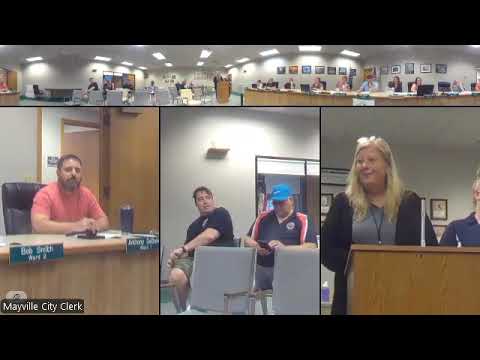
Mayville’s emergency medical services and fire departments updated committees June 23 on operations, staffing, training and equipment maintenance.
EMS staff told the public safety committee the service has handled about 81 more calls than at the same point last year and is “ahead” of prior five‑year averages. Staff said a transition from itemized billing to a flat‑rate billing model has meaningfully increased revenue, and that the department made offers to one currently licensed applicant and to another applicant pending licensure. Training continues: the current advanced EMT class had an almost 98 percent first‑time pass rate, and a basic EMT class and additional triage and mass‑casualty training are scheduled for summer months.
The fire department reported three pumpers failed recent pump tests because of leaking or faulty valves; crews plan valve repairs and retesting. The department scheduled hose and ground‑ladder testing July 25 and outlined a staged repair program to reduce component cost by rebuilding lift cylinders rather than full replacements. Several apparatus repairs are pending or budget‑dependent: a cab crew‑area air‑conditioning repair estimated at about $4,500, replacement of belting and brake components on older pumpers, and transmission service on the newest pumper later this summer. The department also reported rust developing on under‑frame fasteners and said the command unit bought used after a prior fire will need ongoing attention.
Staffing and training highlights: the fire department reported 22 active members with one applicant in process and multiple personnel completing certifications including Firefighter I, hazmat, pump operator and fire officer courses. Departments are planning drive‑training and RIT (rapid intervention team) certification for mutual‑aid responses.
Operational data provided to committees showed about 59 fire calls year to date at the time of the reports, with the service on pace for 130 or more calls for the year; the previous 30 days included 19 dispatches across a range of incident types including downed power lines, vehicle accidents and weather‑related responses.
Committee members asked staff to prioritize maintenance planning within the city budget and to return with cost estimates for any items likely to require capital replacement or carryover into next year’s capital improvement plan.