Get Full Government Meeting Transcripts, Videos, & Alerts Forever!
Get email alerts on the K 12 Assessments topic
No spam. Unsubscribe anytime.
Flossmoor SD 161 reports gains on spring assessments; board debates ambitious proficiency goals
Summary
District administrators told the School Board that math and eighth-grade scores climbed this spring, highlighted work at Parker Junior High and early results from a City Year pilot; board members debated setting a 2033 proficiency target aligned with the state s 90% and discussed lowering chronic absenteeism.
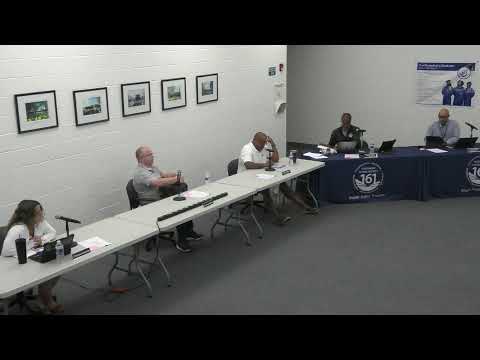
Miss Crawford, staff member, presented Flossmoor School District 161—oard members with a spring assessment update that showed notable gains in math and eighth-grade outcomes this school year and recommended continued emphasis on standards-based instruction and shared classroom practices.
The presentation summarized four assessment sources: the 5 Essentials school-climate survey, NWEA MAP growth data, preliminary Illinois Assessment of Readiness (IAR) results and the Illinois science assessment, plus AIMSweb screening and a new student experience survey. "This report typically includes a review of our 5 Essentials data, as well as our academic data," Miss Crawford said, summarizing the packet the board received.
Why it matters: district leaders said the gains provide early evidence that coordinated instructional changes, collaborative teacher teams and targeted supports produced measurable improvements — especially at Parker Junior High. Board members also debated adopting long-range academic goals tied to state targets, with some urging an even more aggressive absenteeism target to support achievement objectives.
Most important findings
- MAP/math: Administrators reported double-digit fall-to-spring MAP gains at several schools, including a +13 point increase at Flossmoor Hills and a +12 improvement at Heather Hill (school-level figures presented by staff). District presenters tied those gains to focused, standards-based instruction and consistent classroom routines.
- IAR and ELA: Using the state—urrent cut scores, the district reported improvements across grades: fourth-grade IAR math rose about 17 percentage points districtwide; Parker Junior High—ighth-grade IAR math improved by roughly 9.2 points. Eighth-grade ELA increased by about 12.8 points under the same cut scores.
- Science: The district reported a large jump in Parker eighth-grade science proficiency, from 38% to 61% proficient under the current state threshold (a +23 point change noted in the presentation).
- 60% threshold: District leaders highlighted multiple grade-level-subject combinations that reached or exceeded 60% meeting/proficient under current cut scores (examples cited included third-grade ELA at Flossmoor Hills and fourth-grade ELA at Western Avenue).
- City Year pilot at Parker: The board heard an early report on City Year services at Parker Junior High. Staff said City Year core members worked with students on the district focus list and that 35% of those students met or exceeded their MAP math targets and 30% met or exceeded their MAP reading targets. Staff also reported attendance gains of 15%–20% among students served and fewer behavior referrals from that focus group.
- AIMSweb and screening: Janet Keith (presented as Jackie in the packet), staff member, reviewed AIMSweb screening usage; the district uses AIMSweb to progress-monitor K–8 students identified as at risk. Staff reported tiered intervention growth and planned quarterly MTSS (multi-tiered system of supports) reviews.
Context and interpretation
Presenters repeatedly cautioned that the IAR percentages used in the presentation reflected the current state cut scores and that the Illinois State Board of Education plans to publish revised cut scores; staff said the revised boundaries are expected to increase some percentages but that the district used the current official thresholds for planning and school improvement work.
Miss Crawford and other administrators told the board that teams that showed the strongest gains shared several leading indicators: consistent classroom routines, high expectations for student thinking and work, strong teacher collaboration, and focused standards-based instruction. "Where we saw concerted collective effort and focus on the standards, we saw results," Miss Crawford said.
Board reaction and next steps
Board members praised the Parker team and other pockets of growth and pressed staff on whether gains reflected short-term test preparation or deeper instructional change. Administrators said the improvements were driven by sustained changes in planning, small-group instruction, and stronger use of assessment data rather than isolated "test prep"; they also described the district nnual SIP (school improvement planning) retreat where teams studied practices that preceded score gains.
The board spent significant time on a draft set of district education goals produced by district staff and the education committee. The draft sets a multi-year proficiency target modeled on a statewide objective the Illinois State Board of Education has published for 2033 (staff noted the state goal of 90% proficiency in its projections) and a separate attendance goal aimed at reducing chronic absenteeism (district draft language used a 10% chronic absenteeism threshold). Several board members argued for raising the proficiency target to 90% to match the state nd for adopting a more aggressive absenteeism target than 10%, arguing high attendance is required to reach high proficiency.
No final vote on the long-range goals was taken; trustees and staff agreed to bring revised language and a draft scorecard back to the board and to committee work in coming weeks. Administrators proposed a September or October timeline for a draft scorecard linking lead instructional measures (classroom evidence, PLC practices, MTSS activity) to lag indicators (MAP/IAR/science percentages).
Other district initiatives mentioned
- Standards of excellence/Studer work: The board reviewed a set of "standards of excellence" developed with Studer Education to align culture, classroom management and professional practices across schools; staff said the standards will guide induction and be linked to the employee and student experience surveys.
- Student experience survey: The first administration of a district student/parent/staff experience survey identified three common areas for improvement (student safety, student-teacher trust/relationships, and peer relationships); staff said they plan follow-up conversations with students and families to unpack survey responses.
What the board will do next
District leaders will revise the draft academic goals and return a scorecard recommendation to the board. Committee members will begin developing committee-level metrics and timelines. Board members said they expect revised language and a formal vote in a future meeting once committees complete their work and return recommended scorecard metrics.
Ending
Board members and staff framed the presentation as the start of a multi-year effort to turn pockets of strong practice into districtwide, repeatable results. Administrators asked the board to review the draft goals with committees and promised more detailed, standard-by-standard analyses when the state releases revised cut scores.