Get Full Government Meeting Transcripts, Videos, & Alerts Forever!
Get email alerts on the Urban Forestry topic
No spam. Unsubscribe anytime.
Moraine tree board highlights Arbor Day, reviews research on trees and cooling
Summary
At a regular meeting, the Moraine Tree Board reviewed an Arbor Day event organized by Kelly Stricker and discussed a recent climate-modeling paper about reforestation’s limited but meaningful cooling potential, citing UC Riverside scientist Bob Allen.
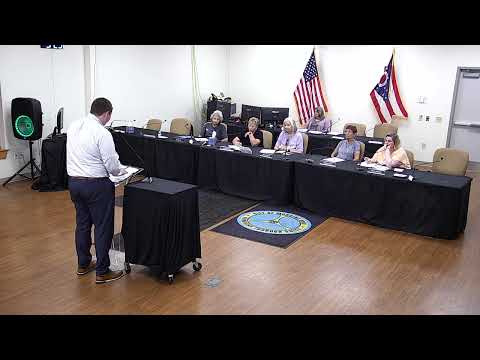
The Moraine Tree Board on an unspecific date commended Parks and Recreation staffer Kelly Stricker for an Arbor Day event held April 25 that included activities for all ages, photos for the city’s Tree City USA recognition and a distribution of tree saplings to early attendees.
Board members said the event included hands-on activities such as painting small tree trunks for children, an educational component tied to the city’s Tree City USA status and a food vendor (Schmidt’s sausage truck). The presenter reported that Stricker arranged saplings for early attendees but the transcript records conflicting counts (the presenter said 15, but elsewhere said 11 or possibly 12); the precise number was not specified in the meeting record.
The presenter read aloud findings from a new modeling study cited by the board. According to the presenter’s summary of the paper from Communications Earth & Environment, researchers at the University of California, Riverside estimated restoring forests to their pre‑industrial extent could lower global average temperatures by about 0.34 degrees Celsius. The presenter attempted a Fahrenheit conversion in the meeting transcript but the recorded conversion is unclear. The board quoted Bob Allen, identified in the paper as a climate scientist at UC Riverside and the study’s lead author: “Reforestation is not a silver bullet. It’s a powerful strategy, but it has to be paired with serious emissions reductions.”
Board members also summarized technical points raised in the study that were discussed at the meeting: trees emit biogenic volatile organic compounds (BVOCs) that can interact with other gases to form particles that reflect sunlight and promote cloud formation, which can have a cooling effect; the presenter told the board that existing climate models do not fully account for those chemical interactions. The meeting record also notes the researchers called for careful decisions about where to plant trees — with the strongest opportunities and also the greatest risks of deforestation in tropical regions — and cited Rwanda as an example where conservation-linked tourism revenue can provide local incentives to preserve forested land.
The presenter said the board will keep an educational piece on the agenda; no formal action, motion or vote was recorded on the topic during the meeting.
The meeting record contains the presenter’s handout photo of the saplings and the board’s discussion of Arbor Day logistics and photos for publicity. The transcript also records brief verbal acknowledgement from other attendees but no formal motions or directives were adopted on the topic.