Get Full Government Meeting Transcripts, Videos, & Alerts Forever!
Get email alerts on the Fuels Mitigation topic
No spam. Unsubscribe anytime.
Counties push fuels mitigation, mapping and public outreach after 2024 fire season
Summary
County wardens and State Forestry described mitigation grants, requests for mapping coal‑seam and burn scars, and the need for better public information and Ready‑Set‑Go evacuation messaging after the 2024 season closed highways and triggered multi‑county evacuations.
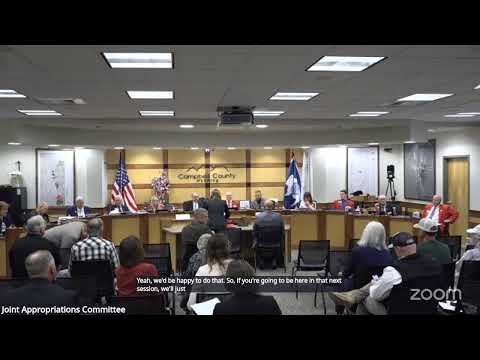
County fire officials told the Joint Appropriations Committee they plan to expand mitigation, mapping and public information work after the 2024 fires, and requested state support for grants and technical assistance.
State Forester Kelly Norris summarized fuels mitigation efforts funded through state and federal grants and said the last year’s grants supported 26 defensible spaces and 529 acres of fuel treatments in six counties during 2024. She said an August lightning storm and an anomalous combination of drought, higher fuels and low snowpack contributed to persistent standing grass and rapid fire spread.
Campbell County Fire Warden JR Fox described local lessons learned on public information: the county’s public information officer was “entrapped” on a fire during the August storms and the county decided to create a public information group and adopt the Ready‑Set‑Go evacuation framework statewide to make evacuation messages clearer. Fox also said Campbell County had more than 119,000 acres burned on state and private lands in 2024 and that mapping coal seam fires is a priority; the county is part of an application for a FEMA‑funded mapping grant to identify coal seam hot spots and post‑fire impacts.
State Forestry and county leaders requested updates on how the Wyoming Wildlife and Natural Resource Trust is spending $49 million in grants on invasive‑grass mitigation and other recovery work, and asked the trust to report to the committee before the next meeting. Committee members asked for a timeline and the specific deliverables tied to those trust grants.
Witnesses reiterated that mitigation funding depends heavily on federal programs (Western Wildland Urban Interface grants, Community Wildfire Defense Grants) and that the state’s role is often coordinating applications and administering pass‑through grants. They asked the committee for predictable, multi‑year support to expand fuels work and public outreach ahead of high‑risk seasons.