Get Full Government Meeting Transcripts, Videos, & Alerts Forever!
Get email alerts on the Incident Response topic
No spam. Unsubscribe anytime.
County chiefs: mutual aid and aviation limited during 2024; committee weighs prepositioning and emergency rules
Summary
County and state witnesses said the 2024 fire season showed limits to mutual aid, that aviation and incident management capacity were often committed elsewhere, and that emergency EFSA rule changes to allow prepositioning may be needed for rapid initial attack.
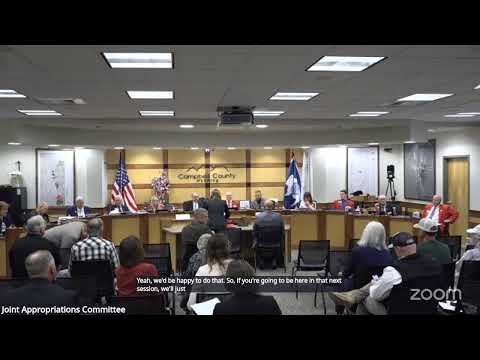
County fire wardens and the Wyoming state forester told the Joint Appropriations Committee that the 2024 fire season exposed operational limits in mutual aid, aviation availability and incident management capacity — and that some of those limits stem from national resource allocation and the state’s current rules about prepositioning resources.
Chad Cooper, president of the Wyoming Fire Advisory Board, described the coordination system: local fire districts perform initial attack and then, if incidents exceed local capacity, an agency administrator group convenes to forecast resource needs and order overhead (type 3 teams), aviation and hand crews. He said most wildfires are controlled during the first operational period but that extreme seasons and concurrent storms can overwhelm state and federal assets.
Kelly Norris said Wyoming has expanded its contracted aviation in 2025 but that last year crews and aircraft were often committed to other national priorities. “We extended Allstate Aviation contracts, and both single engineer tankers and our helicopter responded to fires on their last day of contract,” Norris said, adding that aviation buys time but does not replace boots on the ground.
County leaders described the August 2024 lightning event that produced hundreds of starts and closed highways, forcing a shift from direct suppression to structure protection and creating multiple simultaneous demands for firefighters and aircraft. Campbell County Warden JR Fox said mutual aid “was nonexistent” in parts of the event because neighboring jurisdictions were similarly tasked.
State Forestry said it is updating EFSA rules to allow emergency prepositioning of resources in areas of high risk and intends to pursue an emergency rule this season; staff also plan general rule changes that will go through the regular public comment period and will not be implemented this season. The proposed changes are meant to clarify request and notification procedures, update reimbursement standards and align state rules with interagency agreements.
Committee members asked for additional operational data, including a five‑year running average of EFSA ending balances and callouts where counties requested EFSA assistance last year. Leaders agreed to return with the requested data and to coordinate with regional partners on prepositioning and dispatch practices.