Get Full Government Meeting Transcripts, Videos, & Alerts Forever!
Get email alerts on the Forestry Staffing topic
No spam. Unsubscribe anytime.
State forestry says staffing, pay and retirement gaps are driving talent loss to federal agencies
Summary
Wyoming State Forestry and county fire wardens told the appropriation committee that a small state staff, lack of firefighter retirement benefits for state firefighting roles and limited seasonal positions have led to turnover and difficulty scaling during big fire seasons.
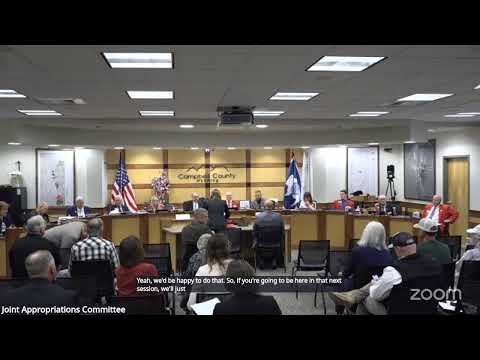
Wyoming’s State Forestry Division told the Joint Appropriations Committee that staffing shortfalls and benefit differences are reducing the state’s on‑the‑line wildfire capacity and creating turnover to federal fire agencies.
Kelly Norris, the Wyoming state forester, said the division has roughly 50 full‑time employees statewide and only a handful of positions directly dedicated to firefighting and aviation support; several senior staff members have decades of experience and are nearing retirement.
“Wildland firefighter fighting is a profession and it should not be considered a collateral duty,” Norris said in testimony. She described long deployments last season, overtime billed to fires (about $337,000 in FY2025), extensive vehicle mileage by staff during suppression and a pattern of trained foresters moving to federal jobs that offer different pay and firefighter‑specific retirement and paid rest days.
Norris told the committee that the division trains employees extensively for fire leadership and that those employees are often recruited by federal agencies offering firefighter retirement ages and different benefits. She said the division has reclassified three vacant crew‑supervisor positions to “fire trainers” to spread capacity geographically and that growth in aviation staffing earlier in 2025 reflects legislative support but does not eliminate other operational gaps.
County fire wardens told the committee they rely heavily on state staffing in some roles but that most initial attack is local: “Not 1 agency, not 1 fire district can take care of all of it ourselves,” Campbell County Fire Warden JR Fox said, praising interagency coordination during the 2024 season while advocating for more full‑time state capacity.
Witnesses warned the committee that the state’s forestry positions are categorized as foresters rather than firefighter positions, which reduces the state’s ability to offer firefighter‑style retirement benefits and hazard pay that can retain experienced operational staff. Committee members requested options and cost estimates for creating firefighter positions or otherwise improving retention and recruitment incentives for state employees who perform sustained wildfire duties.