Get Full Government Meeting Transcripts, Videos, & Alerts Forever!
Get email alerts on the Fentanyl Response Spokane topic
No spam. Unsubscribe anytime.
Community leaders, health officials and people with lived experience close Gabriel’s Challenge urging sustained fentanyl response
Summary
At a closing session of Gabriel’s Challenge in Spokane, health officials, treatment providers, judges and people with lived experience described local resources, ongoing roundtable work and called for sustained collaboration, harm-reduction measures and a proposed summit to keep momentum.
Spokane City Council President Betsy Wilkerson welcomed participants to the final Gabriel’s Challenge community session on fentanyl, thanking organizers and urging attendees to share what they learned with neighbors.
“The most important thing to me, it has created a new community,” Wilkerson said, noting the sessions helped break down barriers and encouraged continued local action.
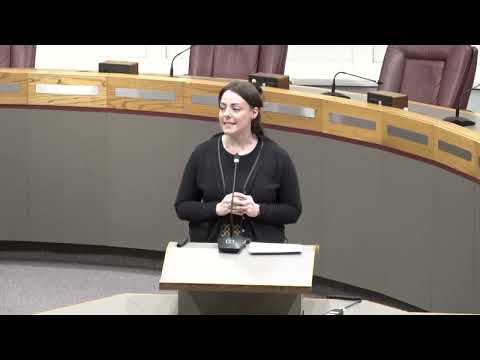
The session brought presentations from Coordinated Care of Washington, a Medicaid managed-care plan, public-health updates from Spokane Regional Health District, perspectives from Municipal Court Judge Gloria Ochoa Brook, Native Project leadership and several people in recovery. Speakers outlined existing treatment and harm-reduction programs, data tools and outreach efforts while calling for more coordinated, sustained community action rather than short-term effort.
“Katie Ramos, licensed mental health clinician and behavioral health contracting manager” with Coordinated Care described low- or no-referral access to outpatient behavioral health services for plan members and listed programs the plan provides, including a proactive 0 Overdose program to identify members at heightened risk and help with safety planning and access to medication and treatment. “Medications and treatment are at no cost,” Ramos said, adding that Coordinated Care offers care navigation and supports ranging from telehealth counseling to detox and supportive housing referrals.
Kelsey Van Horn, identified as vice president for Apple Health and Medicaid at Coordinated Care, said the plan’s community-giving and capacity-building efforts focus on social determinants of health, workforce development and equity initiatives, including an endowment at Eastern Washington University to support workforce pipelines in behavioral health.
Spokane County Health Officer Dr. Francisco Velasquez outlined the county’s fentanyl roundtable, which he said has about 74 members representing faith-based groups, behavioral-health providers, police and fire, justice system partners and people with lived experience. He said the roundtable has three work groups focused on youth prevention and education, post-system care (what happens after a person touches criminal justice or health systems) and other interventions. The county maintains an online opioid dashboard and a County Health Insights data hub that map available services and provide near-real-time indicators such as EMS and emergency-room overdose visits.
Dr. Velasquez described the health district’s “spike alert” response plan, modeled on communicable-disease responses, to identify sudden increases in overdoses and coordinate prevention, treatment and outreach to reduce harm. He also said the health district has placed Narcan dispensers in Spokane libraries and is expanding training and distribution through partners such as the YMCA and street outreach teams.
Municipal Court Judge Gloria Ochoa Brook described the scope of cases she sees and urged diversion and treatment alternatives to incarceration where appropriate. She noted Washington allows civil commitment for people who are a danger to themselves or others and described a judicial pathway in which certain sentences can make defendants eligible for inpatient treatment programs such as those run by Pioneer Human Services at Geiger. “I believe in restorative justice, I believe in rehabilitation, I believe in compassionate accountability,” she said, describing the court’s approach to supervising people post-conviction.
Toni Lodge, identified as executive director of Native Project, urged broader honesty about how local economies and licensing can normalize substances and argued for elevating treatment. “We have to elevate how we do treatment, where we do treatment, the importance, and get rid of the shame about it,” Lodge said, describing long experience operating treatment and recovery services and noting the broader social drivers behind addiction.
Three people with lived experience and representatives from Adult & Teen Challenge described long-term residential recovery programs. Avery Jones, outreach coordinator at Adult & Teen Challenge, said the program offers a year-long residential model and reported a 79 percent success rate for those who complete it. “I have three years sober. My family’s been restored,” Jones said. Gerardo Santa Cruz described the value of “uninterrupted time” in long-term programs to address underlying trauma and behavior.
Andrew Hill, executive director of Excelsior Wellness, urged the community to move from listening to shared leadership, shared risk and sustained action. Hill proposed organizing a summit to translate the community’s work into longer-term collaboration, evaluation and funding commitments. Several speakers, including Wilkerson and session organizers, asked participants to leave contact information to be notified about follow-up events and a possible summit.
Organizers and public-health officials emphasized a “no wrong door” approach for people seeking treatment: many outpatient behavioral-health providers accept walk-ins or same-day intakes, and payers such as Coordinated Care will process claims for those services. Dr. Velasquez noted that the county’s treatment center serves adults 18 and older and accepts multiple payment sources, including private pay, Medicaid and veterans’ benefits.
Speakers also highlighted existing community resources and partnerships: a fentanyl roundtable operating for more than a year, Narcan distribution and training programs, an opioid dashboard and a community behavioral-health needs assessment and resource mapping that are updated quarterly on the County Health Insights data hub.
The session closed with a call for continued collaboration, multiple pathways to treatment and a focus on both harm reduction and long-term recovery supports. “Gabriel didn’t survive, but that doesn’t mean he didn’t fight,” one participant said during a remembrance; organizers planned a community celebration in the park to mark the end of the series and to sustain connections formed during the sessions.
No formal votes or legislative actions were taken during the session; participants focused on information-sharing, coordination and next steps for convening and collective action.