Get Full Government Meeting Transcripts, Videos, & Alerts Forever!
Get email alerts on the Child Care And Protection topic
No spam. Unsubscribe anytime.
Department of Family Services outlines child‑care funding, licensing and child‑protection caseloads
Summary
Agency officials told lawmakers federal childcare block grant funding, eligibility rules and provider licensing are central to early-care support; social‑services leaders also summarized child‑protection caseloads, out‑of‑home placement counts, reunification and the fiscal share devoted to foster care.
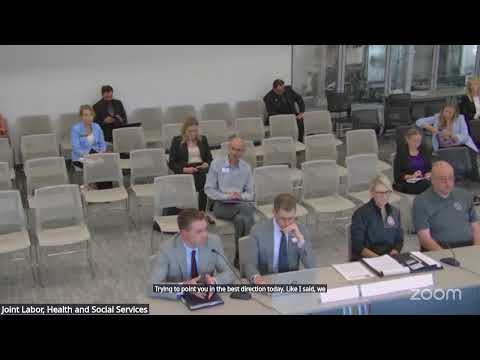
Department of Family Services officials briefed the joint committees on the state’s early‑care programs, licensing oversight and child‑protective services, emphasizing that federal grant rules and state matching requirements shape program choices and budgets.
Roxanne O'Connor, support‑services senior administrator, said Wyoming receives a Child Care and Development Block Grant of about $16 million and must provide a state match; "If we don't meet that maintenance of effort, we will not receive the $16,000,000 in block grant," she told the committee. O'Connor said that more than 70 percent of the block grant is used for childcare assistance for income‑eligible families; the program supports working parents and accepts providers across the state. She described a “mixed delivery system” of family childcare homes and larger centers and said licensing staff oversee health and safety rules and background checks. O'Connor also described partnerships with the University of Wyoming on professional development and infant/toddler credentialing.
Christy Gordy, senior administrator for social services, described the department’s child‑protection, juvenile justice and adult‑protective programs and gave caseload and budget context. She said about 724 children are in out‑of‑home placement statewide; about 456 are in family‑like settings (foster or kinship care) while roughly 156 are in congregate care (group homes, residential treatment). Gordon said the department reunifies roughly 72 percent of children who enter care and reported a 5 percent re‑entry rate within 12 months. Gordy told lawmakers social services is roughly a $155 million division within a $325 million agency budget and said the majority of state general fund dollars the division spends are for out‑of‑home care.
Committee members followed with detailed questions. Senator Hutchings and others asked how the department coordinates early childhood services with other agencies; O'Connor explained the Department of Health operates developmental preschools for children with higher‑intensity developmental needs while DFS licenses childcare providers. Committee members asked about maximum sizes for family childcare homes (O'Connor said up to 10 children, 15 with a second staffer in a family childcare center) and about licensing exemptions for small family units.
Lawmakers also pressed Gordy on programs that intersect with child support and Medicaid. She provided data about a Medicaid birth‑cost‑recovery effort dating to 2018: the department reported roughly $78 million in expenditures were referred to child support since 2018; $950,000 was reduced to judgment and $708,000 collected, of which roughly half must be returned to Medicaid — leaving about $350,000 retained — while the program has cost about $500,000 to administer, creating a net shortfall in that account as of January data she reported.
DFS officials did not seek formal changes at the meeting. They asked the committee for continued funding and interagency cooperation on prevention, licensing and training so families can access stable childcare and so the department can focus spending upstream to reduce expensive out‑of‑home placements.