Get Full Government Meeting Transcripts, Videos, & Alerts Forever!
Get email alerts on the Land Use Pud Michigan Road topic
No spam. Unsubscribe anytime.
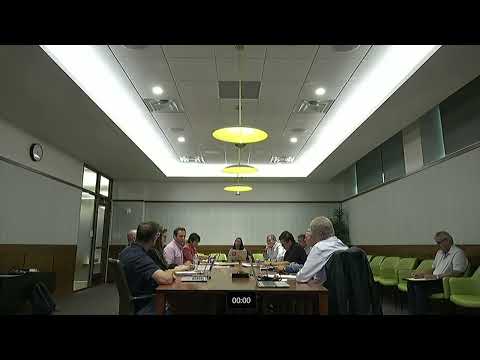
Carmel committee hears Edward Rose proposal for 22-acre PUD on Michigan Road; tax, connectivity and industrial-zoning loss top concerns
Summary
Developer Edward Rose sought approval of a planned unit development (PUD) for about 22 acres along US 421/Michigan Road at the Carmel Land Use Committee meeting on June 18, a proposal that would allow up to 360 multifamily units on the site.
Developer Edward Rose sought approval of a planned unit development (PUD) for about 22 acres along US 421/Michigan Road at the Carmel Land Use Committee meeting on June 18, a proposal that would allow up to 360 multifamily units on the site.
The proposal drew both support for reactivating a long-neglected area and concerns over tax impacts, loss of industrially zoned land, wetland constraints and road connectivity. Committee members and project representatives discussed tax projections, the local TIF (tax-increment financing) allocation, state changes under "Senate Bill 1," and potential future local income-tax options.
John Davichiewicz, a land-use professional with Nelson and Frankenberger representing the project team, told the committee the site is currently inside a county TIF allocation area that will expire in the 20302031 timeframe and that Edward Rose "have no plan to seek TIF assistance through the county and or city" for the project. Davichiewicz said the property now generates about $240,000 in taxes annually and that a full multifamily build-out would be expected to produce about $1,100,000 annually in property taxes once fully assessed. He also cited a projected annual local income-tax contribution of about $396,000 from tenants based on an assumed average household income near $100,000.
Davichiewicz and the project team said a market analysis concluded new office-warehouse construction at this site would likely be priced "30 to 40% over market" and therefore unlikely to lease, producing an estimated $460,000 a year in taxes if developed as industrial/warehouse instead of multifamily. He also warned that provisions in Senate Bill 1 (as discussed at the meeting) raise the business personal-property exemption and could reduce ancillary property-tax revenue for industrial uses.
Council members pressed a range of planning and public-safety questions. Several members said they support reactivating the corridor but asked the developer to preserve future opportunities for eastwest connections and to avoid permanently blocking later roadway linkages. One committee member emphasized wetlands on roughly one-third of the parcel and said routing a public road "all the way through this wetland" would be cost-prohibitive; others said future ingress and egress points are required for fire and emergency response.
Several councilors raised a separate, longer-term concern: converting remaining industrially zoned acreage in Carmel to multifamily would reduce the citys stock of land available for large industrial or corporate users. Council members said retaining some industrial capacity helps keep employers such as ACES and other headquarters-type operations in the city. Economic-development staff and councilors discussed the difficulty of predicting a replacement industrial user and the trade-offs between immediate activation and preserving acreage for future employers.
On site design, the developer said it would limit tree clearing and keep much of the wooded area "largely in its natural state," and that the ordinance will be amended to prohibit drive-through uses in the retail frontage planned along Michigan Road. The project team reported it had submitted a traffic and parking analysis along with the zoning application and concluded the multifamily development could be served by existing access points plus an extension of Retail Parkway to the site and the signalized intersection on US 421.
Committee members and staff discussed process and timing. Carmel requires re-noticing and a council-level public hearing when a plan commission matter goes to council; the committee was told the council would need to consider adoption by Aug. 19 under the current scheduling. The committee set a follow-up land-use meeting for July 9 to take up outstanding issues, and staff agreed to circulate a written clarification confirming the project teams statement that the developer is not seeking city or county TIF assistance.
No formal motion or vote was recorded at the June 18 committee meeting. Council members who voiced specific blocking requirements said they would want clear evidence of road-connectivity solutions and assurances the ordinance language preserves council control over drive-throughs before supporting final approval.
The committee hearing combined technical detail from the project team with repeated requests from council members for additional analysis and for a corridor study that several members said is "long overdue" to guide broader redevelopment of the Michigan Road/Mayflower Park area. The project will return to the committee on July 9 for further consideration.