Get Full Government Meeting Transcripts, Videos, & Alerts Forever!
Get email alerts on the Pension Funding topic
No spam. Unsubscribe anytime.
SERS board chair urges city to cover cost of unilateral voluntary retirement incentives; actuary estimates $1.47 million impact
Summary
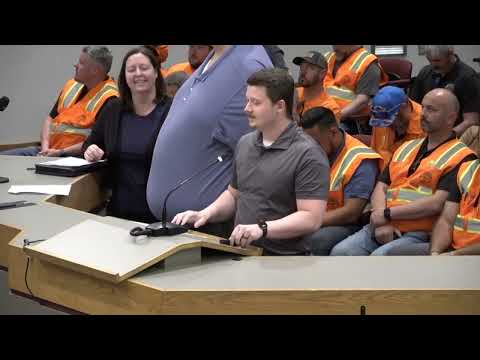
James Teakin, chair of the Spokane Employees Retirement System board, told council the administration implemented a voluntary retirement incentive program without board engagement; actuaries later calculated a $1,471,000 actuarial impact and the SERS board asks the city to pay the resulting cost rather than allocating half to members.
The chair of the Spokane Employees Retirement System board told the Finance and Administration Committee that a recently implemented voluntary retirement incentive (VRI) program was handled without the retirement board's full participation and that the city should cover the resulting actuarial cost.
James Teakin, chair of the SERS board, said the board was told of a possible VRI in September and that an initial informal cost estimate ran as high as $2.2 million. The board later authorized a $10,000 preliminary study. "In March of this year, the actuaries gave us the real impact, and the real impact determined by the actuaries is $1,471,000," Teakin said, describing the actuarial valuation of the VRI impact on the retirement system.
Teakin said the administration selected who would be eligible for the incentive and that the program applied to a small set of employees rather than being broadly offered, so most SERS members did not have the opportunity to participate. The board's position, he said, is that because the program was unilaterally implemented by the city it should not be funded by spreading the cost across the retirement system's membership. "It is the opinion of me, the board chair, and the SIRS board that this bill should rely should reside solely with the city of Spokane," he said.
The board discussed amortization options and favored a three-year schedule for paying the actuarial cost rather than a longer period. Teakin described the approximate employee-borne portion as $736,000 (about half of the actuarial cost) that would otherwise be allocated to members as increased contributions if the system were to amortize the obligation by normal cost sharing.
Councilmembers who are liaisons to SERS said they were concerned that the board was not allowed to weigh in and that the change reduces system funding at a time when reserves have been drawn down and bond rating implications are possible. One councilmember said the way the board was treated was "improper" and urged finding dollars in the city budget to make SERS whole.
Teakin asked the council to consider options to make the retirement system whole and to ensure SERS is part of any future decisions that materially affect benefit funding or system costs.