Get Full Government Meeting Transcripts, Videos, & Alerts Forever!
Get email alerts on the Self Storage Development 2530 Tamiami Trail topic
No spam. Unsubscribe anytime.
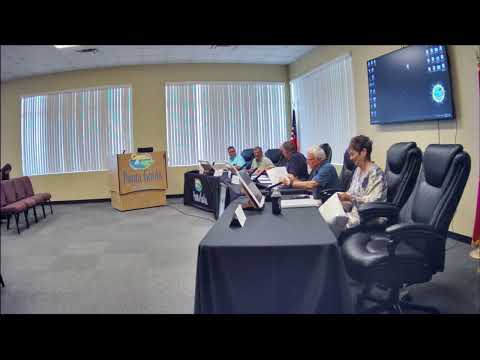
Planning and Zoning Board sustains appeal allowing 112,510‑square‑foot storage project at 2530 Tamiami Trail
Summary
The Punta Gorda City Planning and Zoning Board voted 5–1 on June 23 to sustain an appeal of an administrative determination and allow up to 112,510 square feet of indoor self‑storage at 2530 Tamiami Trail, conditioned on the developer obtaining possessory interest in the property.
The Punta Gorda City Planning and Zoning Board voted 5–1 on June 23 to sustain an appeal of an administrative determination and allow up to 112,510 square feet of indoor self‑storage at 2530 Tamiami Trail, conditioned on the developer obtaining possessory interest in the property.
The vote overturns a Development Review Committee (DRC) administrative interpretation that the Highway Commercial district caps many commercial developments at 30,000 square feet. Zoning official Rachel Berry told the board she had determined that the special‑exception approval covered the use but that a 30,000‑square‑foot cap in one LDR section applied to some commercial categories; the applicant appealed Berry’s interpretation.
The dispute centered on how the Land Development Regulations (LDRs) are read. Berry said her “determination was made based off of the understanding that there was most likely a typo when the code was rewritten,” and that the cross‑references in Section 3.10 and Section 4.13 had been altered when the code was updated. Board discussion focused on whether the code as currently written limits commercial projects to 30,000 square feet or whether the exception language in other subsections permits larger commercial buildings subject to conditions such as a traffic impact analysis.
Resident and appraiser Mike Polk, who spoke during public comment, urged denial of the larger project, arguing the market already has significant capacity. “The project before you today is a 112,510 square foot self storage facility at 2530 Tamiami Trail,” Polk said, and warned that three nearby approved projects would bring “approximately 345,000 square feet of self storage space” to the market. He also disputed the applicant’s tax‑revenue estimate, saying the likely annual city tax would be closer to $70,000 to $80,000.
Interim city attorney Steven Laskovich told the board the proposed developer did not currently own the parcel and therefore did not have vested rights. “The proposed developer of the storage facility does not own the real property in question,” Laskovich said, and he noted that outcomes of the board’s decision could be appealed to city council or to the circuit court.
Board members debated whether the board should rule or send the matter to city council because of possible legal implications. After amendments and discussion, the board adopted a motion to sustain the appeal, finding that the record supported allowing more than 30,000 square feet and that an administrative error had been made. The board added a condition limiting the ruling to the applicant and parcel at issue, and conditioning the approval on the applicant obtaining possessory interest in the property. That amendment was approved unanimously; a separate amendment to require closing within 90 days failed for lack of a second.
The final motion, as read into the record, sustained the appeal and authorized up to 112,510 square feet for the site, conditioned upon the developer obtaining possessory interest in the property. The board recorded a 5–1 vote in favor of the amended motion.
The city attorney reminded the board that a valid appeal of the Planning and Zoning Board’s decision could be filed to city council, and that the developer could seek judicial review in circuit court.
The board closed the quasi‑judicial hearing after the vote and moved on to its remaining business.