Get Full Government Meeting Transcripts, Videos, & Alerts Forever!
Get email alerts on the Budget Cip Rates topic
No spam. Unsubscribe anytime.
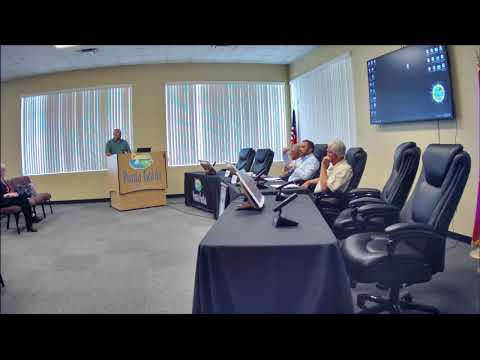
Utility advisory board approves five-year budget, adds staff and signals multi-year rate increases
Summary
Punta Gorda City Utility Advisory Board approved the utilities division budget and five proposed staff positions and discussed a five-year capital improvement plan that includes a proposed 12% annual rate increase through fiscal 2029 and large water and wastewater projects including a $56 million RO expansion.
The Punta Gorda City Utility Advisory Board on June 23 approved the utilities division budget for fiscal year 2026 and endorsed adding five positions to the utilities staffing plan, while staff outlined a five-year capital improvement program that would require substantial financing and multi‑year rate increases.
The board’s action approved the proposed budget “as presented plus the 5 additional positions,” a motion that passed by voice vote. Board members discussed a proposed rate plan staff used in the pro forma, which includes 12% annual increases through fiscal 2029 and a 5% increase in fiscal 2030 to fund an ambitious capital program and debt service.
The vote followed a detailed presentation from Tom Spencer, utilities director, and Chris Simeon, finance director, who reviewed revenues, planned projects and financing assumptions. Spencer told the board the current pro forma assumes a 12% rate increase through fiscal 2029 and a 5% increase in fiscal 2030 and that consultants will refine how those increases would be distributed by customer tier. “Currently, the proposal is gonna be 12% increases, through fiscal year 29 and a 5% increase in fiscal year 30,” Spencer said.
Board members and staff stressed public outreach and explained that impact fees will cover only a portion of debt service on growth‑related projects. Spencer and Simeon said the city intends to bring a formal rate study and an impact‑fee study to the board in July and to City Council in August. The work includes analysis of whether a recently proposed state change to a county surcharge applies to the city; staff said they are awaiting legal guidance.
Key elements of the five‑year plan presented to the board include a placeholder estimate of $10 million for an advanced metering infrastructure (AMI) replacement, and two large water projects each currently estimated at about $56 million: a reverse‑osmosis (RO) expansion and filtration improvements. Wastewater work highlighted in the pro forma includes the wastewater treatment plant improvement project and several force‑main and lift‑station upgrades. Staff plan to pursue a mix of financing: State Revolving Fund (SRF) loans for major treatment projects, bank loans for meter financing and grants where possible.
Simeon said the utilities fund remains solvent in the near term. Staff reported year‑to‑date water and sewer revenues above budget for the current fiscal year and noted transfers already set aside to meet future SRF debt‑service reserve requirements. The pro forma assumes use of reserves and a mix of transfers, estimated grants and estimated financing to balance the program while maintaining an operating reserve; staff recommended keeping an R&R reserve of $1.5 million and noted the existing operating reserve of $3.1 million may need future adjustment.
Board members recommended clear, simple public messaging explaining where water comes from, why projects are needed and why rates or fees may rise. Several members urged a one‑page “case for support” and GIS‑based story maps staff said the interim city manager is developing. Spencer said the rate study will consider statutory limits on immediate fee increases and whether the city should pursue the “exigent circumstances” route that requires additional hearings to raise impact fees faster than a 50% per‑year limit.
The board also discussed staffing requests contained in the budget: two water‑distribution maintenance positions and three administrative positions (an engineering technician, a project manager and a grants coordinator). Board members generally supported adding the positions but suggested outsourcing or a consultant approach for grant work if the city prefers not to hire a permanent grants coordinator immediately.
The board will forward its recommendation to City Council; staff said the budget presentation will go to council on July 9.