
Hospitals warn proposed cuts to assessment could cost Arizona hospitals 'three times' the direct hit after federal match lost
Get AI-powered insights, summaries, and transcripts
Subscribe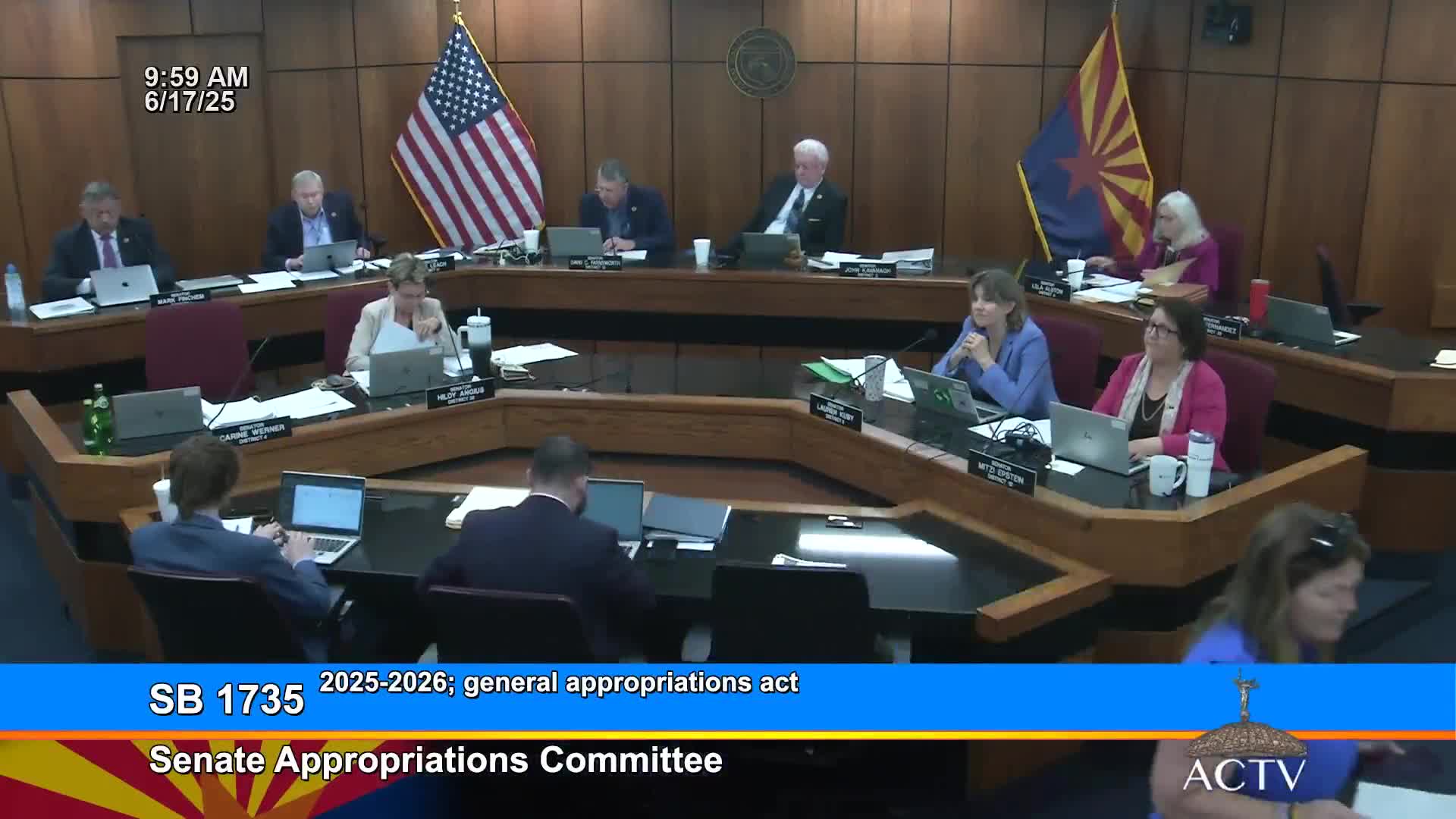
Summary
Hospital representatives told the Senate Appropriations Committee that trimming a $100 million hospital assessment in the state budget will reduce federal matching dollars and effectively multiply the impact on hospital reimbursements. The Health Systems Alliance said the assessment helped generate federal dollars that reimburse care for Medicaid
Hospital advocates told the Senate Appropriations Committee they oppose provisions that would reduce or retool an existing hospital assessment, which they said helped secure federal matching funds to reimburse care for Medicaid beneficiaries.
"Hospitals agreed to the assessments over 12 years ago to help cover the state's portion for Medicaid beneficiaries," Tom Farley of the Health Systems Alliance of Arizona testified. He said the assessments are designed to recoup roughly 80%–90% of costs through a federal match and that reducing the state assessment by $100 million would, in effect, remove the federal match and could amount to roughly a $300 million impact on hospital reimbursements.
Farley told the committee hospitals are already planning contingencies because of possible federal changes to Medicaid reimbursement and urged lawmakers to find ways to reduce the potential impact on hospitals. He thanked senators for language in the Senate budget that would end an annual hospital assessment practice carried in last year’s budget, while urging lawmakers to look for offsets to soften the blow.
Committee members asked whether hospital systems were seeing concrete notices from federal authorities; Farley said national consultants and federal‑level analysis indicate the potential scale of changes and that states are evaluating mitigation strategies.
No formal change to the assessment rate was adopted during the committee hearing; Farley’s testimony was part of the record as senators considered FY2026 appropriations.