Get Full Government Meeting Transcripts, Videos, & Alerts Forever!
Get email alerts on the Student Technology Policy topic
No spam. Unsubscribe anytime.
Parents ask Catalina Foothills board to adopt ‘bell‑to‑bell’ phone policy under new state law
Summary
Community group Tech Aware Parents urged the Catalina Foothills Unified School District Governing Board to implement a districtwide “bell‑to‑bell” ban on student personal devices following passage of state legislation limiting device use in schools.
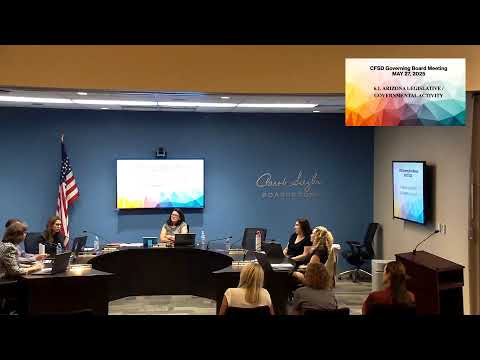
At the May 27 meeting of the Catalina Foothills Unified School District Governing Board, parents representing the community group Tech Aware Parents urged the board to adopt a districtwide “bell‑to‑bell” policy that would require students to turn off and securely store personal devices for the entire school day under new state law HB 2484.
The speakers said the law, which restricts student wireless device use and social media on campus, creates an opportunity for the district to standardize limits across grades K–12. Jennifer Lahr, a district parent, told the board, "You as the board have a unique opportunity to gift our students something profoundly valuable. Up to 7 uninterrupted hours every school day free from all the social media pressure, constant distraction, cyberbullying, addictive and inappropriate content, and just overall digital overload."
Lahr described one operational option she and other parents have discussed: students place phones in labeled bins at arrival; the bins are stored securely and returned to classrooms at the end of the day. She cited national research and statistics during her three‑minute public comment, saying schools where devices are restricted see reduced distractions and better student focus.
Laura Thompson, a co‑founder of Tech Aware Parents, said the group conducted a district parent survey and summarized results for the board. Thompson said 268 parents participated and reported that 93% were “very or somewhat concerned” about the effect of personal devices on student well‑being and that 82% supported a bell‑to‑bell policy prohibiting device use during the school day. She told the board that 65% of surveyed parents asked for more information about the district’s new filtering or monitoring system (referred to in the comments as the "Syntyngics system").
Thompson also relayed concerns from parents about emergency use and safety, noting that some parents want students to retain phones to call 911 or a parent during emergencies. "Phones during an incident distract from following instructions," she said, and added that phones can spread rumors and potentially alert a threat to someone’s location, which are commonly cited risks in studies the parents referenced.
Board members thanked the speakers and noted that the subject was not on the meeting agenda; the board president said the materials would be disseminated to all board members and the group’s survey results would be reviewed. No formal policy action was taken at the meeting; board members said they expect to review state model policies and return items to the board ahead of the new school year, because several recently enacted education bills take effect 90 days after the legislative session ends.
The board did not vote on any device policy at the May 27 meeting. The district’s next meetings were scheduled to consider policy language and model policy updates before the start of the 2025–26 school year.