
Water officials warn budget would sweep more than $70 million from long‑term augmentation fund as committee advances budget
Get AI-powered insights, summaries, and transcripts
Subscribe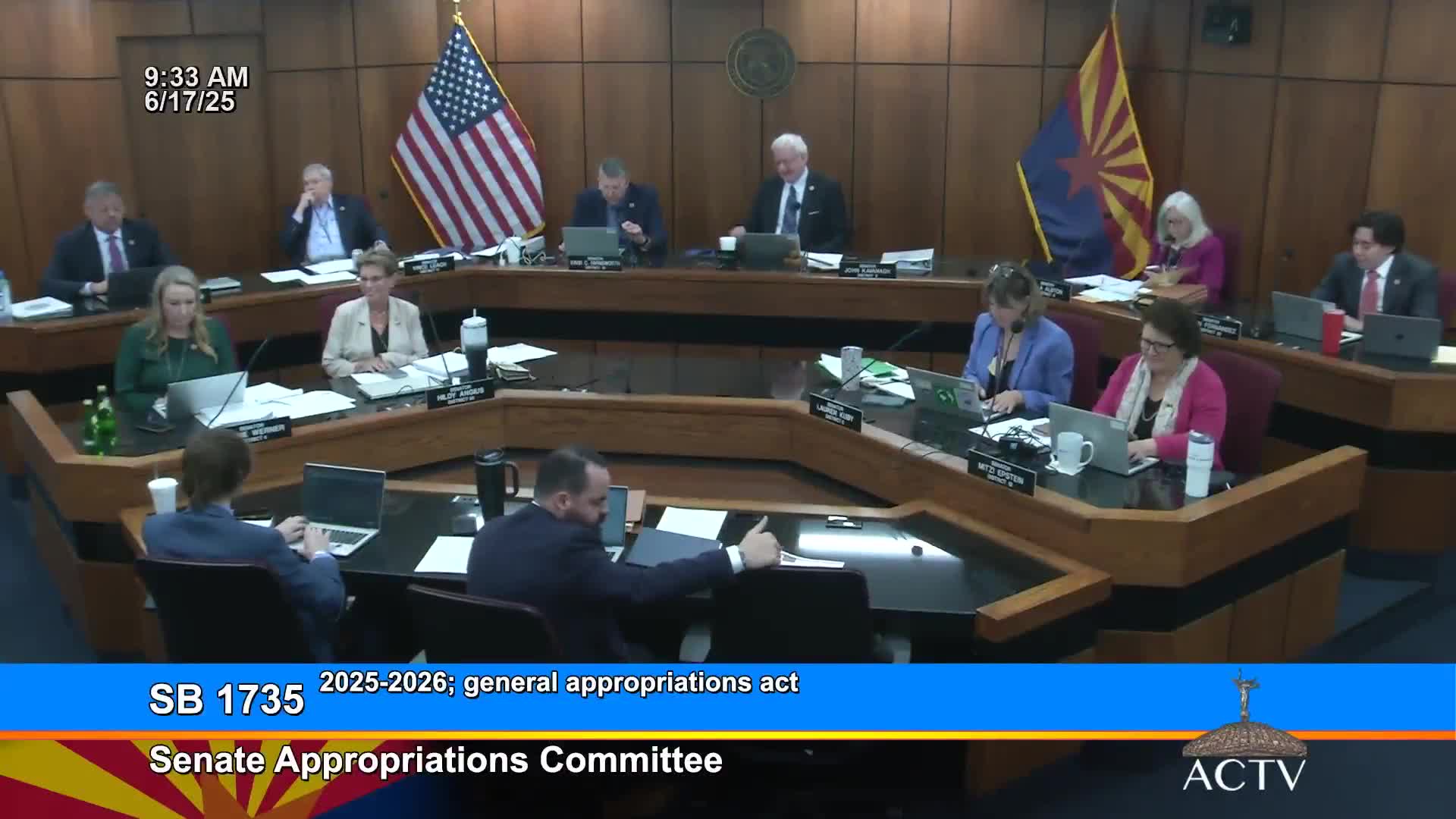
Summary
The Senate Appropriations Committee advanced the FY2026 general appropriations bill after WIFA officials warned it would sweep more than $70 million from the Long‑Term Water Augmentation Fund, jeopardizing a competitive solicitation to secure long‑term water supplies.
The Senate Appropriations Committee advanced the fiscal‑year 2026 General Appropriations Act (Senate Bill 17‑35) after hearings in which water officials warned the bill would sweep funding set aside for long‑term water projects.
"I am here today to respectfully oppose the post sweep of over $70,000,000 from the Long Term Water Augmentation Fund," Judah Wakselbaum, chief legislative liaison for the Water Infrastructure Finance Authority of Arizona (WIFA), told the committee. "This fund remains the only fund in the state solely dedicated to identifying and developing new long‑term water supplies."
Wakselbaum said WIFA is running a three‑phase competitive solicitation to identify teams capable of delivering large augmentation projects and that draining the dedicated fund would undercut that work. "That process will fail if the legislature continues to drain the very fund to make it possible," he said. He also told senators the proposal before the committee swept more dollars than the House version and would weaken the state's negotiating leverage with potential private partners.
Why it matters: WIFA and others say the Long‑Term Water Augmentation Fund is the state's principal tool to pursue new supplies and to leverage federal and private investment. Committee members asked WIFA staff how the solicitation is structured and why the fund must remain intact. WIFA staff described a Phase 1 vetting of qualified teams, Phase 2 feasibility and vetting, and Phase 3 build‑out; they repeatedly said potential project details remain confidential while procurement moves forward.
Senator John Kavanaugh, committee chairman, and Senator David Leach pressed WIFA on timing and transparency. Leach said members and constituents see the pace as slow and described the fund's repeated use as a "piggy bank." Wakselbaum said WIFA provided regular updates to nonvoting legislative board members and that the methodical solicitation process is intended to protect the state's fiduciary duty and attract credible partners.
The appropriations bill discussed in the hearing includes multiple FY2026 allocations across state government. Wakselbaum and other speakers singled out the Long‑Term Water Augmentation Fund sweep as particularly harmful to long‑term water planning.
What happened next: The committee moved SB17‑35 with a due‑pass recommendation. The committee vote count on the bill recorded in the hearing was 8 ayes and 2 nays.
Discussion points recorded in committee: - WIFA: the Long‑Term Water Augmentation Fund is intended as committed leverage in negotiations with private and public partners; reducing it reduces the state's bargaining position. - Senators: concerns about pace of projects, desire for more information on project types (WIFA said procurement confidentiality limits public disclosure during solicitation), and frustration that the fund has been used for other purposes in prior years.
No final law change beyond the committee action was adopted in the hearing; SB17‑35 will proceed to floor consideration where the full membership will continue debate.