Get AI Briefings, Transcripts & Alerts on Local & National Government Meetings — Forever.
House approves bill limiting employees' access to courts by expanding arbitration; critics say it favors employers
Loading...
Summary
The House passed Senate Bill 15 14, a bill revising employment dispute rules to favor arbitration, amid floor explanations that the law will increase costs for workers and shift dispute resolution power toward employers. The bill passed 34-25-1.
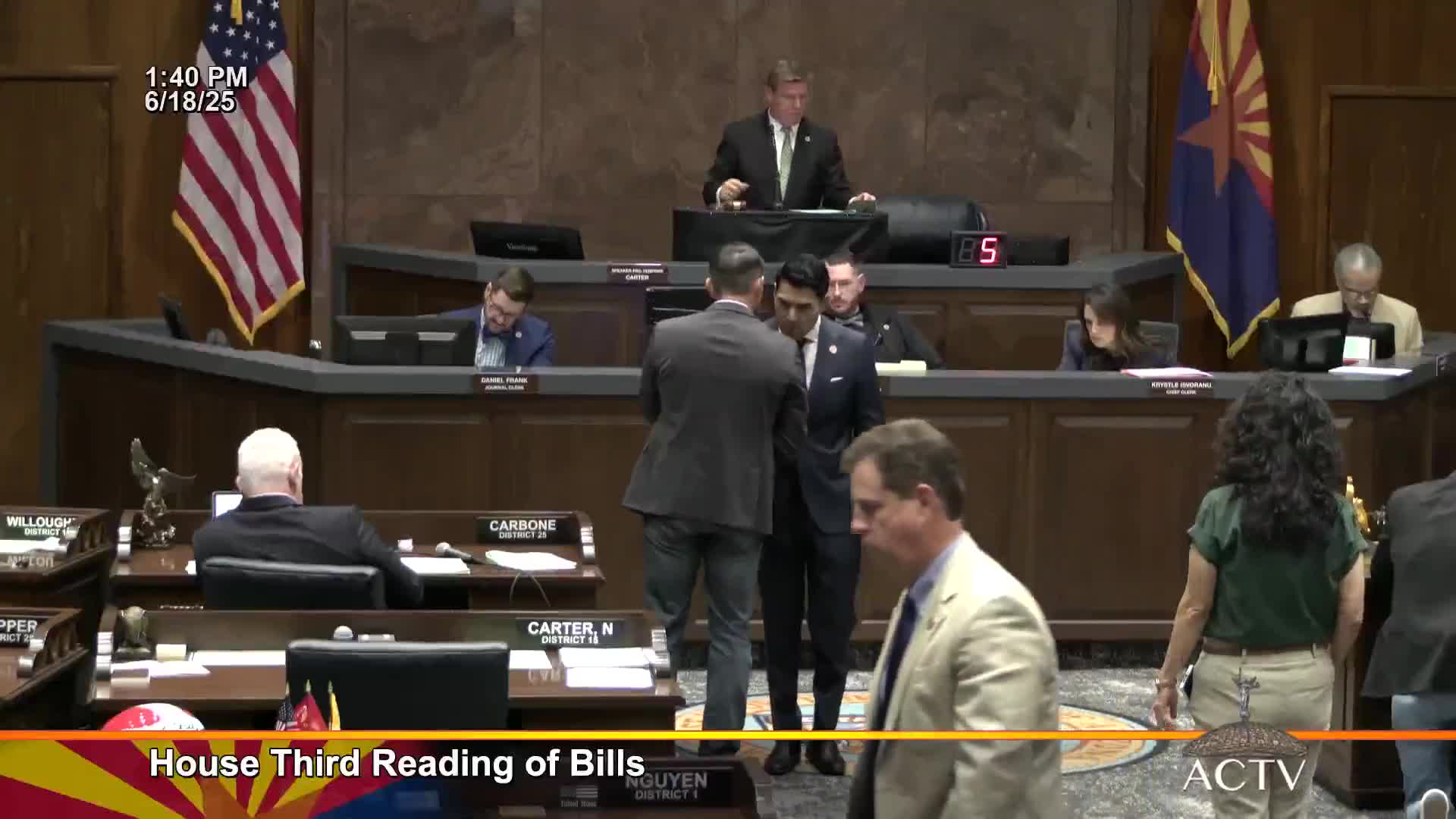
The Arizona House on June 17 passed Senate Bill 15 14, which amends Title 23 regarding employment relationships and—according to opponents on the floor—would make arbitration the primary pathway for many workplace disputes. The final recorded vote was 34 ayes, 25 nays and 1 not voting.
Critics argued arbitration disadvantages employees by imposing fees and giving repeat business to arbitrators who handle employer cases. "Arbitration costs employees more money, and gives employer power over the worker," Representative Aguilar said in explaining a no vote. "This is literally just protecting working class people from being able to file a grievance with their employer. This would force employees to have to pay fees to file a grievance with their employer."
Supporters did not make extended floor remarks captured in the transcript; the clerk recorded the passage of the bill and instructed the clerk to convey it to the Senate.
The debate focused on how mandatory or favored arbitration affects workers' access to remedies and on broader concerns about worker protections and costs. The recorded explanations on the floor show partisan disagreement: Aguilar argued the bill is "an anti-worker veil in the state of Arizona," while others supported the measure as a matter of statutory change to employment dispute resolution.
The clerk recorded the final vote and the House ordered the bill conveyed to the Senate for further action or processing.