Get Full Government Meeting Transcripts, Videos, & Alerts Forever!
Get email alerts on the School Board Accountability topic
No spam. Unsubscribe anytime.
House approves measure that can remove school board members after receivership; lawmakers split
Summary
The Arizona House passed House Bill 2610 on final reading after extended debate about local control, accountability for Isaac Elementary School District, and potential harm to students if the bill is applied retroactively. The measure drew sharply divided votes and competing views about state intervention and local elections.
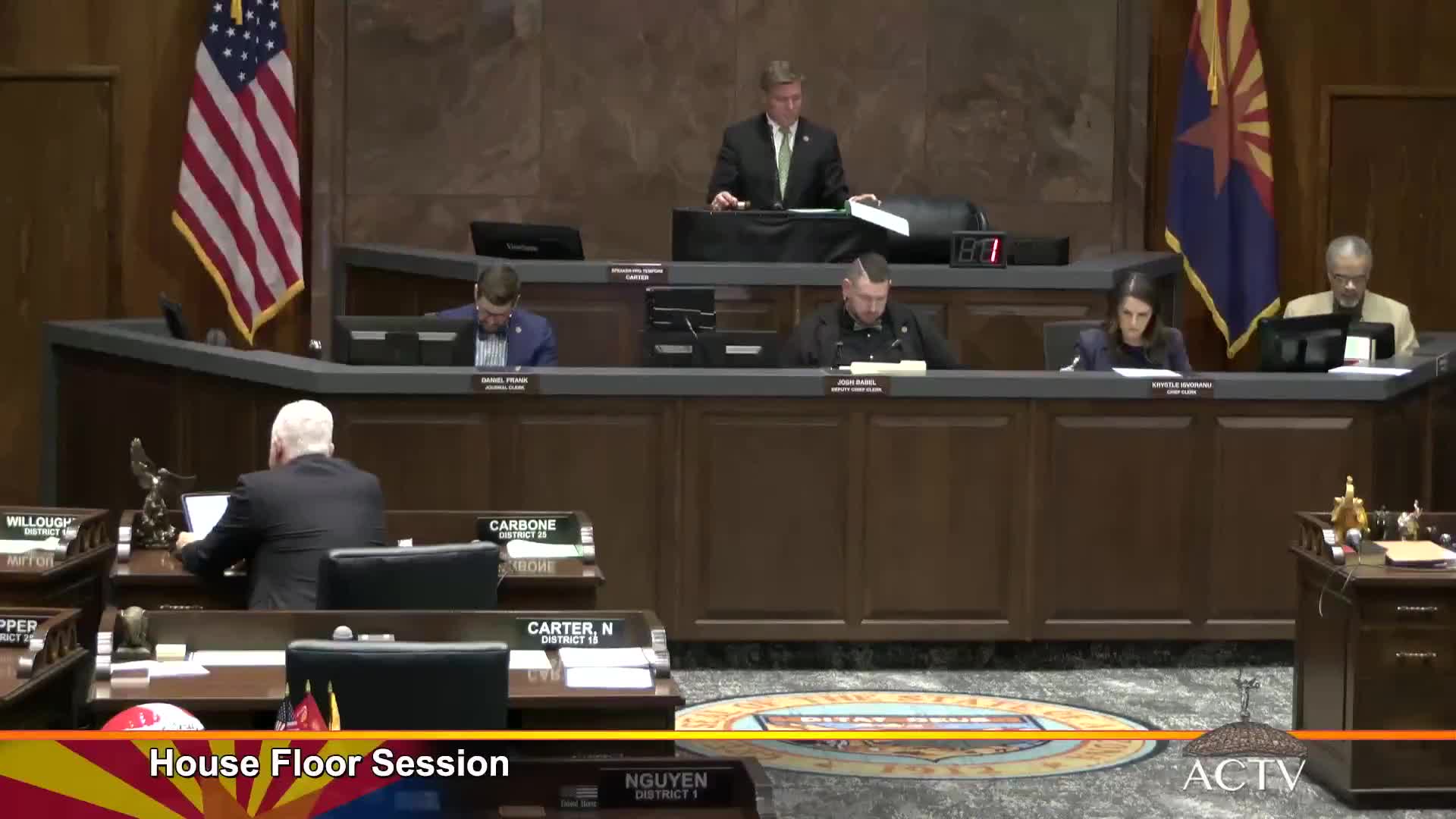
The Arizona House of Representatives on June 17 approved House Bill 2610, a measure that creates a pathway to remove or bar governing board members when a school district enters receivership, passing the bill 39-20-1 and sending it to the governor.
Supporters said the bill is designed to hold school board members accountable for financial mismanagement and to prevent future failures that put students at risk. "If you do not notify the department of education ... and the district goes into receivership, you're fired," Representative Gress said, describing the bill as a way to "clean up a lot of problems." He also criticized what he described as a "predatory" $25,000,000 loan made involving Tolleson Union High School District and said the loan carried a balloon payment he said would leave Isaac Elementary facing roughly $18,000,000 due in four years.
The bill matters because it changes the consequences for elected local officials and could lead to the removal of school board members following state receivership actions. Opponents argued the Legislature would be overreaching into locally elected authority and warned of direct harms to students and staff if the law is applied retroactively.
Representative Gutierrez said the bill is "overreaching" and that "it is not up to the legislature to force a governing board member or members ... to resign," stressing that school board members are publicly elected and that removal decisions historically involve county boards of supervisors. Representative Aguilar, who voted no, argued the bill's retroactivity could force schools to close and cost local jobs, saying "when you're introducing a bill that will hurt a school district and leave kids with no school to go to, I think there's a serious problem there."
Other members navigated between criticism of local mismanagement and concern over state power. Representative Livingston, a former school board member, said mismanagement exists and supported accountability, while Representative Potts argued for keeping democratic choice intact, calling the bill a "reaction, not a remedy." Representative Cruz warned against "trampling on local control" and voted no.
On procedure, Representative Gress moved that the House concur in the Senate amendments to House Bill 2610. After debate and explanations of vote, the clerk recorded a final tally of 39 ayes, 20 nays and 1 not voting. The journal entry notes the bill passed on final reading and the clerk was instructed to convey it to the governor.
The debate highlighted several substantive questions left for implementation: whether the measure applies retroactively to Dec. 31 (a point raised by opponents), how state and county officeholders share responsibility for oversight, and what safeguards (if any) the bill includes for due process before removal. The transcript records members pressing on local budget oversight and prior audits, but the bill text and any implementing rules will determine how removals and related processes operate.
With the passage, House Bill 2610 moves to the governor for consideration; the transcript records the House directing the clerk to convey the bill to the governor.