Historical Museum at Fort Missoula opens restored WWII detention barracks exhibit
Loading...
Summary
The Historical Museum at Fort Missoula held a dedication and ribbon-cutting for a restored detention barracks and new exhibit interpreting the site's World War II use to hold Italian nationals and Japanese American men; museum leaders credited federal and private grants, county support and descendant families for the project.
The Historical Museum at Fort Missoula held a dedication ceremony at Fort Missoula to open a restored World War II detention barracks and an accompanying exhibit that tells the stories of Italian nationals and Japanese American men held at the site, museum leaders and partners said at the event.
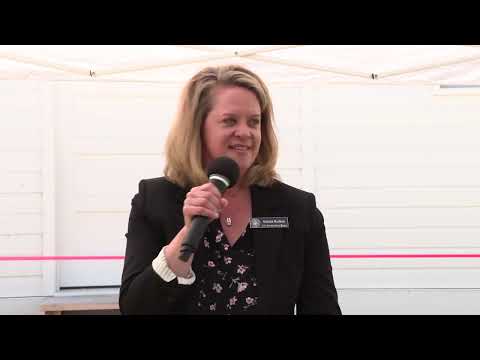
The new exhibit and restored building aim to preserve firsthand accounts and teach visitors about the site’s wartime use. "The restored barracks are more than just walls and wood," Kristen Kukin read from a letter on behalf of U.S. Senator Steve Daines, saying the site is "a powerful reminder to honor the stories of the incarcerated Japanese Americans and Italian nationals right here on American soil during World War II." Missoula County Commissioner Josh Slotnick framed the museum’s work as part of a civic practice of justice, noting federal acknowledgement of the injustice.
Museum staff and project partners described funding and construction details central to completing the project. Matt Lauzenheiser, executive director of the Historical Museum at Fort Missoula, said the project received a $533,000 grant from the Japanese American Confinement Sites Grant Program administered by the National Park Service and additional support from the MJ Murdock Charitable Trust, the Tracy Foundation, the Lewis L. Bork Foundation and a grant from the Institute of Museum and Library Services. Lauzenheiser said more than 200 individual donors contributed, and he credited Missoula County facilities employee Ethan Redfern with acting as construction manager, saying county support reduced private costs "by roughly $100,000." Lauzenheiser described the total project fundraising as approximately $1.3 million (approximate figure provided by museum staff).
Speakers at the dedication described the human experience of internment and the reasons for preserving the site. Slotnick summarized the federal government’s later finding and apology, saying the 1988 Civil Liberties Act concluded that such internment "was based on racial prejudice, wartime hysteria, and a failure of political leadership." He urged that the exhibit help future visitors learn the lesson and "work for" justice rather than assume progress will happen automatically.
Several project partners described their roles. Crystal Herzog, project architect with A and E Design, said the work was a historic-preservation effort intended to enable visitors to "see it, interpret it, and really experience it." Stacy Haines of Structure West, the contractor, detailed the engineering and craft challenges of restoring the building. Historical Research Associates (HRA) curator Kayla Blackman and HRA representative Morgan described outreach to descendant families and the exhibit’s focus on 10 individuals — five Italian men and five Japanese men — whose stories are featured in the space. Emma Sulphurs, curator of collections at the museum, invited attendees to explore interactive elements inside the barracks and to "sit on a bunk, read through a letter, meet some of the Fort Missoula internees," so visitors can consider the men’s lived experiences.
The program concluded with a ribbon-cutting led by Friends board member Ron Wakamoto, after which attendees toured the exhibit. Wakamoto, who described his own family’s history of wartime imprisonment and later citizenship, said he felt "like the luckiest guy in the world" to be able to speak about the history publicly and to share it with students.
No formal votes, ordinance actions or policy decisions were taken at the ceremony; the event was a dedication and public opening. The museum and partners said the exhibit will be part of the Historical Museum at Fort Missoula’s ongoing educational programming and outreach to descendant communities and school groups.