Get Full Government Meeting Transcripts, Videos, & Alerts Forever!
Get email alerts on the Wildlife Funding topic
No spam. Unsubscribe anytime.
House approves 1.25% transient lodging tax increase to fund wildlife conservation
Summary
The Oregon House passed House Bill 29 77 on June 20, 2025, adding 1.25 percentage points to the state transient lodging tax to fund the state’s wildlife conservation priorities, including wolf compensation, anti‑poaching and connectivity programs.
The Oregon House of Representatives on June 20 approved House Bill 29 77, adding 1.25 percentage points to the state transient lodging tax to fund the Oregon Department of Fish and Wildlife’s (ODFW) conservation strategy and related programs.
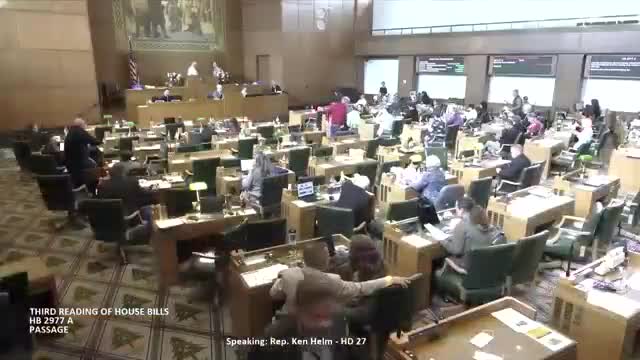
Sponsor Representative Dacia Helm told colleagues the bill leaves the existing 1.5% in place and would add 1.25% for a combined state transient lodging tax that remains lower than most other states. “This bill adds 1.25% to the state transient lodging tax,” Helm said on the floor, and she described the revenue’s allocation to ODFW programs, wolf compensation, anti‑poaching efforts and connectivity and stewardship work.
The bill directs the new revenue so that 1.00% funds ODFW’s Recovering Oregon’s Wildlife Fund, which supports the agency’s comprehensive wildlife plan covering nearly 300 species. The remaining 0.25% is allocated among related programs, including a designated share for the wolf compensation program and anti‑poaching efforts; Helm said the wolf compensation allocation would amount to about $3 million per biennium.
Supporters argued the tax is closely tied to tourism’s impact on wildlife and that a broad, low rate on lodging is a suitable revenue source. Representative Helm said tourists come to Oregon to experience wildlife and outdoors recreation, noting that about 65% of lodging revenue comes from out‑of‑state visitors. “If we’re going to have to tax folks, that’s the way we should do it—broad based and low rate,” Helm said.
Opponents said the state should instead use general‑fund dollars and warned about cumulative tax impacts. Representative Mark Reschke, who spoke against the measure, noted that the Legislature had earlier allocated $2.5 million from the general fund for wolf compensation and criticized using a new tax rather than prioritizing existing general‑fund resources.
Other members urged caution about creating new dedicated revenue streams for a single agency, warning that future legislatures might repurpose or reallocate funds. Supporters replied the dedicated stream would stabilize funding for programs that have historically been subject to biennial budget fights.
The House recorded enough votes for passage; several members voted no in roll calls noted on the record, but the bill received the constitutional majority and was declared passed and will move to the Senate. The bill requires a three‑fifths majority for final revenue‑raising approval in later steps.
The outcome sets aside a recurring revenue stream for wildlife management and related programs; supporters said it eliminates recurring ad‑hoc budget fights over wolf compensation and conservation work, while opponents said the state should fund those priorities from the general fund.
If the Senate and governor approve the measure, the new rate and allocations will be implemented according to the bill’s effective dates and distribution language.