Get Full Government Meeting Transcripts, Videos, & Alerts Forever!
Get email alerts on the Student Digital Policy topic
No spam. Unsubscribe anytime.
Parents urge Catalina Foothills board to adopt all-day phone ban; presenters cite case studies and student benefits
Summary
Two founders of TechAware Parents asked the Catalina Foothills governing board to adopt a bell-to-bell cell-phone ban K-12, presented case studies from other districts and urged the board to use the upcoming administrative retreat and meetings to craft a firm policy.
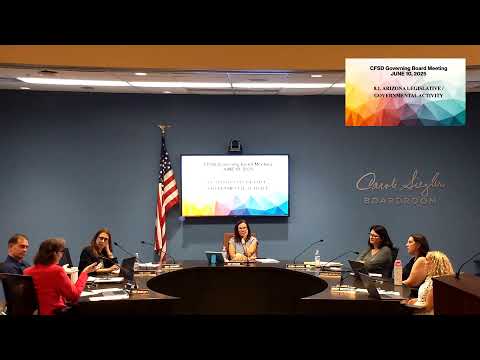
Reagan Prefling and Laura Thompson, founders of the local group TechAware Parents, urged the Catalina Foothills Unified School District Governing Board on June 10 to adopt an all-day ban on student cell-phone use.
In public comment, Prefling framed the issue as one of learning and student well-being, saying an all-day ban (phones collected and stored for the full day) reduces distractions and helps students focus on in-person learning. She described three implementation options -- phones in backpacks, collection by class, or full-day storage -- and recommended full-day storage as the most effective approach.
Thompson followed with case studies, citing several school systems that adopted bell-to-bell bans and reporting improvements in classroom focus and reduced interpersonal conflict. She identified Wakefield High School in Virginia (April 2025 reporting) and referenced district-wide approaches in Ohio (a large district that allowed schools to select their collection method) and noted some opposition related to digital-literacy instruction and access for lower-income students. Thompson said most case studies include exceptions for medical needs and special education.
Why it matters: board members are preparing to discuss cell-phone policy during an upcoming administrative retreat and two scheduled meetings. The speakers asked the board to consider stronger language than they said recent Arizona law provides, which they characterized as "weak" and likely to produce weak local policies if the district adopts permissive language.
Speakers requested that the board consider a K-12 bell-to-bell ban but acknowledged district administrators will need to weigh operational and equity concerns, such as emergency contact procedures and accommodations for students with medical needs.
The presenters said they would follow up by email with links to news articles and research cited during the comments.
No board action was taken during the public-comment period; the board later addressed cell-phone policy language during administrative discussions and will consider the issue at future meetings.