Get Full Government Meeting Transcripts, Videos, & Alerts Forever!
Get email alerts on the Public Safety Real Time Crime Center topic
No spam. Unsubscribe anytime.
Spokane County sheriff—s real-time crime center details technology, mobile units and regional assists
Summary
Sheriff—s real-time crime center staff updated commissioners on staffing, deployments of mobile surveillance "COW" units, software integrations and regional requests; presenters said the center has helped investigators, saved staff hours and is exploring subscription funding with partners.
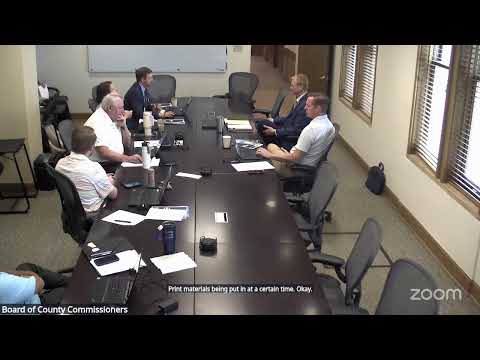
Spokane County—s Real-Time Crime Center staff told the Board of County Commissioners on June 17 that layered surveillance, license-plate readers and new data platforms are producing arrests and investigative leads while saving investigator time.
"We—re dedicated to ensuring the safety and security of the community," Justin Elliott, presenting for the Real-Time Crime Center, said during the quarterly briefing. "We're gonna harness this technology, and provide rapid actual intelligence to deputies and officers."
The presentation described current staffing, recent operational changes and a series of technology integrations. The center runs a team of analysts and a suite of tools that county staff said streamlines investigations by bringing data from multiple systems into a single searchable interface (Peregrine) and by enabling live video, automatic license-plate reader (ALPR) alerts and body-worn camera access through a consolidation platform.
A repeated operational example was use of mobile camera trailers and repurposed patrol vehicles (referred to in the briefing as "COWs"). Elliott said the county has six of those units in circulation, with two deployed in the valley and others sent in response to incidents or by request from local captains. He described several recent captures, including a stolen-vehicle arrest after an ALPR hit and a warrant arrest in another state that analysts helped resolve by tracing activity to an Illinois address.
Staff highlighted some performance figures: analysts— involvement in cases has increased, system-enabled successes remain, and the center reported hundreds of asset moves and hundreds of hours saved for field personnel. The briefing also noted that the center hosts tours for other agencies and has drawn interest regionally.
The presenters reviewed costs and sustainment options. Elliott said outfitting a retired patrol vehicle to function like a county mobile surveillance vehicle costs roughly $16,000 to $18,000, excluding the vehicle and labor. He said the center currently does not have a subscription or cost‑sharing program in place with other jurisdictions, and that the office is exploring whether partners would contribute to staffing or subscription fees to sustain expanded hours and coverage.
The briefing described how the center supports other agencies: analysts have assisted the U.S. Marshals Service and local police departments, and staffers said Peregrine and related tools can assemble investigative packets more quickly for prosecutors. The presenters cautioned that while these platforms increase access to evidence, discovery and prosecution still rely on native-source records and legal processes.
Privacy and records access were raised in questions from commissioners. Elliott and colleagues described a standard process for partnering businesses and property managers: businesses can connect their cameras to the center and then sign agreements that permit the sheriff's office to access footage when appropriate; staff said they provide informational stickers and GRAMA-compliant notice language to partners.
No formal vote took place during the briefing. Commissioners and staff discussed next steps: expand analyst hours into evening periods, continue training investigators on the new systems, pursue grant or subscription funding to sustain staffing, and return with a semiannual comprehensive report.
The county plans to present a more detailed semiannual report to the board in coming months that will include additional metrics and funding proposals.