Get Full Government Meeting Transcripts, Videos, & Alerts Forever!
Get email alerts on the Infrastructure Sewer topic
No spam. Unsubscribe anytime.
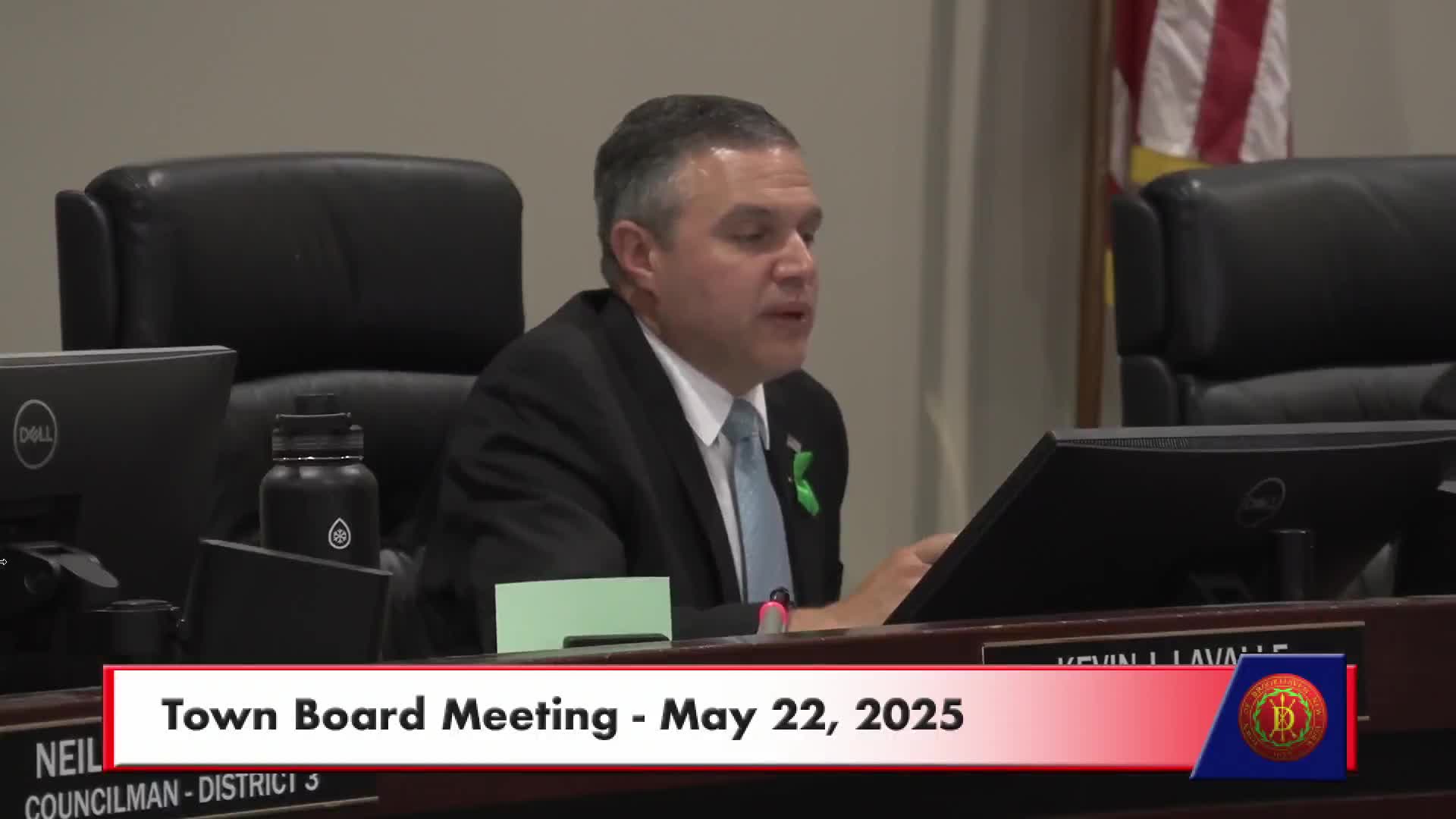
Brookhaven holds hearing on proposed Mastic Beach sewer district; engineers outline $43M plant, $20M ARPA gap
Summary
Town of Brookhaven officials and project engineers on Thursday presented the map, plan and report for a proposed Mastic Beach Sewer District, a multimillion‑dollar effort intended to enable downtown redevelopment and reduce nitrogen pollution from antiquated cesspools and septic systems.
Town of Brookhaven officials and project engineers on Thursday presented the map, plan and report for a proposed Mastic Beach Sewer District, a multimillion‑dollar effort intended to enable downtown redevelopment and reduce nitrogen pollution from antiquated cesspools and septic systems.
The engineer of record, Steve Hajduk, told the Town Board the plan envisions a roughly 286‑parcel district centered on Neighborhood Road, Mastic Road and portions of Comac Road. The project includes a primarily gravity collection system with two pump stations, and a new wastewater treatment plant currently sized at 300,000 gallons per day. Hajduk said the current capital cost estimate is approximately $43 million and annual operation and maintenance costs are estimated at about $1.1 million.
The town has secured $20 million in American Rescue Plan Act (ARPA) funding from Suffolk County through an intermunicipal agreement, Hajduk said, but that leaves roughly $23 million that would need to be financed or funded through additional grants. Using current assumptions, the engineering team presented a benefit‑based user charge model (billing by sanitary flow / single‑family equivalent). Under the model shown in the map/plan report, a typical two‑bedroom condominium unit (the most frequently occurring unit type projected in the redevelopment) would face an estimated annual sewer use charge of about $4,297 in year one, falling to about $2,788 per year after Phase 5 of neighborhood redevelopment, and to roughly $3,300 at full future buildout — numbers Hajduk and town staff emphasized are contingent on additional grant awards and project phasing.
Supervisor Padico and Hajduk both stressed the numbers in the report reflect a “worst‑case” financing scenario required by statute and by grant reporting rules. Padico said the district formation and map/plan filing were necessary steps to unlock additional grant opportunities and to meet ARPA spending timelines; he added that, without significant additional grant funding, the project would not be economically viable and therefore would not proceed in the form presented.
Public speakers at the hearing offered mixed input. A supporter representing a local conservation group said sewering was essential both to revive the downtown business district and to improve Great South Bay water quality. Longtime Neighborhood Road business owners asked for clarifications about who must connect, hook‑up costs and traffic/parking impacts during construction; town counsel and staff said existing residential properties are not automatically required to hook up unless redevelopment triggers health department connection requirements, while commercial connections would typically carry a hookup cost (engineering estimate presented in the report: approximately $26,500 per commercial connection, subject to final design and permitting).
Hajduk described a tentative financing plan: subtracting the secured $20 million in ARPA funds from capital costs leaves an amount to be bonded and repaid over time; that debt service, plus annual O&M, is the basis for the user charges shown. Hajduk and staff said more grant funding applications will be pursued as the project advances, particularly once the district is in formation and designs are further developed — milestones grant programs often require.
The board closed the public comment portion of the hearing and held the public hearing open pending the board’s secret (executive/closed) review on June 12, 2025, to allow staff and the project team additional time to pursue grants and supply requested clarifications. The Town Board did not vote to form the district at the meeting.