Get Full Government Meeting Transcripts, Videos, & Alerts Forever!
Get email alerts on the Juvenile Justice Funding topic
No spam. Unsubscribe anytime.
Spokane County court outlines staffing cuts, pared services after state trim to BECCA funding
Summary
Spokane County Superior Court officials told the Spokane County Board of Commissioners on June 16 that state cuts to BECCA‑related funding will force elimination of two full‑time superior court positions and reductions in case management while the court preserves statutorily required hearings.
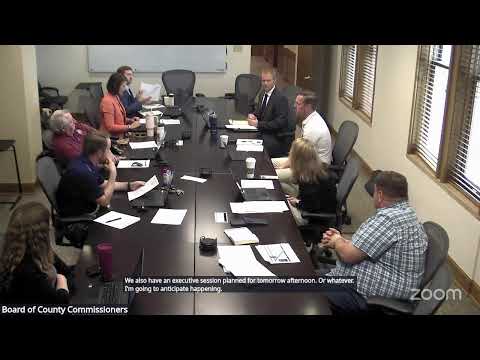
Spokane County Superior Court officials told the Spokane County Board of Commissioners on June 16 that state funding cuts to BECCA-related programs have forced a staffing and service reorganization intended to preserve statutorily required hearings while reducing other direct services.
The court’s plan, presented at the commissioners’ strategic planning meeting, is to continue holding hearings required under state law and to retain a judicial officer and a court coordinator, while eliminating two full‑time superior court positions and reducing some case management roles. County staff said the changes are intended to meet the statutory minimum and to preserve an outreach point for schools and families where possible.
Court representative: The court representative explained that the state funding is administered through the courts and the Administrative Office of the Courts and that the county will “do everything we can” to keep hearings and core functions running. The representative said the county hopes to continue partial funding of bench work and to maintain a coordinator position and some case managers for the “at‑risk youth and CHINS [child in need of services] side.” The presentation said the plan reflects “the statutory minimum” for continuing hearings and clerk functions while noting uncertainty about attorney funding under statute.
Commissioners’ response: Commissioners at the meeting pressed the court on advocacy steps and timelines. One commissioner asked how county leaders and associations should coordinate with legislators to restore funding, and suggested inviting state lawmakers to see local operations. Multiple commissioners and attendees urged coordinated legislative messaging to distinguish early intervention work from later punitive court action.
Timing and staffing details: County and court staff described a short bridge fund that will cover some roles through specified dates (for example, some clerical and public defender positions are funded only through July or October under the transition plan). The court representative said two full‑time superior court positions will be eliminated; later remarks by staff indicated three case manager positions are expected to be eliminated by September. A clerk processing position is projected to be left vacant through the end of the calendar year because the county lacks ongoing funding. Exact dates and dollar amounts for each position’s elimination or transition were discussed but not uniformly specified during the presentation.
Operational impact and risks: Presenters warned the county could see more hearings if the out‑of‑court processing and case management that reduce contested matters are diminished. County staff and several commissioners said reducing upstream services (case management and school‑based interventions) risks creating more downstream involvement with the criminal justice system, which may raise costs and public‑safety concerns later.
Advocacy and next steps: Commissioners and county staff discussed coordinating with the Superior Court Judges Association, the Board of Judicial Administration and county lobbyists to make BECCA funding a legislative priority in the next session. Staff said they would meet with school districts and outside partners (including Launch Northwest, which operates school engagement coordinators in some districts) to explore noncounty options to retain case management capacity. No formal board motion or vote was recorded at the meeting; presenters described the plan as an operational transition to match reduced state funding and as contingent on whether additional funds are secured.
Ending: County staff asked commissioners for assistance with legislative outreach and to let them know if the board wanted to host legislative briefings or site visits. The court and county staff said they will continue outreach with schools over the summer and will return with more detailed timelines and revised budget impacts if circumstances change.