Get Full Government Meeting Transcripts, Videos, & Alerts Forever!
Get email alerts on the Envision Evanston 2045 topic
No spam. Unsubscribe anytime.
Committee debates "preserve and increase" housing language; residents urge stronger, explicit affordability goals
Summary
Residents and committee members urged clearer, implementable housing guidance in the Envision Evanston 2045 draft, calling for explicit goals to increase affordability and to allow neighborhood‑scale 'missing middle' housing where it fits local scale.
Evanston — Public commenters and committee members spent substantial time Tuesday discussing the draft Envision Evanston 2045 comprehensive plan’s housing chapter, focusing on whether the plan’s wording—especially the phrase "preserve and increase Evanston's diverse housing choices"—gives clear direction to the city and the Land Use Commission.
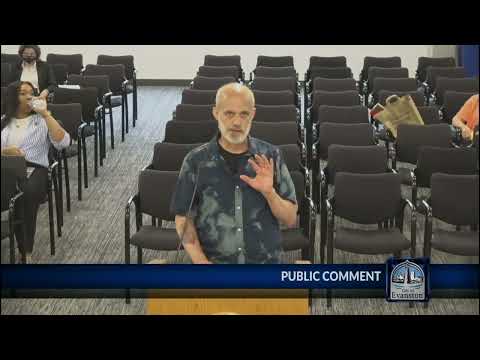
Public comment: Several residents urged clearer, more actionable language on housing affordability and "missing middle" housing types.
Scott Roberts, a Third Ward resident, told the committee the current action language in the draft—"preserve and increase Evanston's diverse housing choices"—is too vague to guide zoning decisions. "A comprehensive plan is meant to work alongside revision of the zoning code," Roberts said. "The language was whittled down over time to 'preserve and increase Evanston's diverse housing choices.' That is a sentence that doesn't really tell us much, and it could be used to justify a wide range of decisions." He proposed more specific direction allowing duplexes, triplexes and small‑scale multiunit forms by right when they match neighborhood scale.
Mary Rosinski and Sue Lohlbach of Connections for the Homeless also urged stronger language on affordable housing. Lohlbach said Connections and Joining Forces participants provided written feedback asking that the plan explicitly prioritize increasing affordable housing for low and moderate incomes rather than relying on euphemisms about "diversity of housing stock." "That feedback came from a fairly large group of community members," Lohlbach said. "The plan needs to state that it is the city's intent to increase the number of units that are within the means of lower income groups." She added that language should be explicit both about increasing new affordable units and preserving existing affordability.
Staff process and next steps: City staff explained that the version before the committee reflects the Land Use Commission's recommended amendments: the working draft has been revised through public hearings, stakeholder submissions and suggestions from boards and commissions. Staff said the council will discuss the plan on June 24 and July 1, and that zoning code changes were intentionally paused: if the council approves a final comprehensive plan it would then decide whether and how to reboot a separate zoning‑code amendment process.
Committee members raised several practical questions: what does "preserve" mean in practice; are there specific AMI bands the plan should prioritize; and should the plan explicitly endorse certain housing forms such as duplexes, townhouses, cottage clusters or small multiunit buildings. Members urged clearer statements about which populations the city aims to serve and asked staff and stakeholders to offer specific, implementable language—for example, allowing small multifamily structures that retain single‑house scale and comply with prevailing height, FAR and setback limits.
Committee direction: The chair asked members and stakeholders to submit line‑by‑line suggested language changes prior to the council's special meetings so the committee can forward considered recommendations. Staff committed to follow up on specific requests, including adding clearer data and policy justification where participants asked for it.
Ending: The committee did not adopt language changes at the meeting. The discussion will continue at upcoming council hearings; staff and committee members will gather more specific suggested language and data to bring forward to council.