
Board accepts assessor/AAB work‑group report, approves minutes and sets Sept. 17 follow‑up
Get AI-powered insights, summaries, and transcripts
Subscribe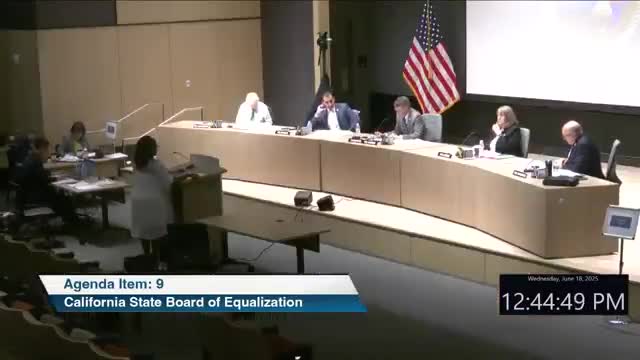
Summary
The Board approved the April work‑group minutes, accepted the draft report summarizing assessor and assessment appeals board (AAB) presentations and scheduled a second work‑group meeting for Sept. 17 to pursue mid‑ and long‑term recommendations.
The Board of Equalization on June 18 voted to accept the county assessors and assessment appeals board (AAB) work‑group report, approved the April 30 work‑group minutes and set a second work‑group meeting for Sept. 17 to pursue mid‑ and long‑term recommendations.
Member Tony Vasquez, who chaired the April work group, presented the report and the categorization of short‑, mid‑ and long‑term solutions. Executive Director Yvette Stowers told the board she had reviewed the report and identified two short‑term recommendations staff could implement quickly: increased AAB member access to BOE technical training and identifying pending legislation (staff noted SB 284 as a pending bill of interest).
Vasquez said the mid‑term items require further stakeholder input and the long‑term items could require legislation or budget changes. The board approved a motion to schedule the second work‑group meeting on Sept. 17 and to accept the report for distribution to participants.
During discussion members emphasized prioritizing “low‑hanging fruit” first. The board asked staff to send training invitations and to circulate the final report and suggested next‑step materials to participants in advance of the September meeting.
The board will use the Sept. 17 meeting to refine mid‑term recommendations — such as proposals touching assessors’ administrative burdens, e‑filing practices and Prop 19 implementation — and to consider whether legislative or budgetary action will be required for longer‑term solutions.