Get Full Government Meeting Transcripts, Videos, & Alerts Forever!
Get email alerts on the Municipal Budget topic
No spam. Unsubscribe anytime.
Canal Winchester holds public hearing on 2026 tax budget as income-tax reliance grows
Summary
City Finance Director Amanda Jackson presented the 2026 tax budget at a public hearing, outlining revenue projections, heavy reliance on income tax, and planned expenditures across general, street and enterprise funds.
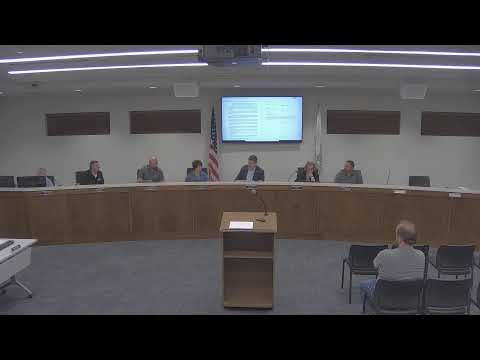
Canal Winchester officials held a public hearing June 16 on the city’s proposed 2026 tax budget, with Finance Director Amanda Jackson laying out revenue projections, spending priorities and fund balances ahead of the July 15 statutory deadline.
Jackson told the Canal Winchester City Council the tax budget is about revenue estimates — not the 2026 appropriations — and must be filed with the county auditor by July 20. She highlighted that the city’s general fund depends heavily on income tax receipts, which the city projects will remain its largest single revenue source.
"This is not our 2026 appropriations. This is not where our money is going," Jackson said, explaining the tax budget’s role as a revenue forecast used by the county budget commission to adjust levies.
Jackson said the city’s income tax collections have grown markedly since 2016 and are projected conservatively for 2026; she noted that development-driven revenues have slowed and the forecast aims not to rely on uncertain receipts. She also reviewed the city’s property-tax framework, explaining inside versus outside millage and how county reappraisals in Franklin and Fairfield counties affect collections.
On expenditures, Jackson flagged an estimated 7.5% increase in salaries and benefits for 2026 tied to added staffing, cost-of-living adjustments and greater employee family health coverage. She said the city is budgeting for capital outlays including IT upgrades and ongoing park and street projects, and said enterprise funds (water, sewer, stormwater) are intended to be self-supporting through user charges.
Jackson provided fund-balance figures showing an estimated general-fund balance of about $16 million at the end of 2025 (approximately one year’s worth of expenditures), and stressed the city is not ‘‘sitting on a pile of cash’’ but using reserves for planned projects.
Council members asked clarifying questions during the hearing, including how much property-tax revenue comes from Franklin versus Fairfield counties; Jackson said roughly $150,000 of the cited county-derived property-tax revenue is from Fairfield County and the remainder from Franklin.
The hearing drew no public comments and the ordinance adopting the tax budget remained at second reading; council scheduled further budget work before final appropriations in the fall.