Get Full Government Meeting Transcripts, Videos, & Alerts Forever!
Get email alerts on the Public Safety Aviation topic
No spam. Unsubscribe anytime.
Cochise County sheriff defends grant-funded helicopter program, calls federal prosecution gap 'frustrating' after Yuma shooting
Summary
Sheriff Mark J. Daniels told KWCD listeners the county's helicopter support is fully grant-funded, costed as an inclusive program and used for search-and-rescue, SWAT and medical support; he described a recent Yuma-area shooting at a law-enforcement helicopter as an example of where he believes federal charges were warranted.
Sheriff Mark J. Daniels said Cochise County's helicopter program is fully covered by outside funding and is not paid for by local taxpayers, and he urged clarity after a board member described the program cost in a way he called "misleading."
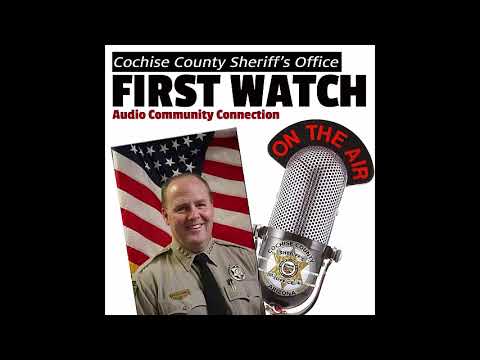
Daniels, speaking on KWCD's First Watch, said the county receives an inclusive contract for aviation support and pays an installment of $340,000 to the provider; the program covers pilots, fuel, maintenance and lodging. "We have 100% grant funded helicopter program. The county pays nothing. It pays not a penny," Daniels said. He added that the unit averages about 87 flight hours per three months.
The nut graf: Daniels used the interview to push back on a board remark that the program cost was "$3,000 an hour," saying the number misrepresented the full, inclusive contract and underscored the role of the aircraft in searches, SWAT oversight and remote medical response in a county of large land area.
Daniels detailed operational uses for the helicopter, which the sheriff's office calls Hawkeye. He said it assists in search-and-rescue missions, provides aerial oversight during high-risk warrants and SWAT operations, and helps deputies reach remote locations. "When you take somebody's freedom away, that risk becomes elevated. In this case, no different. So having a helicopter above us ... it's amazing," he said.
Daniels also described a recent incident in Yuma County — in Dateland — where a man reportedly fired multiple times at a law-enforcement helicopter. Danielsaid the suspect was arrested on local charges, but "this should have been a federal case," and he called the outcome frustrating for local agencies. "At the end of the day, we're the ones having to clean up the mess," Daniels told the radio audience.
He defended the county's decision not to own or operate its own aircraft, saying that the contract model gives rural Cochise County access to aviation without the capital and operating burden. "County can't afford to own a helicopter. County can't afford to buy a helicopter or run a helicopter," he said, calling the contracted program a practical way to get that capability to deputies in remote areas.
Daniels said the aircraft is used for a variety of missions and pointed to a recent SWAT arrest of a suspect accused of a "very egregious" offense against children, where aerial oversight helped keep officers safe. He also said the program proved valuable during a recent missing-person search and other high-acuity calls.
The sheriff said he raised the board remark because it lacked detail and, he said, mischaracterized the program's cost structure and community benefit. He urged public and board members to consider the whole contract rather than an hourly flight figure.
Ending: Daniels framed the aviation program as a safety and operational asset for a large rural county and reiterated that the county's arrangement requires no direct taxpayer support. He said he planned to continue to correct public misconceptions about the program's funding and role.